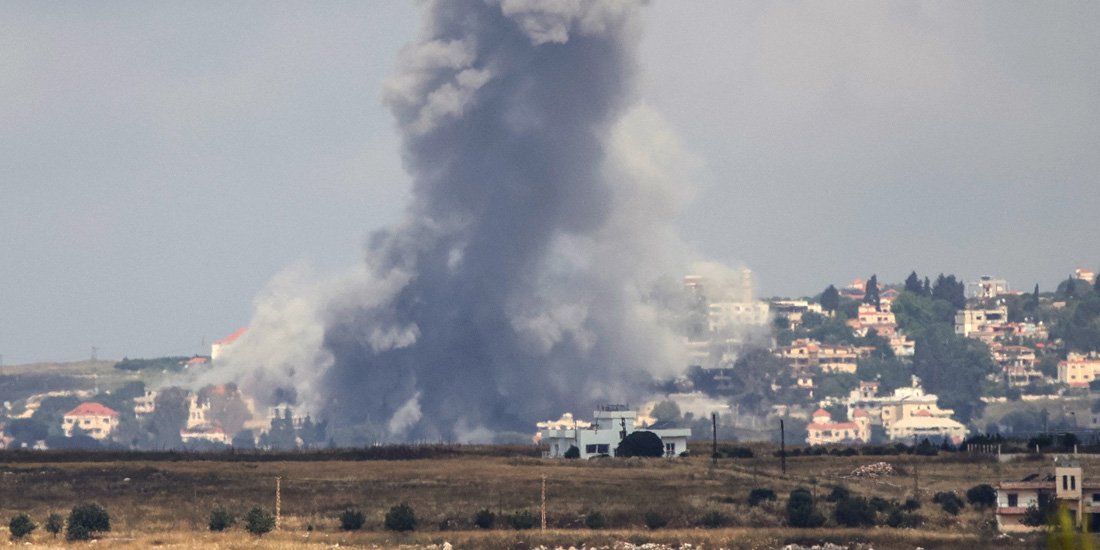
Israeli forces carried out a new wave of air and artillery strikes across southern Lebanon on Saturday, hours after issuing evacuation warnings to residents in more than a dozen locations and a day after Prime Minister Benjamin Netanyahu said Israeli troops had advanced deeper into Lebanese territory.
The renewed attacks come despite ongoing diplomatic efforts and recent military-level talks between Israel and Lebanon in Washington aimed at easing tensions and preventing further escalation.
According to Lebanon’s military, two soldiers were seriously wounded in what it described as a targeted strike by an Israeli drone near the southern city of Nabatieh. The incident occurred just one day after military delegations from both countries held security discussions in the United States ahead of a new round of US-mediated negotiations scheduled for June 2 and 3.
Strikes Reported Across Southern Lebanon
Lebanon’s state-run National News Agency reported multiple Israeli strikes and artillery bombardments across southern regions, including areas near the historic Beaufort Castle.
The attacks have raised concerns about damage to cultural and historical sites. Lebanese Culture Minister Ghassan Salame warned on Friday that continued military operations were placing several heritage landmarks in “serious danger.”
In a joint statement, Lebanese President Joseph Aoun and Prime Minister Nawaf Salam condemned the latest Israeli actions and agreed to intensify diplomatic contacts aimed at halting the attacks.
The leaders discussed what they described as the expansion of Israeli operations into several towns and villages in southern Lebanon, particularly in the districts of Tyre and Nabatieh, as well as reports of destruction of homes and historical sites.
Lebanon-Israel Talks Continue
Despite the ongoing violence, diplomatic engagement has continued. Senior Pentagon official Elbridge Colby described recent discussions between Lebanese and Israeli military representatives as “productive,” though he did not reference calls for a ceasefire, which remains a key demand from Beirut.
A ceasefire intended to end hostilities between Israel and the Iran-backed militant group Hezbollah officially took effect on April 17 but has been repeatedly violated, with both sides accusing each other of breaching the agreement.
Hezbollah Claims Counterattacks
Hezbollah announced on Saturday that it had launched rockets toward the northern Israeli town of Kiryat Shmona in response to Israeli military actions.
The group also claimed responsibility for an ambush against Israeli troops near Ghandouriyeh in southern Lebanon, alleging that the attack forced Israeli forces to withdraw. Hezbollah further stated that it fired rockets at an Israeli military base in northern Israel.
Netanyahu Says Troops Have Advanced
On Friday, Netanyahu said Israeli forces had crossed beyond the Litani River, a strategic waterway located roughly 30 kilometres north of the Israel-Lebanon border.
“Our forces have crossed the Litani; they have moved up to the commanding terrain,” Netanyahu said, adding that Israel was “hitting Hezbollah head on.”
The latest escalation follows months of conflict that intensified after Hezbollah entered the broader regional war in support of Iran. According to Lebanon’s Health Ministry, Israeli strikes on Friday alone killed 11 people, while more than 3,300 people have reportedly been killed in Lebanon since the conflict escalated in early March.
With fresh negotiations scheduled for next week, regional and international mediators are under increasing pressure to prevent further deterioration of security along the Israel-Lebanon border.