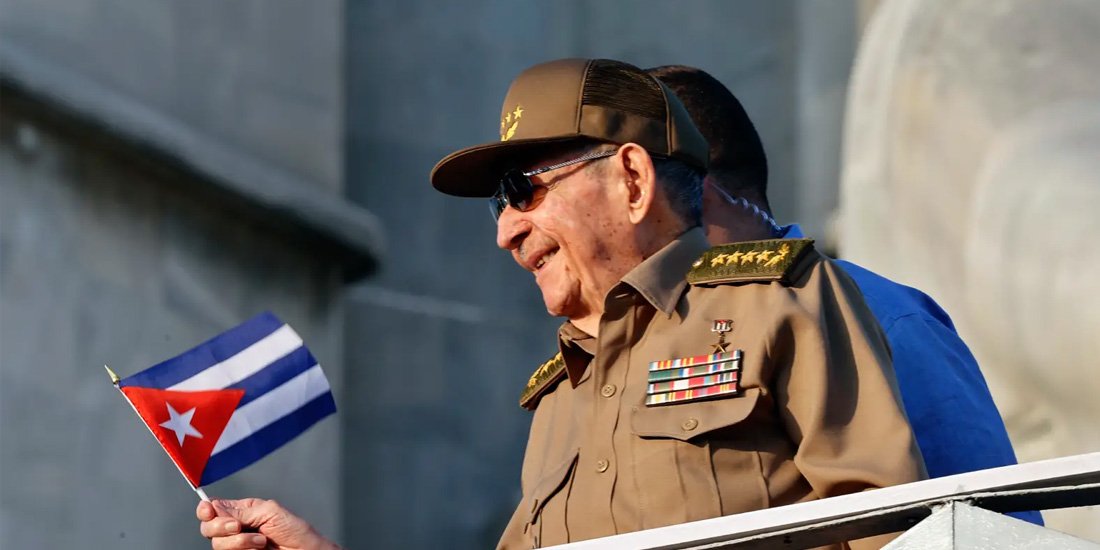
The Cuban government has formally rejected what it described as a legally baseless accusation by the United States Department of Justice against former Cuban leader Raúl Castro, escalating a diplomatic confrontation between Havana and Washington over an incident nearly three decades old involving the destruction of two civilian aircraft in Cuban airspace.
In a statement issued from Havana, Cuban authorities said Washington lacked both legitimacy and jurisdiction to bring any legal action against Castro over the February 1996 incident in which Cuban military jets intercepted and destroyed two aircraft operated by Brothers to the Rescue, a Miami-based group involved in Cuban exile activism. Four people died in the incident, which at the time triggered widespread international condemnation.
The Cuban government argued that the aircraft had repeatedly violated Cuban airspace in the years preceding the incident and maintained that the military response constituted legitimate self-defence under international law. Havana said it had filed repeated formal complaints between 1994 and 1996 with the United States State Department, the Federal Aviation Administration, and the International Civil Aviation Organization, documenting more than 25 alleged violations of Cuban airspace by the organization, and that Washington had failed to act on those warnings.
Cuban officials accused the United States of distorting the historical record and applying double standards on questions of national sovereignty and airspace security. The statement argued that Washington itself would not tolerate unauthorized foreign aircraft entering its airspace under comparable circumstances.
The Cuban government also situated the accusation within its broader characterization of United States policy toward the island, describing American sanctions and other measures as collective punishment and an energy blockade, and linking the legal action to what it called longstanding hostility toward Cuba’s socialist system.
Relations between the two countries have remained constrained for decades despite intermittent diplomatic openings, with disputes over human rights, sanctions, migration, and security issues continuing to complicate bilateral engagement.