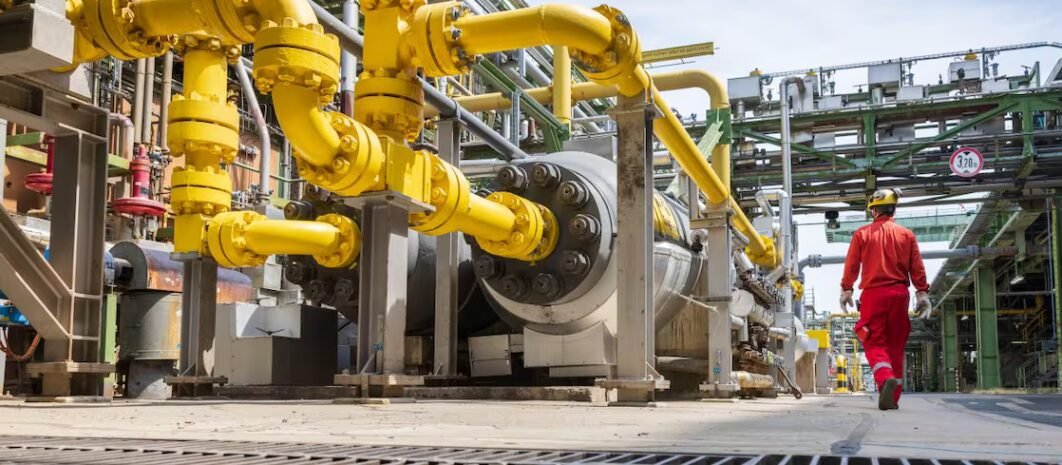
Nigeria’s liquefied natural gas sector is on the verge of a landmark expansion as the Train 7 project at the Nigeria Liquefied Natural Gas facility approaches full completion, with engineers now transitioning into pre-commissioning activities that mark the final stretch before operations begin.
The project, valued at five billion dollars, has exceeded 92 percent completion and is widely regarded as one of the most consequential energy investments in Nigeria’s recent history. When it enters production, the facility will raise the country’s LNG output capacity from 22 million tonnes per annum to 30 million tonnes, representing a significant boost to Nigeria’s share of the global gas market.
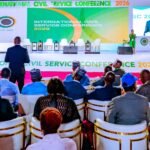
The milestone was disclosed at the 2026 Nigerian Oil and Gas Midstream and Downstream Summit in Lagos, convened by the Nigerian Content Development and Monitoring Board under the theme of growing and sustaining local content development across the midstream and downstream sectors.
Officials traced the project’s origins to front-end engineering work that began in 2018, followed by a design reconfiguration that introduced a common liquefaction unit capable of producing the equivalent of two older-generation trains. The Final Investment Decision was reached in December 2019 in Abuja, with shareholders including the Nigerian National Petroleum Company Limited, Shell, TotalEnergies, and Eni committing to proceed.
Construction commenced in 2020, even as the global economy reeled from the disruptions of the COVID-19 pandemic. The engineering, procurement, and construction contract was awarded to a consortium comprising Saipem, Chiyoda, and Daewoo, and the shareholders maintained their commitment throughout a period of extreme global uncertainty.
The project’s broader significance lies in what it has generated beyond its physical infrastructure. Nigerian firms including Dorman Long, Aveon, and African Industries supplied substantial volumes of structural steel when the project required up to 4,000 tonnes within tight delivery windows. All medium and high voltage cables were manufactured domestically by companies including Coleman, Mecom, Medgene, and Cable Metal.
At peak activity, more than 13,000 Nigerian workers were employed on the project, receiving training in welding, scaffolding, electrical installation, and other specialist disciplines. The project achieved 130 million man-hours of work with only two lost-time injuries recorded.
Challenges were encountered along the way. Some local vendors struggled to meet production capacity, quality standards, and delivery timelines, requiring additional technical oversight. The experience also revealed gaps in cryogenic equipment manufacturing. Rather than treat these as failures, project leaders used them to create collaboration opportunities with Nigerian universities to deepen local research and technical competencies.
Steel fabrication and galvanising facilities invested in during Train 7’s construction will continue to serve the wider Nigerian industry long after the project concludes. Officials warned that fabrication yards could contract, skilled workers might migrate in search of opportunities elsewhere, and local manufacturers who invested to meet project standards could lose momentum without sustained follow-on work.
The NCDMB reported that the number of upstream operating companies in Nigeria has grown from fewer than 10 to 117 since the Nigerian Oil and Gas Industry Content Development Act came into force in 2010, while service companies have surged to more than 11,700, collectively generating well over 100,000 jobs. Local content participation across the industry has risen from less than five percent at that time to 61 percent in 2025.