Lawmakers and member states of the European Union have reached an agreement to implement the bloc’s trade pact with the United States after months of delays and mounting pressure from US President Donald Trump.
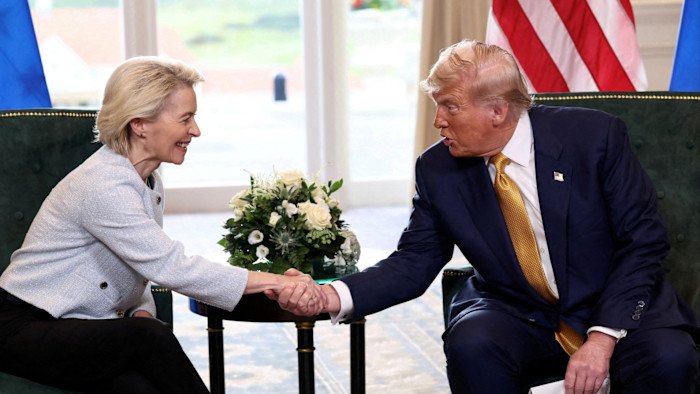
Negotiators from the European Parliament and EU member states concluded discussions in the early hours of Wednesday, paving the way for the implementation of the trade agreement originally sealed last July in Turnberry, Scotland.
The deal established a 15 percent tariff on most European goods entering the United States, while the EU pledged to remove levies on the majority of US imports. However, the implementation process stalled for months, prompting Trump to threaten fresh tariffs unless the agreement was ratified by July 4.
Welcoming the breakthrough, European Commission President Ursula von der Leyen said the agreement would allow the EU to fulfil its commitments under the transatlantic trade arrangement.
“This means we will soon deliver on our part,” von der Leyen stated, calling for the ratification process to be completed swiftly.
She added that the agreement would help ensure “stable, predictable, balanced, and mutually beneficial transatlantic trade.”
The development places the EU on course to meet Washington’s deadline and potentially ease tensions that have strained trade relations between both sides for more than a year.
Trump had earlier warned that failure to ratify the pact could lead to significantly higher tariffs on European exports, including an increase in duties on European cars and trucks from 15 percent to 25 percent.
The tariff measures introduced by the Trump administration, particularly on steel, aluminium, and automobile parts, had pushed the EU to strengthen trade partnerships with other regions. Despite this, Brussels continues to view its €1.6 trillion trade relationship with the US as strategically important.
As part of the final agreement, the European Commission was granted powers to suspend favourable tariff conditions if the US fails to honour its commitments or engages in discriminatory trade practices against EU businesses.
The deal also includes safeguards allowing the EU to respond to sudden surges in US imports that could harm domestic industries.
However, lawmakers softened several earlier demands during negotiations. The final text gives the US until the end of the year to remove surtaxes above 15 percent on steel components, rather than making it an immediate condition.
In addition, negotiators removed a proposed “sunrise clause” that would have delayed the EU’s obligations until the US fully implemented its side of the agreement. A “sunset clause,” which would have caused the deal to expire unless renewed, was extended to the end of 2029.
Chairman of the European Parliament’s trade committee, Bernd Lange, defended the compromise, saying lawmakers succeeded in securing key protections for the EU economy.
However, Anna Cavazzini of the Greens group expressed concerns that the agreement placed the EU at a disadvantage, although she acknowledged that it could help restore economic stability and reduce tensions in EU-US relations.