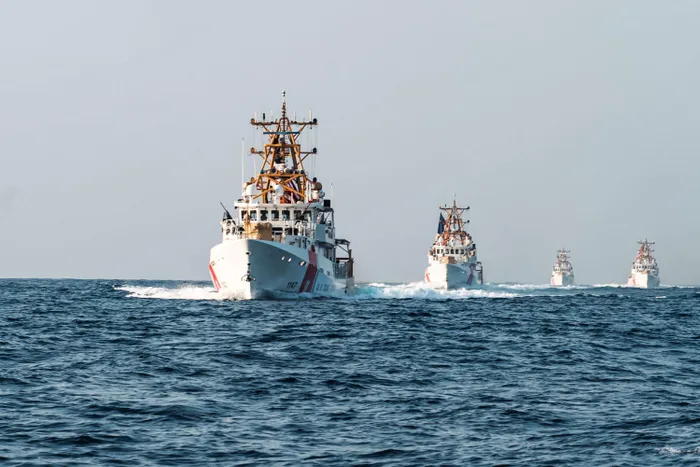
Tensions between Iran and the United States escalated on Monday as Tehran warned that any American attempt to intervene in the Strait of Hormuz would be viewed as a violation of the ongoing Middle East ceasefire.
The warning comes after US President Donald Trump announced plans for a new maritime security operation aimed at escorting commercial vessels through the strategic waterway, which has been effectively blocked amid rising hostilities.
Speaking on Sunday, Trump described the initiative dubbed “Project Freedom” as a humanitarian effort to assist stranded ships and their crews, many of whom are reportedly running low on essential supplies.
“We will use best efforts to get their ships and crews safely out of the Strait,” Trump said, adding that operations would commence on Monday.
However, Iranian authorities swiftly pushed back against the proposal. The head of Iran’s parliamentary national security commission stated that any US interference in the strait’s current maritime arrangements would be considered a breach of the ceasefire agreement that took effect on April 8.
The standoff follows weeks of stalled negotiations between both countries, with Iran’s control of the Strait of Hormuz—one of the world’s most critical oil transit chokepoints—emerging as a central issue. The blockade has significantly disrupted global shipments of oil, gas, and fertilizer, sending shockwaves through international markets.
In response to Iran’s actions, Washington has imposed countermeasures, including restrictions on Iranian ports, further complicating efforts to de-escalate the situation.
Despite the heightened rhetoric, Trump indicated that diplomatic engagements were still ongoing, expressing optimism about the possibility of a breakthrough. “Very positive discussions” were underway, he said, though he did not directly address Tehran’s reported 14-point proposal aimed at ending the conflict.
The US military, under United States Central Command, is expected to deploy significant assets for the escort mission, including guided-missile destroyers, aircraft, unmanned systems, and approximately 15,000 personnel.
Meanwhile, reports suggest that Iran has issued a one-month deadline for negotiations to reopen the strait, lift US naval restrictions, and formally end hostilities.
European leaders have also voiced concern over the prolonged closure of the vital shipping route. Johann Wadephul, Germany’s foreign minister, called for the immediate reopening of the strait, stressing the growing economic toll on global markets. In discussions with Iranian Foreign Minister Abbas Araghchi, he emphasized the need for a negotiated resolution and urged Iran to fully renounce nuclear weapons.
With more than 900 commercial vessels reportedly stranded in the Gulf as of late April, according to maritime intelligence firm AXSMarine, the crisis continues to deepen. Oil prices have surged to approximately 50 percent above pre-conflict levels, reflecting mounting concerns over supply disruptions and broader economic fallout.