The World Health Organisation has warned that 9.5 million children across Africa remain under-immunised and a further 6.7 million have not received a single routine vaccine, as dwindling international funding and the disruption caused by ongoing conflicts threaten to reverse decades of hard-won immunisation progress across the continent.
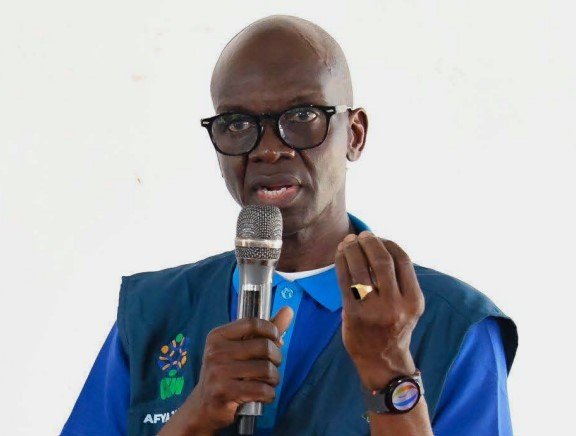
In a message marking the 2026 Vaccination Week, WHO Regional Director for Africa Dr. Mohamed Yakub Janabi said the region’s immunisation programmes faced mounting pressure from two converging forces: declining donor contributions that had sharply reduced financial support for routine vaccination campaigns, and security crises in multiple countries that had physically prevented health workers from reaching children in vulnerable communities.
Despite the challenges, Janabi acknowledged significant recent achievements. In December 2025, the African Regional Verification Commission confirmed that Cabo Verde, Mauritius, and Seychelles had eliminated measles and rubella, becoming the first countries in the WHO African Region to reach that milestone. Through the Big Catch-Up initiative, nearly 8.75 million children who had missed routine vaccines during the pandemic were successfully reached, with coverage for diphtheria, tetanus, and whooping cough restored to pre-pandemic levels.
Since 1988, polio vaccination efforts across Africa have averted an estimated 1.57 million deaths and prevented paralysis in more than 20 million people, while since 2000, approximately 500 million African children have been protected through routine vaccination programmes. In the Lake Chad Basin and the Horn of Africa, governments, communities, and frontline vaccinators reached nearly 200 million children in the previous year alone.
The organisation said vaccines prevented approximately 1.8 million deaths in Africa every year, emphasising that each life saved represented families kept whole, healthcare systems freed from battling preventable outbreaks, and communities able to work, farm, and trade without disruption.
Janabi stressed that for Africa to keep its 2030 immunisation targets on course, countries needed to significantly deepen domestic resource mobilisation and strengthen national ownership of immunisation programmes rather than remaining dependent on external funding that had become increasingly uncertain.