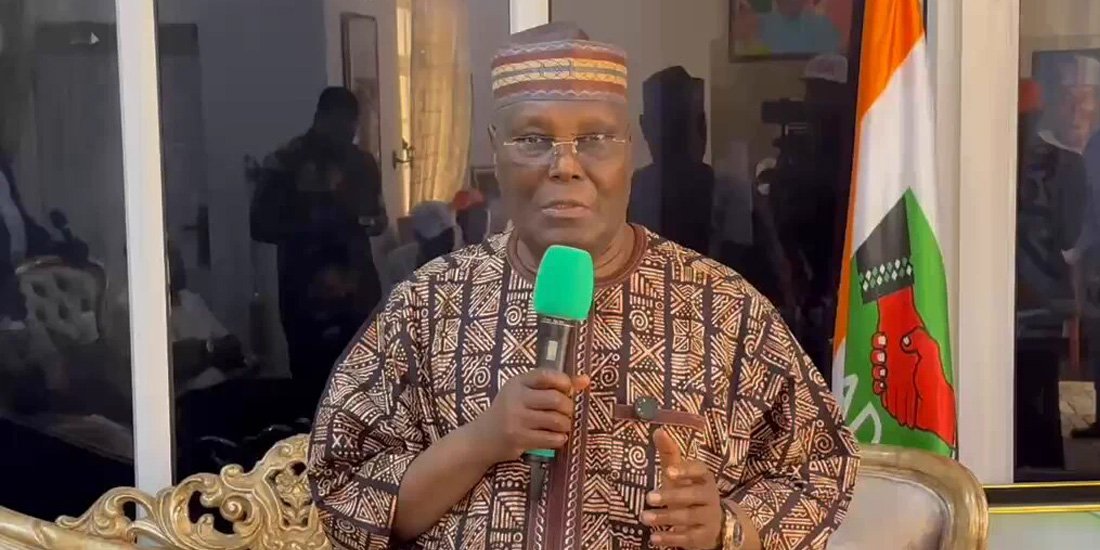
Presidential candidate of the African Democratic Congress (ADC), Atiku Abubakar, has vowed to constitute an independent team of experts to investigate the disbursement of ₦33.75 billion reportedly paid to 3.29 million vulnerable Nigerian households under the Federal Government’s cash transfer programme.
Atiku’s position followed concerns reportedly raised in an audit report over whether the funds reached their intended beneficiaries.
In a statement issued by his Senior Special Assistant on Public Communication, Phrank Shaibu, the former Vice President described the audit findings as a serious indictment of the Bola Tinubu administration, arguing that the government had withdrawn fuel subsidy, increased taxes and tariffs, and raised transportation, electricity and food costs while promising interventions for vulnerable Nigerians.
According to Atiku, the figures contained in the audit findings also raised questions about the adequacy of the intervention. He noted that ₦33.75 billion shared among 3.29 million households amounted to approximately ₦10,258 per household.
“This is beyond a bookkeeping scandal. The intervention is insultingly small, yet even that small amount cannot be cleanly accounted for,” Atiku was quoted as saying.
He added that if funds intended for vulnerable Nigerians could not be satisfactorily traced while access to records required for accountability was being frustrated, the situation represented a serious failure of responsibility towards the poor.
Atiku commended the Auditor-General for the Federation, Shaakaa Chira, who was appointed by the Tinubu administration in October 2023, for what he described as placing constitutional responsibility above political considerations.
“That is what institutions are supposed to do — protect the public purse, not the political comfort of those in power,” he said.
The former Vice President also questioned the government’s figures on the cash transfer programme, noting that the administration had claimed that more than ₦600 billion was disbursed to over 10 million households, after Nigerians were previously told that about 15 million households were beneficiaries.
He argued that the conflicting figures made it difficult for Nigerians to establish the actual number of households that benefited from the programme.
“It now appears that the Tinubu’s administration cannot give Nigerians a coherent account of how many households actually benefited from its intervention programme, while significant portions of the expenditure have failed to withstand independent audit scrutiny,” Atiku said.
He stressed that government announcements alone could not establish that payments had been made, saying, “A ministerial announcement is not proof of payment. A name on a social register is not a bank alert.”
According to Atiku, the Auditor-General was reportedly questioning ₦33.75 billion allegedly paid to 3.29 million beneficiaries, in addition to ₦36.74 billion in payments reportedly made without pre-payment audit and another ₦4.62 billion for which payment vouchers were allegedly not produced.
He said the issues could not be dismissed as mere accounting discrepancies because the funds were appropriated in the name of vulnerable Nigerians facing a cost-of-living crisis.
Explaining his decision to investigate the matter, Atiku said Nigerians could not reasonably expect the same government whose expenditure was under scrutiny to investigate itself.
“My team will constitute an independent group of financial, audit, technology and public-accounting experts to interrogate the available records surrounding these cash-transfer payments,” he said.
He explained that the team would trace the funds using available public and institutional records and examine beneficiary figures, payment channels, reconciliation records, audit queries and other inconsistencies identified in the programme.
“When that work is completed, we will furnish Nigerians with the findings,” he added.
Atiku also called for transparency in the payment process, saying relevant transaction records should be made available if payment platforms such as Remita were used.
“If beneficiaries received the money, there should be evidence. If access to records was obstructed, Nigerians deserve to know by whom and why,” he said.
Beyond the cash transfer controversy, Atiku argued that Nigerians needed sustainable improvements in purchasing power rather than repeated announcements of palliative measures.
He advocated economic policies aimed at reducing the cost of transportation, food and energy while increasing domestic production and local refining capacity.
“Our intervention will follow production. It will support domestic refining, increase local supply, reduce the cost of energy and ensure that the benefit reaches Nigerians through lower prices,” he said.
Atiku maintained that the government could not remove subsidies, increase taxes and raise electricity and transportation costs while failing to provide adequate accountability for interventions designed to cushion the impact on vulnerable households.
He therefore challenged the government to publish verifiable payment trails if the beneficiaries were genuine, insisting that funds that did not reach their intended recipients should be recovered.
He further demanded prosecution of any official found to have diverted, misapplied or misappropriated funds meant for vulnerable Nigerians.
“The poor have already paid enough through higher fuel prices, food costs, electricity bills, transportation fares and taxes. They must not also be made to lose the money appropriated in their name,” Atiku said.