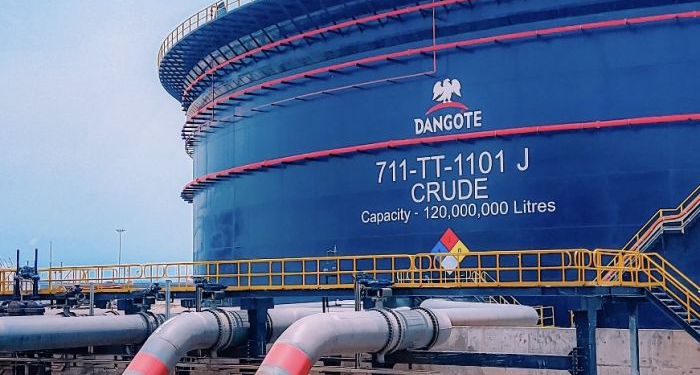
The Dangote Refinery supplied approximately 72 percent of Nigeria’s domestic petrol demand in March, cementing its position as the dominant force in the country’s fuel supply chain. But the data also reveals a quietly significant rise in imports that raises fresh questions about the refinery’s market control.
Figures from the Nigerian Midstream and Downstream Petroleum Regulatory Authority showed that total petrol consumption in March fell to 47.3 million litres per day, down from 56.9 million litres in February, a 16.9 percent decline. Against that backdrop, Dangote’s domestic supply of 34.2 million litres per day represented roughly 72.3 percent of national demand.
At the same time, petrol imports surged 96.7 percent month on month, climbing from 3 million litres per day in February to 5.9 million litres in March. The jump is notable given that the NMDPRA has repeatedly stated it stopped issuing import licenses to oil marketers months ago. The rise in imported volumes despite that position has yet to be officially explained.
For over a year, refinery owner Aliko Dangote has pushed for an end to petrol imports, arguing that Nigeria’s import licensing regime undermines local refining by allowing marketers to compete with domestic production even when supply is adequate. The company maintains that under the Petroleum Industry Act, imports should only be permitted when there is a clear and documented supply shortfall.
Oil marketers and a cross-section of Nigerians hold a different view. They argue that leaving the market solely to one refinery, particularly with the NNPC’s Port Harcourt and Warri facilities still non-operational, risks monopoly pricing and leaves consumers with no competitive alternatives.
On refined products beyond petrol, three operational modular refineries, Walter Smith, Edo Refinery, and Aradel, collectively contributed approximately 629,000 litres per day of diesel during the month. Diesel consumption averaged 14.5 million litres per day, slightly above the national benchmark, signaling sustained demand from industrial and commercial users despite rising prices linked to the Middle East crisis.
In the gas segment, total supply averaged 4.888 billion standard cubic feet per day. Nigeria LNG received the largest share at 3.033 billion standard cubic feet, representing approximately 62 percent of total gas output. Liquefied petroleum gas demand outpaced supply during the month, with a daily shortfall of 396 metric tons recorded against a backdrop of retail prices ranging from N980 to N1,450 per kilogram nationally.
Fuel sufficiency data showed petrol stock levels at 21 days including Dangote’s pumpable volumes, diesel at 55 days, aviation fuel at 109 days, and LPG at 14 days.