Nigeria’s Chief of Naval Staff, alongside senior military officers and security analysts, has issued an unambiguous message to the country’s armed forces: that the battle against oil theft, terrorism and violent extremism cannot be won by institutions whose personnel are not in peak physical and mental condition, and that the urgency of the threats Nigeria faces demands a military culture built on sustained readiness rather than periodic bursts of effort.
The call was made at the Nigerian Navy’s first quarter route march for 2026, held over the weekend at the Navy Town Parade Ground in Asokoro, Abuja, an event that brought together serving personnel, senior officers and defence commentators in what became as much a forum for strategic reflection as it was a demonstration of physical capability.
A Culture of Readiness, Not a One-Off Event
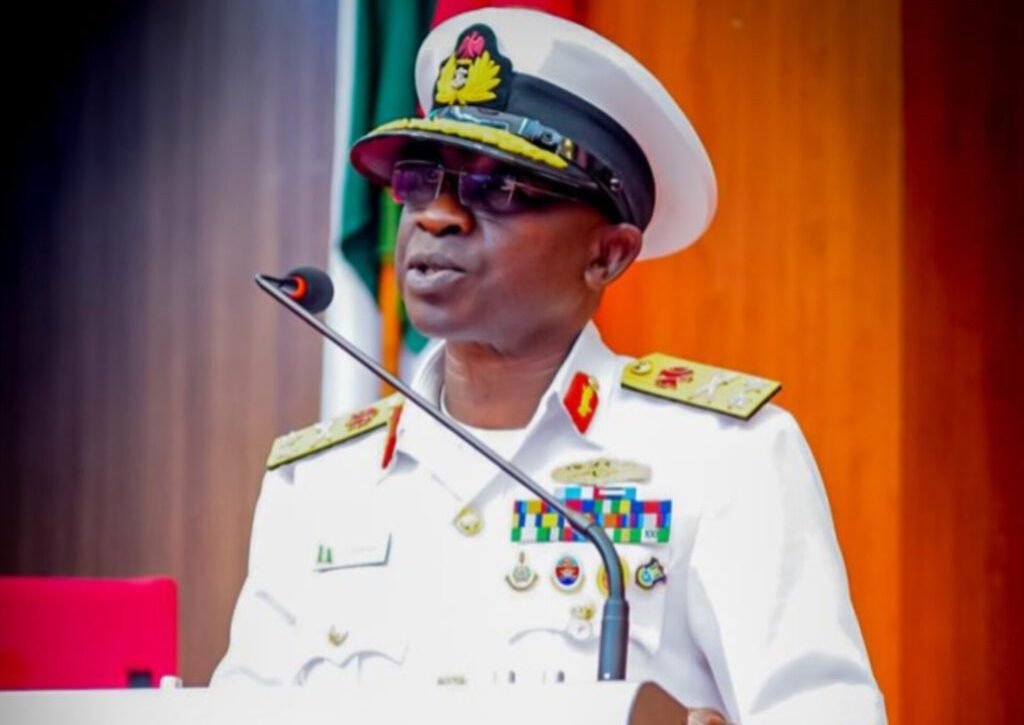
Vice Admiral Idi Abbas, the Chief of Naval Staff, set the tone for the gathering by commending personnel for the strength, stamina and endurance they put on display during the march, describing those qualities as indispensable to the fulfilment of the constitutional responsibilities that the armed forces carry on behalf of the Nigerian people and the country’s economic wellbeing.
Represented at the event by the Director of Manning at Naval Headquarters, Rear Admiral Kolawole Oguntuga, the CNS used his address to make a point that went beyond the day’s activities, stressing that the kind of fitness and alertness on display must be woven into the daily fabric of military life rather than reserved for scheduled exercises.
“This exercise is not meant to be a one-off activity. Rather, it should be sustained individually and collectively, at all times. We must continually strive to maintain both physical fitness and mental alertness so that we can effectively discharge our constitutional responsibilities and uphold the oath we have sworn to defend this nation,” he said.
He also drew attention to the relationship between the military and the civilian population it serves, noting that the confidence he observed in the faces of ordinary Nigerians who watched the march unfold along the route was a reminder of the expectations placed on the armed forces and the obligation those expectations create.
“As we moved out this morning, I am sure you noticed the excitement among the civilians we encountered along the way. They looked at us with confidence and expectation. They believe in us and therefore we must not betray that trust. We must prove to them that the Nigerian Navy and the armed forces in general remain a formidable force to be reckoned with,” he said.
Fitness as a Strategic Asset
The Director of Defence Media Operations, Major General Michael Onoja, brought a sharper operational lens to the conversation, articulating in precise terms why physical fitness and mental alertness are not peripheral concerns but central determinants of whether military missions succeed or fail in the kind of complex security environment Nigeria is navigating.
He noted that in a country where troops are simultaneously confronting insurgency, kidnapping and a range of asymmetric threats, the speed at which a soldier can move, process information and react under pressure frequently makes the difference between mission success and mission failure.
“The ability of soldiers to move, think and react faster than their adversaries often determines mission success or failure,” he said, adding that endurance, strength and agility allow troops to operate effectively across Nigeria’s diverse and often challenging terrain while carrying heavy equipment, withstanding extreme weather conditions and maintaining unit effectiveness through prolonged deployments.
Onoja was equally insistent on the importance of mental sharpness, pointing to the specific demands that groups such as Boko Haram and the Islamic State West Africa Province place on Nigerian troops through their unpredictable and constantly adapting tactics. He said that the ability to process intelligence rapidly, distinguish civilians from hostile actors and make sound decisions under intense pressure is a function of mental conditioning that must be as deliberately cultivated as physical fitness.
“Mental sharpness enhances situational awareness, discipline and emotional control, thereby reducing the risk of operational errors and civilian harm,” he said.
He also highlighted the longer term dimension of these qualities, noting that physical and mental fitness build the confidence and morale that sustain a fighting force through extended campaigns, and that psychological resilience in particular helps troops manage the stress, trauma and prolonged family separation that are inherent features of active deployment.
A Defence Correspondent’s Assessment
Veteran defence journalist and Editor in Chief of Razor Media Group, Odita Sunday, added an analytical perspective to the proceedings, affirming from his years of covering Nigeria’s security landscape that fitness and alertness are not theoretical ideals but operational necessities in the fight against oil theft, piracy, terrorism and violent crime.
“Fitness provides the endurance, strength and agility required to operate in harsh environments and respond swiftly to threats, while mental alertness ensures sound judgement, situational awareness and rapid decision-making under pressure. Together, these qualities are critical to mission success, survival and the ability to outmanoeuvre adversaries,” he said.
A Charge to Sustain the Fight
Closing out the event, the Chief of Naval Staff issued a direct charge to troops to sustain and intensify the coordinated kinetic operations currently underway against the nation’s adversaries, reaffirming the Nigerian Navy’s commitment to both national security and the economic stability that a functioning petroleum sector underpins.
He framed the conversation within a broader sense of institutional duty and historical responsibility, reminding personnel that the armed forces remain one of the foundational institutions holding Nigeria together and that the sacrifices of those who served before them must not be allowed to go to waste.
“For us to sustain this fight and continue enhancing our national security, we must remain physically and mentally fit,” he concluded.