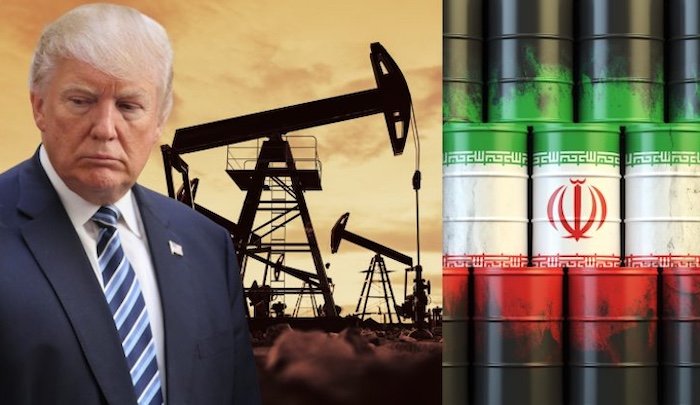
Global oil prices dropped sharply on Wednesday after Donald Trump announced a two-week ceasefire agreement with Iran, tied to the potential reopening of the strategic Strait of Hormuz.
Brent crude, Nigeria’s benchmark, plunged as much as 15.5 per cent to $92.28 per barrel, its steepest daily decline since the COVID-19 pandemic before recovering slightly to trade around $94.44 per barrel later in the day. U.S. benchmark West Texas Intermediate (WTI) also fell significantly, dropping 15.87 per cent to $95.03 per barrel.
The sharp decline follows weeks of volatility that had pushed oil prices as high as $120 per barrel at the height of tensions in the Gulf region.
European natural gas markets also reacted swiftly, with prices falling by about 20 per cent at the Amsterdam open, as the ceasefire raised hopes of eased supply disruptions and a reopening of the Strait of Hormuz, a key global energy transit route.
Despite the market optimism, uncertainty lingers in the liquefied natural gas (LNG) sector. No LNG shipments have passed through the Strait in over a month, after earlier disruptions forced vessels, including Qatari cargo ships, to abandon transit attempts.
Shipping sources indicated that Iran had previously threatened to target vessels attempting to pass through the route without its approval, effectively shutting down one of the world’s most critical oil and gas corridors.
Iran’s Foreign Minister, Abbas Araqchi, said Tehran would suspend attacks if hostilities ceased, adding that controlled passage through the Strait could resume temporarily under military coordination.
A senior Iranian official also suggested that the route could reopen in a limited capacity ahead of planned negotiations between U.S. and Iranian representatives in Pakistan.
Trump, speaking on the development, said Washington had received a 10-point proposal from Tehran, describing it as a workable framework for further negotiations and a step toward a broader peace agreement.
Meanwhile, Nigeria recorded gains in crude oil production amid improved security conditions in the Niger Delta. The Group Chief Executive Officer of Nigerian National Petroleum Company, Bayo Ojulari, said production rose from 960,000 barrels per day in 2022 to an average of 1.71 million barrels per day, peaking at 1.84 million barrels per day in 2025.
Ojulari attributed the increase to enhanced pipeline security and coordinated efforts involving government agencies, industry operators, and host communities, which have helped curb oil theft and vandalism.
At a parliamentary roundtable in Abuja, Senate President Godswill Akpabio, represented by Senator Jimoh Ibrahim, called for deeper collaboration among stakeholders to sustain production growth, while House Leader Julius Ihonvbere stressed the need for fairness and accountability in the sector.
In a related development, Exxon Mobil projected that rising oil and gas prices linked to the crisis could boost its upstream earnings by up to $2.9 billion in the first quarter. However, it warned that downstream operations could record a $5.3 billion hit due to timing differences in shipments.
The company also disclosed that its overall production is expected to decline by six per cent quarter-on-quarter, with assets in Qatar and the UAE accounting for about 20 percent of its global oil output in 2025.
Exxon Mobil is expected to release its full first-quarter results on May 1, as investors continue to monitor global energy markets for signs of stability following the ceasefire announcement.