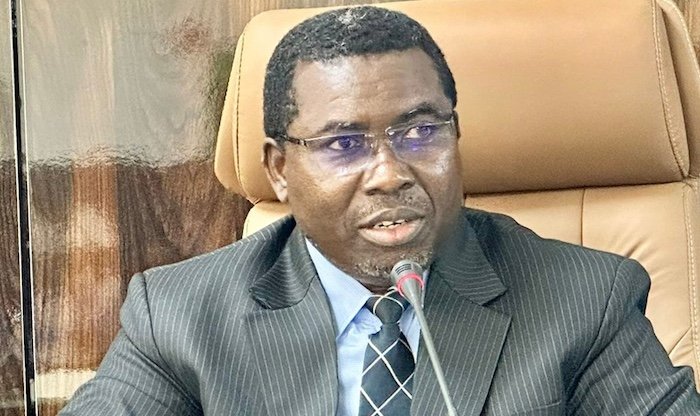
The Chairman of the Independent National Electoral Commission (INEC), Professor Joash Amupitan, has called for stricter internal editorial guidelines across media organisations as Nigeria prepares for the 2027 general elections.
Amupitan made the call in Abuja on Wednesday at the 81st General Assembly of the Broadcasting Organisations of Nigeria, urging the National Broadcasting Commission (NBC) to strengthen oversight of broadcast content.
According to a statement issued by INEC’s Director of Voter Education and Publicity, Victoria Eta-Messi, the commission’s chairman warned that misinformation—rather than physical violence—could pose the greatest threat to the credibility of the 2027 polls.
“The most dangerous weapon in the next election cycle may not be a gun, but a smartphone user’s lie amplified by an uncritical broadcast station,” Amupitan said, stressing the need to preserve Nigeria’s airwaves as “a sanctuary for truth, not a megaphone for chaos.”
He described the media space as the new frontline of democratic contestation, noting that elections are increasingly being shaped not only at polling units but within the broader information ecosystem.
Providing a timeline for the upcoming polls, Amupitan said 283 days remained until the Presidential and National Assembly elections scheduled for January 16, 2027, while Governorship and State Assembly elections are slated for February 6, 2027.
He emphasized that the credibility of the elections would depend not only on logistics and technology but also on responsible media conduct.
Citing provisions of the Electoral Act, the INEC chairman highlighted Section 96(1), which prohibits the use of abusive, inflammatory, or divisive language capable of inciting ethnic, religious, or sectional tensions. He warned that careless political broadcasting in a diverse society like Nigeria could deepen divisions and destabilize the electoral environment.
Amupitan also reiterated the importance of the statutory 24-hour “cooling-off period” before election day, during which political advertisements and campaign broadcasts are banned. He said the provision is designed to allow voters reflect and make independent decisions free from last-minute influence.
While acknowledging the constitutional right to freedom of expression, he stressed the need to balance it with responsible regulation, noting that the airwaves are a limited public resource that must be fairly allocated—especially during elections.
“With 22 registered political parties, fairness is not optional; it is statutory,” he said, urging broadcasters to provide equal access and avoid allowing any group to dominate coverage.
He warned that violations of electoral broadcasting rules could attract severe penalties, including heavy fines for media organisations and their principal officers, and in some cases, imprisonment.
The INEC chairman further noted that the convergence of traditional and digital media has complicated regulation, as broadcast content can now be quickly amplified online.
“Content is no longer confined to radio and television. It is clipped, amplified, and weaponised within minutes,” he said.
To address these challenges, Amupitan proposed a range of reforms, including clearer legal definitions of equal access, stronger collaboration between INEC and the NBC, and enhanced independence for regulatory bodies. He also called for improved fact-checking systems and greater transparency in political advertising, particularly regarding sponsorship disclosures and pricing.
He cautioned that voter apathy remains a significant threat to Nigeria’s democracy and warned that media organisations may face increasing pressure to prioritise lucrative political advertising over balanced reporting as campaigns intensify.
“Elections are no longer contested only at polling units; they are contested in the information space,” Amupitan said. “The media must rise against misinformation and disinformation to safeguard the integrity of the electoral process.”