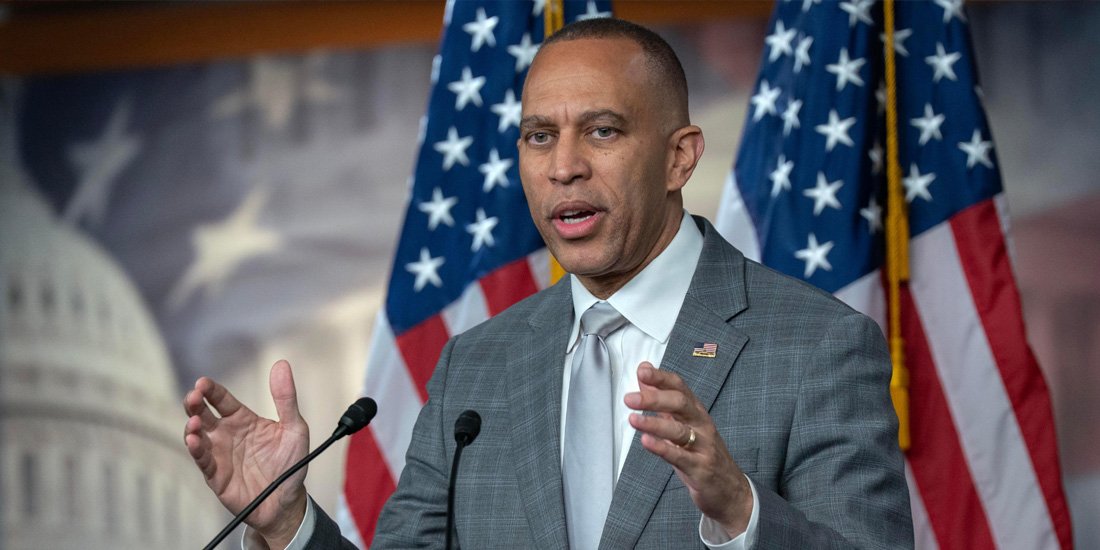
New York Congressman Hakeem Jeffries has made history after securing the Democratic Party’s nomination for Speaker of the United States House of Representatives, becoming the first Black lawmaker to be formally nominated for the position.
The 56-year-old House Minority Leader emerged as the party’s candidate following a closed-door secret-ballot vote on Wednesday, November 18, after Democrats secured victories in the November 3 midterm elections to take control of the House.
Jeffries secured 251 votes, while 11 members of the Democratic caucus voted against his nomination, giving him a decisive victory despite growing disagreements within the party over his leadership and political positions.
Ahead of the vote, Jeffries agreed to a formal ballot rather than an uncontested nomination by acclamation, allowing members to express their positions privately and providing a clearer indication of his support within the caucus.
However, some incoming Democratic lawmakers had raised concerns about his leadership, arguing that the party needed a more progressive approach to its legislative priorities.
Among his most vocal critics was Ohio Congressman-elect Don Leonard, who withheld his support pending commitments from Jeffries on several progressive demands, including ending US military assistance to Israel and reforming campaign finance regulations introduced following the Supreme Court’s Citizens United ruling.
In a video shared on social media, Leonard said he would not support Jeffries unless he committed to enforcing existing American laws, including the Leahy Law, in relation to Israel’s military operations in Gaza.
He also called for campaign finance reforms, describing the issue as central to addressing some of the country’s political challenges.
Jeffries has faced criticism from sections of the Democratic Party over his position on Israel and his relationship with pro-Israel advocacy organisations, particularly the American Israel Public Affairs Committee (AIPAC).
Responding to the criticism in an interview with The Atlantic on Tuesday, Jeffries called for significant changes in the Middle East and expressed support for a two-state solution.
Despite the opposition, his decisive victory underscored his continued influence within the Democratic caucus and strengthened his position ahead of the full House leadership election.
The nomination marks another major milestone in Jeffries’ political career. In 2023, House Democrats selected him as their candidate for Speaker following the removal of Republican Kevin McCarthy from the position.
However, Jeffries lost the subsequent House-wide election to Republican Mike Johnson, who retained the speakership.
With Democrats expected to assume control of the House in January, Jeffries is now positioned to replace Johnson when the new Congress convenes on January 3, 2027.