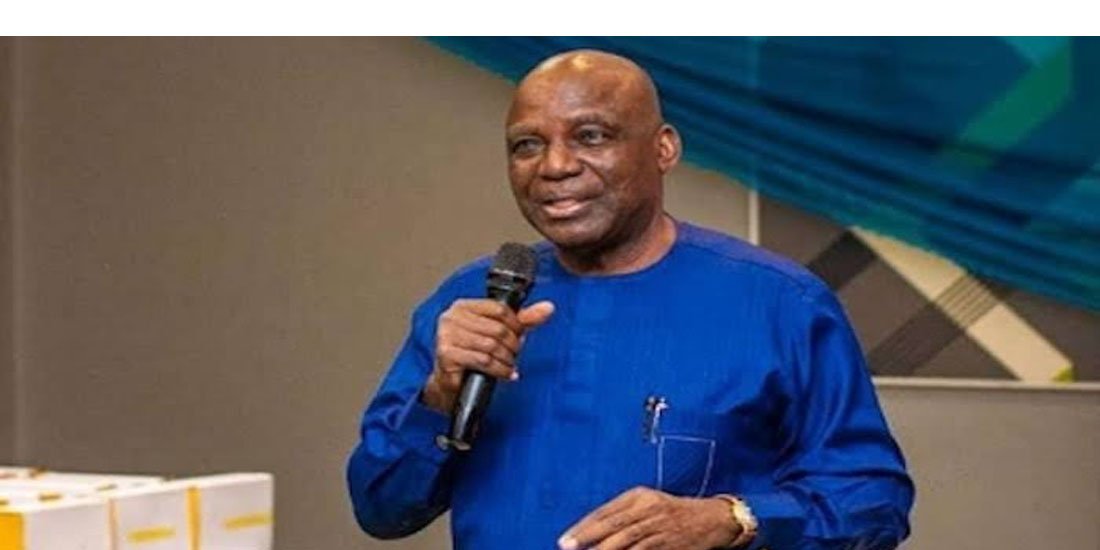
Former Minister of Power and Geometric Power founder, Professor Barth Nnaji, has attributed the continuing struggle to deliver reliable electricity since the 2013 privatization to inadequate infrastructure, weak revenue collection, liquidity shortages and unresolved problems across Nigeria’s electricity supply chain.
Speaking at a business forum in Lagos, Nnaji argued that investors entered the distribution sector expecting a pricing framework that would eventually cover the cost of supplying power. He said the failure to sustain that approach undermined the financial viability of distribution companies and discouraged investment in new infrastructure.
Recalling reforms introduced in 2012, he said electricity tariffs were differentiated to protect lower-income consumers while requiring higher-consuming households and businesses to pay more. Even after those adjustments, he maintained, tariffs remained below the actual cost of service.
Nnaji said the alternative to cost-reflective tariffs was a transparent and reliably funded subsidy. Illustrating the potential fiscal burden, he estimated that a subsidy of ₦50 per kilowatt-hour applied to a continuous 5,000 megawatts would amount to approximately ₦180 billion a month, or ₦2.16 trillion annually. He linked inadequate payments in the market to debts he placed at more than ₦7 trillion owed to generating companies.
He also pointed to foreign exchange pressures, noting that generating equipment, transmission components and distribution hardware are heavily dependent on imports. At Aba Power, a Geometric Power subsidiary, he said extending smart meters to more than 96 per cent of customers in its service area had cost approximately ₦50 billion.
Beyond tariffs, the former minister said lenders and investors needed credible payment guarantees. He cited the partial risk guarantee associated with the Azura-Edo power project and argued that uncertainty over comparable protections had delayed or discouraged other privately financed projects.
Nnaji claimed that Nigeria had made insufficient progress in adding new grid-connected generating capacity since 2015, even as population and business demand continued to rise. He called for reforms that would make distribution companies bankable, strengthen collections and give investors confidence that power supplied would be paid for.
His figures and assertions about generating capacity, market debt, investment costs and the number of new plants reflect his account and require comparison with current industry and regulatory records.