The European Union has renewed its warning about the scale of poverty in Nigeria, while outlining nearly €45 million in humanitarian assistance for 2026 and a separate €20 million support package for the country’s armed forces.
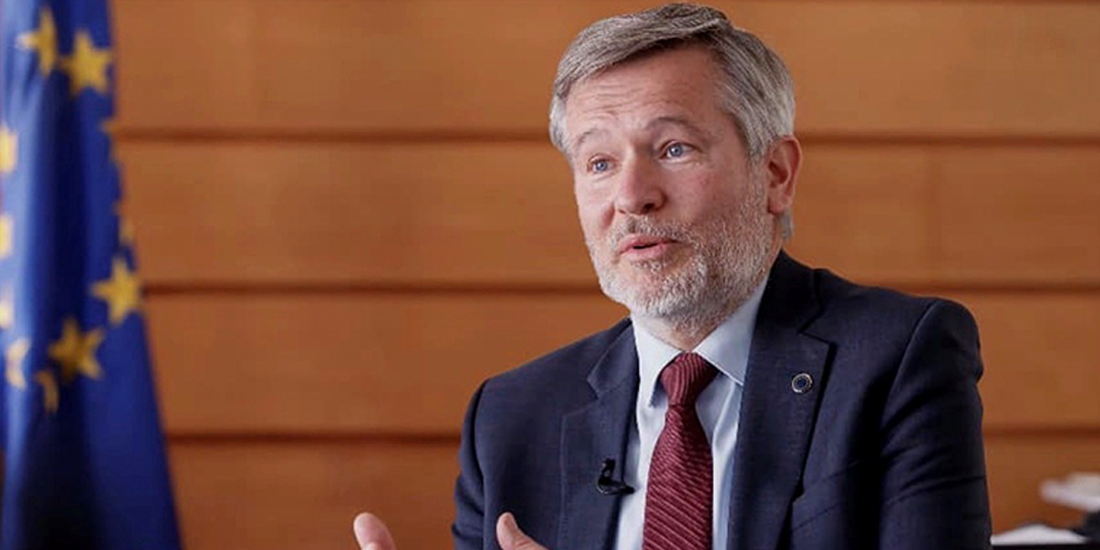
EU Ambassador to Nigeria and the Economic Community of West African States, Gautier Mignot, raised the poverty concerns in Abuja during an event marking the International Day for the Eradication of Poverty. He said Nigeria might have the world’s largest number of people living below the poverty threshold.
Mignot cited the 2022 estimate that 133 million Nigerians were experiencing multidimensional poverty and warned that economic hardship, insecurity and displacement continued to place pressure on vulnerable households. His comparison with other countries was presented as an assessment, not a verified global ranking.
The ambassador said the EU had committed almost €45 million through its humanitarian assistance mechanisms to help communities affected by conflict and other emergencies. He argued that immediate relief needed to be linked with programmes that supported long-term resilience.
He identified education, health, nutrition, income and basic living conditions as overlapping dimensions of poverty that should inform the design of social protection programmes.
According to the envoy, EU-supported initiatives were working with government agencies and development partners to strengthen social registers, improve the identification of vulnerable households and support social protection policy in Abia, Benue, Oyo, Sokoto, Kebbi, Adamawa and Borno states.
In a separate engagement with Defence Minister Christopher Musa, the EU announced €20 million in assistance under the European Peace Facility. The proposed support was intended to strengthen Nigeria’s response to terrorism and related security threats.
The ambassador said an EU technical delegation was expected in Abuja in November to work out delivery arrangements. He also invited the minister to a defence meeting in Brussels.
Musa welcomed the assistance and said security agencies were making progress in some areas, while acknowledging continuing attacks on isolated communities and kidnapping along major roads. He also referred to anticipated military equipment, including attack helicopters and unmanned aerial vehicles.
The minister highlighted the shrinking Lake Chad Basin as a factor contributing to regional instability and said efforts to deny armed groups access to island strongholds remained important to the Multinational Joint Task Force.
Taken together, the announcements link two pressing challenges: protecting communities from violence and ensuring that people affected by insecurity can rebuild livelihoods. The figures cited represent announced commitments and proposals; the supplied material did not establish how much had already been disbursed or delivered.