The African Democratic Congress has asked the Federal Government to publish a detailed reconciliation of a reported $12.4 billion discrepancy in Nigeria’s external accounts, citing figures it attributed to the World Bank’s October 2026 Nigeria Development Update.
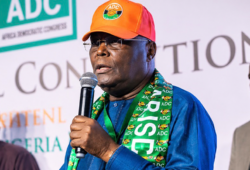
In a statement issued by National Publicity Secretary Bolaji Abdullahi, the opposition party said the reported gap raised questions about the movement and recording of foreign exchange earnings at a time when Nigerians were contending with rising living costs.
The ADC cited a current-account surplus of approximately $12 billion and net financial inflows of $6.2 billion in the first half of 2026. It argued that those figures should have translated into a stronger reserve position and asked why the accounts appeared to contain a $12.4 billion difference.
The party said the World Bank had linked part of the discrepancy to limited repatriation of oil export proceeds, including revenue connected to crude oil pledged against longer-term borrowing arrangements.
Abdullahi called for the disclosure of oil-backed loan commitments, pledged crude volumes and updated net reserve figures. The ADC also asked the government to show how increased revenues were supporting electricity, health, education and other essential services.
The party described the amount as equivalent to about ₦16.5 trillion and compared it with the reported ₦68.32 trillion federal budget for 2026. Those conversions and comparisons were made in the ADC statement and would require confirmation against the underlying report and the exchange rate used.
An external accounts gap, however, should not automatically be interpreted as stolen or missing government cash. Differences between recorded financial flows and changes in reserves can reflect timing, valuation, coverage, errors and omissions, or the treatment of transactions outside the official banking system.
The ADC nevertheless argued that the size of the reported difference justified a public explanation, particularly where oil-backed financing and the remittance of export earnings were concerned.
The supplied report did not include a response from the Presidency, the Central Bank of Nigeria or the Ministry of Finance. A full assessment would require the original World Bank tables and the government’s reconciliation before any conclusion could be drawn about the cause of the discrepancy.