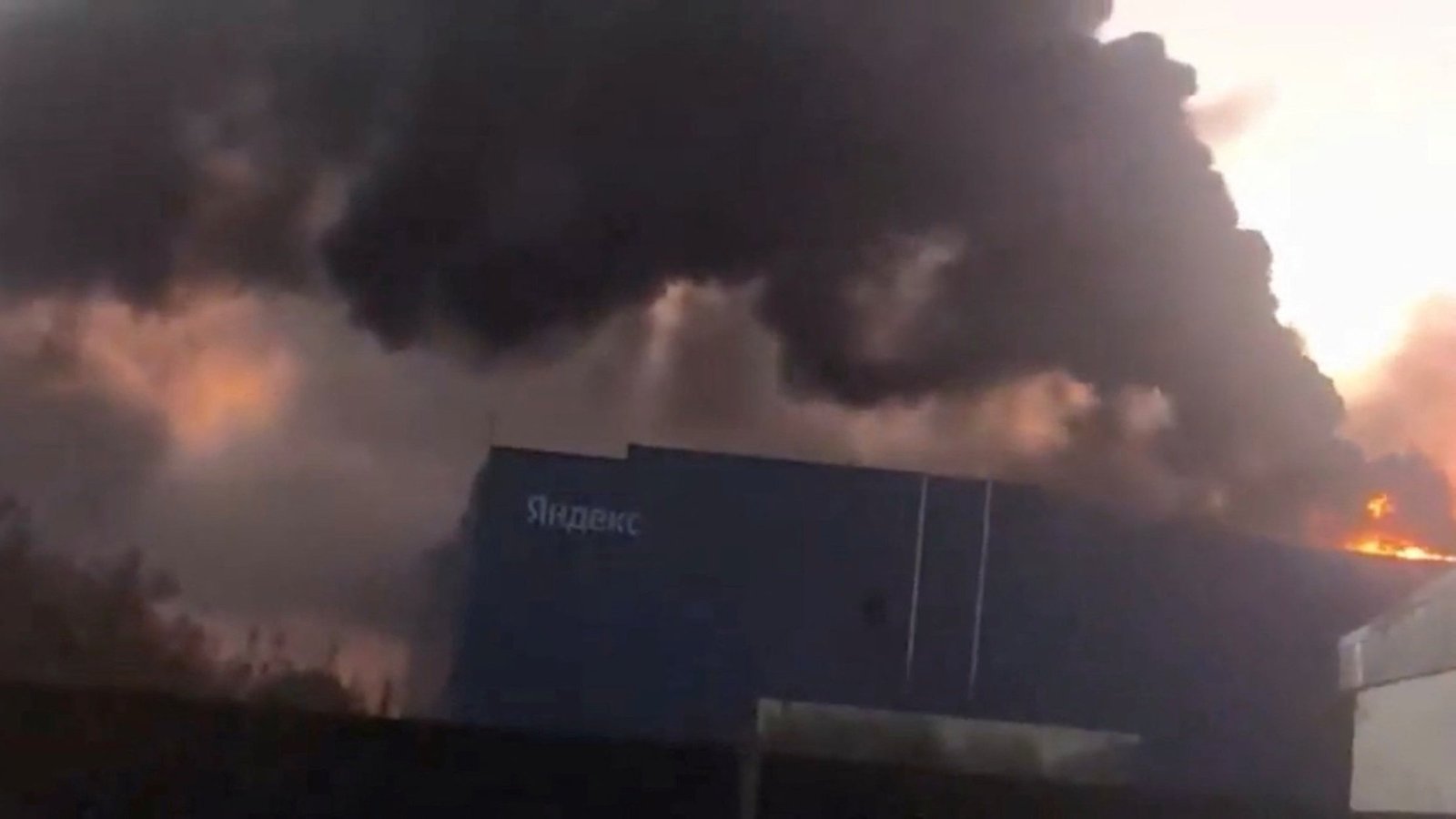
A Ukrainian drone attack on Russia’s largest data centre has intensified concerns over the security of the country’s critical digital infrastructure and its ambitions to expand artificial intelligence capabilities.
The facility, located in Balakovo and owned by state-controlled lender Sberbank, was struck on Wednesday, days after similar drone attacks targeted data centres operated by Russian technology giant Yandex.
Sberbank confirmed the incident but said its services continued operating normally despite the attack.
Alexander Vedyakhin, the bank’s First Deputy Chief Executive Officer, told reporters that although the data processing centre came under attack, there had been no disruption to operations.
The strike coincided with an unannounced Kremlin meeting chaired by President Vladimir Putin on information security issues. Sberbank CEO German Gref attended the meeting, though Russian officials said discussions were unrelated to the latest attacks.
The Balakovo facility has strategic importance to Russia’s technology sector. State media previously reported that it is expected to house the nation’s largest supercomputer, with operations scheduled to commence in 2027.
The attack follows reports of drone strikes on Yandex-operated facilities that host some of Russia’s most advanced supercomputers used for artificial intelligence development and training.
While neither Sberbank nor Yandex has confirmed whether any high-performance computing systems were damaged, analysts say the incidents have exposed vulnerabilities in infrastructure critical to Russia’s AI ambitions.
Sberbank and Yandex currently lead Russia’s domestic AI sector through projects such as GigaChat and YandexGPT, which are intended to compete with global AI platforms.
Despite significant investments, Russia continues to face challenges in closing the technological gap with AI leaders in the United States and China, particularly due to sanctions limiting access to advanced computing hardware.
German Gref recently identified shortages of modern graphics processing units (GPUs) as a major obstacle to AI development, while Vedyakhin noted that dependence on Nvidia’s CUDA software ecosystem remains another significant challenge.
Industry experts warn that replacing restricted technology could prove costly and difficult because of sanctions and supply chain limitations.
The attacks have also reignited debates about protecting critical digital infrastructure. Russian authorities are reportedly considering additional security measures, including relocating sensitive computing equipment underground.
Valery Yermakov, Deputy Chief Executive of telecommunications giant Rostelecom, recently proposed the creation of a highly secure national facility, which he described as a “Doomsday data vault,” to safeguard essential digital assets against future attacks.
The Balakovo data centre is situated near both the Balakovo nuclear power plant and the Saratov hydroelectric power station, though authorities reported no damage to either energy facility.
Ukraine has consistently described attacks on Russian infrastructure as retaliation for Russian strikes on Ukrainian targets during the ongoing conflict.