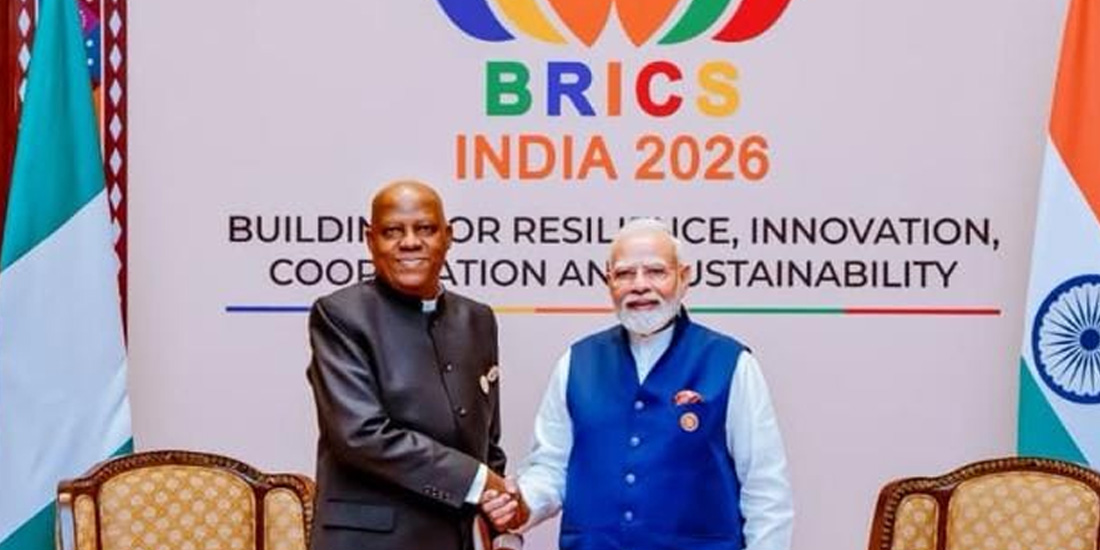
Nigeria and India have reaffirmed their commitment to strengthening bilateral trade and economic relations, with both countries identifying key sectors for expanded cooperation, including energy, defence, technology and healthcare.
The pledge was made during a meeting between Vice President Kashim Shettima and Indian Prime Minister Narendra Modi on the sidelines of the BRICS Summit in New Delhi, India.
The discussions focused on boosting trade and investment opportunities in strategic sectors such as oil and gas, renewable and clean energy, power, defence, healthcare, technology and capacity development.
Prime Minister Modi expressed appreciation to Nigeria for providing a peaceful environment for the estimated 80,000 Indians residing in the country and ensuring their safety and welfare.
He also called for the resumption of crude oil purchases from Nigeria as a way of strengthening economic ties and increasing trade volumes between the two nations.
According to Modi, bilateral trade has declined from about $14 billion annually to roughly $9 billion in recent years, underscoring the need for renewed efforts to expand commercial engagement.
Responding, Vice President Shettima assured the Indian leader that Nigeria would consider the request, while emphasizing sectors of strategic importance to the Tinubu administration.
He identified pharmaceuticals, defence, the creative industry and digital technology as priority areas where stronger partnerships with India could support Nigeria’s development objectives.
Shettima noted that President Bola Tinubu remains committed to attracting foreign investment and building strategic international partnerships to accelerate growth in these sectors.
He said the administration’s goal is to create economic opportunities, drive innovation and improve the livelihoods of millions of young Nigerians through sustainable investments and skills development.
The meeting highlighted the growing importance of Nigeria-India relations as both countries seek to deepen economic cooperation and unlock new opportunities for trade, investment and technological advancement.