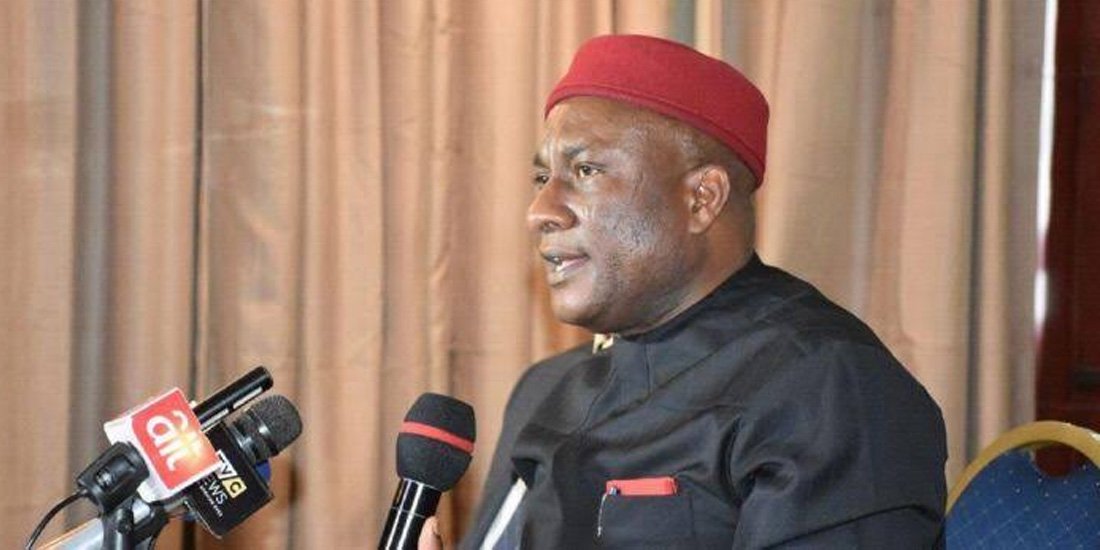
Chairman and Chief Executive Officer of Air Peace Limited, Dr. Allen Onyema, has expressed optimism that President Bola Tinubu’s intervention could help resolve key challenges confronting Nigeria’s aviation industry and improve the operating environment for domestic airlines.
Speaking at the 30th Annual Conference of the League of Airport and Aviation Correspondents (LAAC) in Lagos, Onyema said Nigeria’s reputation as one of the most difficult countries in which to establish and operate an airline could be changed if government authorities address the factors responsible for the situation.
The conference, themed “Towards a Sustainable Aviation Industry: Balancing Government Revenue Demands with Sector Growth,” brought together industry stakeholders to discuss the financial and regulatory issues affecting the sector.
Onyema, who also serves as Vice President of the Airline Operators of Nigeria (AON), identified the five per cent Ticket Sales Charge (TSC) levied on airlines as one of the major burdens affecting operators. According to him, the charge places significant financial pressure on domestic carriers and limits their ability to grow.
To address the challenge, he proposed replacing the percentage-based charge paid to the Nigeria Civil Aviation Authority (NCAA) with a fixed fee attached to each airline ticket. He argued that such a system would make revenue projections more predictable and ease operational pressures on airlines.
The Air Peace boss said he was confident President Tinubu would respond positively to the concerns of airline operators, citing the President’s previous intervention in the removal of the four per cent Free on Board (FOB) levy introduced by the Nigeria Customs Service.
According to Onyema, the levy was withdrawn within 24 hours after the Comptroller-General of Customs, Adewale Adeniyi, presented the concerns of airline operators to the Presidency.
“I’m certain any day President Bola Ahmed Tinubu sees us, if they allow us to see him, because I know he will not mind meeting with us, that will be the day a new revolution in the airline industry in this country will occur,” Onyema said.
He recalled that after raising concerns about the impact of the FOB levy, Adeniyi accompanied him to the Presidential Villa, where the issue was presented to the President. Following the briefing, Tinubu approved the waiver of the charge, a move Onyema described as evidence that the President is willing to listen to stakeholders.
Onyema said similar government action on the Ticket Sales Charge and other industry levies could significantly improve the viability of Nigerian airlines and encourage investment in the sector.
He also argued that excessive taxes and charges have contributed to the collapse of many local airlines over the years, warning that operators would continue to face difficulties expanding their businesses if the current cost structure remains unchanged.
According to him, adopting a fixed charge system would not only benefit airlines but also improve revenue collection for aviation agencies while reducing pressure on passengers.
The Air Peace chairman further revealed that following the removal of the four per cent FOB levy, he fulfilled a pledge to create 1,000 jobs for Nigerians. He said approximately 78,000 applications were received, from which 1,000 young Nigerians were eventually employed.
Onyema stressed that a balanced and predictable taxation framework is essential for building a sustainable aviation industry capable of supporting indigenous airlines, creating jobs, and contributing to national economic growth.
He urged the Federal Government to deepen engagement with airline operators in seeking solutions to the sector’s challenges, noting that a stronger domestic aviation industry would benefit the government, regulatory agencies and the travelling public.