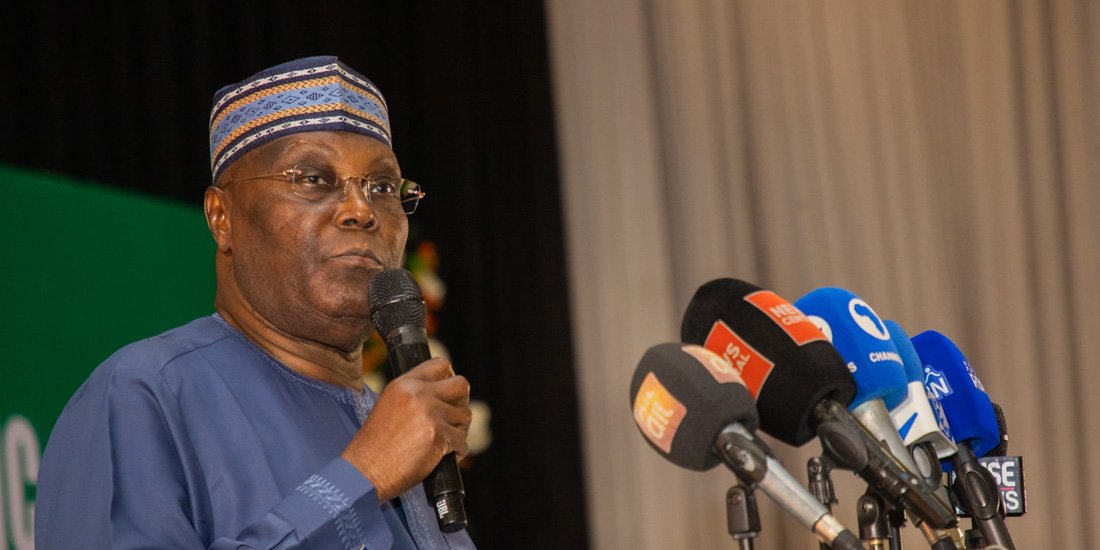
Former Vice President and ADC presidential candidate Atiku Abubakar has defended his proposed production subsidy for petrol, insisting that the policy would protect domestic refineries while reducing fuel costs for Nigerians.
In a statement by his Senior Special Assistant on Public Communication, Phrank Shaibu, Atiku accused the Tinubu administration of deliberately misrepresenting concerns raised by Dangote Refinery over government-imposed petrol prices.
He said Dangote Refinery was right to oppose any policy that would force private refineries to sell below cost, but stressed that his proposal was not designed to compel refineries to absorb losses.
According to Atiku, his plan would replace import-based subsidy with a production subsidy targeted at crude oil refined within Nigeria. Under the model, qualifying refineries would receive support to reduce the cost of crude feedstock, with the resulting savings expected to translate into lower petrol prices.
“Atiku said the subsidy follows the barrel refined in Nigeria,” arguing that the approach would support local production, create jobs and reduce dependence on imported petroleum products.
He proposed strict safeguards, including a fiscal ceiling, maximum support per barrel, independent verification of crude supplied, electronic tracking of crude intake and refined output, domestic supply obligations, transparent pricing and regular audits.
The former vice president also said refineries should not be forced to sell petrol at politically determined prices below their commercial costs.
“If government wants to provide additional relief beyond what lower crude-input costs can sustainably deliver, then government must pay for that relief openly,” he said, adding that any such intervention should be budgeted, capped and audited.
Atiku maintained that the policy would benefit domestic refiners, workers, businesses and consumers, insisting that only crude refined within Nigeria should qualify for the proposed subsidy.
He also rejected the argument that subsidising fuel production would undermine the viability of private refineries, saying the country needed more refining capacity and greater private-sector investment.
“We reject the false choice between a profitable refinery and an affordable pump price,” Atiku said, arguing that government should be able to protect both refinery profitability and consumers.
He criticised the Tinubu administration over the rising cost of fuel, transportation, food and energy, saying Nigerians should not be expected to endure worsening economic conditions indefinitely in the name of reform.
Atiku further accused the government of applying economic interventions selectively, noting that tax waivers, incentives and concessions are routinely granted to businesses.
He urged the Presidency to engage in a substantive debate over his proposal rather than attack what he described as a misrepresentation of his policy.
The former vice president said Dangote Refinery’s concerns about price controls ultimately reinforced the need for a carefully structured production subsidy rather than undermining it.
“Our proposal is clear: support domestic production, reduce the cost of crude going into Nigerian refineries, protect legitimate refinery margins and ensure that lower production costs translate into lower costs for Nigerians,” he said.
Atiku concluded that his proposed model was aimed at subsidising “Nigerian production, not foreign importation”, while promoting local refining, job creation and more affordable fuel for consumers.