US President Donald Trump is facing criticism over his proposal to pay a $5,000 “Trump dividend” to American citizens if Republicans retain control of Congress in the November midterm elections.
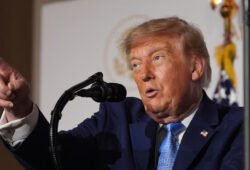
Trump announced the proposal at a Republican midterm convention in Dallas, linking the proposed payment to the party’s performance at the polls.
“If the Republicans win, you win with us and you get $5,000,” Trump said, describing the proposed payment as the “Trump dividend.”
The proposal has triggered questions from economists and some Republicans over its legality, funding and potential impact on the US deficit and inflation. Critics estimate that the programme could cost more than $1 trillion if extended to about 240 million adult citizens.
Marc Goldwein of the Committee for a Responsible Federal Budget estimated the cost at approximately $1.2 trillion for a single year, warning that financing the payments through additional borrowing could significantly widen the federal deficit and fuel inflation.
“The result would be a huge spike in the deficit, and almost certainly in the inflation rate,” Goldwein said.
He also pointed to broader fiscal pressures, including rising debt-servicing costs and persistent inflation, arguing that borrowing another trillion dollars to finance direct payments would further strain federal finances.
Republican Representative Chip Roy of Texas also questioned how the government would finance the proposal, saying he wanted to know how officials planned to fund what could amount to more than $1 trillion.
The criticism comes as US national debt has surpassed $40 trillion, intensifying scrutiny of proposals that could add significantly to government spending.
Goldwein further warned that if the proposed payments proved politically successful, future politicians could be encouraged to make increasingly expensive financial promises during election campaigns.
Democratic leaders have also accused Trump of attempting to influence voters through the proposed payments.
California Governor Gavin Newsom criticised the proposal, accusing Trump of trying to “buy your vote” with taxpayers’ money.
The Democratic National Committee similarly dismissed the proposal as another promise that might not translate into meaningful economic relief for ordinary Americans.
DNC Rapid Response Director Kendall Witmer said working families continued to face high food and fuel prices, rising healthcare costs and wages that had failed to keep pace with inflation.
Questions have also emerged over whether revenue generated from Trump’s tariff policies could finance the proposed dividend.
The Bipartisan Policy Center estimated that the US had collected about $210 billion in tariff and excise tax revenue in 2026 as of September 8. At an average collection rate of approximately $21 billion per month, it calculated that nearly five years of tariff revenue would be required to fund a $5,000 payment to every adult citizen, assuming all such revenue were dedicated to the scheme.
Financial economist Peter Schiff also criticised the proposal, warning that it could unsettle US Treasury markets if investors interpreted it as a signal that the government would resort to additional borrowing.
Within the Republican Party, however, the proposal has received some support. Vice-President JD Vance appeared to suggest that the payments could be means-tested, potentially limiting eligibility to citizens below specified income thresholds.
Republican Senator Bernie Moreno of Ohio expressed support for the plan and said he would introduce legislation to establish the proposed payment.
“I will get a bill ready so that we can get the Trump Dividend passed immediately after the November 3rd election,” Moreno wrote on X.
The proposal would require congressional approval before any payments could be made, leaving key questions over eligibility, funding and implementation unresolved.
The controversy comes as Americans prepare to vote in the November midterm elections, with control of Congress at stake and Trump’s proposed dividend emerging as both an economic and political issue for Republicans seeking to retain their congressional majority.