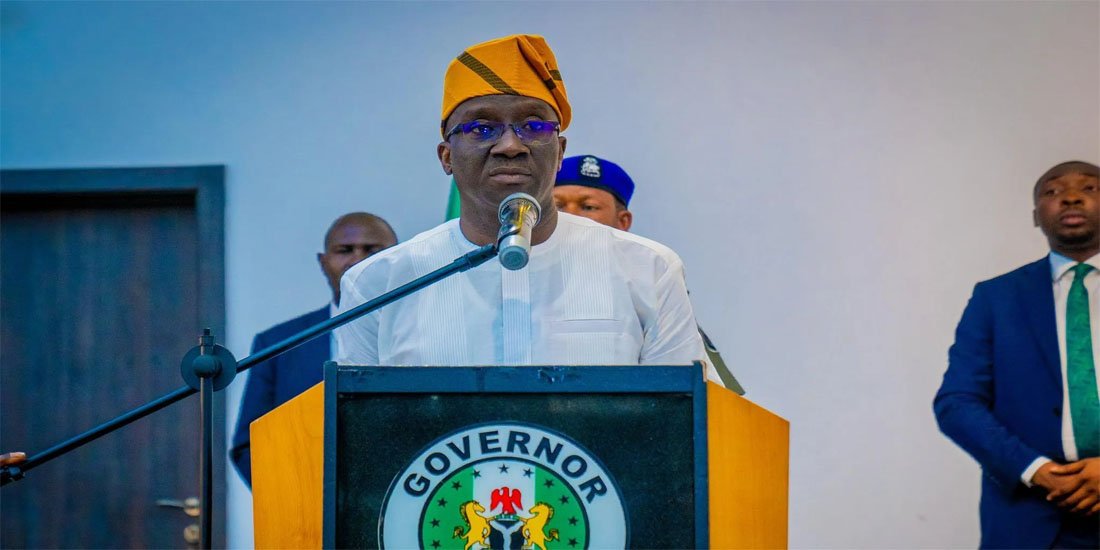
Edo State Governor, Monday Okpebholo, has accused the state House of Assembly of failing to execute constituency projects despite the release of funds allocated for such projects by the state government.
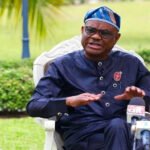
Okpebholo made the allegation while receiving traditional rulers from Esan South East Local Government Area, led by the Onojie of Ubiaja, His Royal Highness Curtis Iredia Eidinojie I, at the Government House in Benin City.
The governor also explained the rationale behind the recent amendment of the state’s Financial Autonomy Law, as well as the Assembly and Judicial Autonomy Law, saying the changes were designed to promote transparency, accountability and due process in the management of public funds.
According to Okpebholo, the amendments became necessary to prevent the people of Edo State from being short-changed in the implementation of government programmes and projects.
He alleged that no constituency project had been executed since September 2025 despite funds being allocated and released for such projects.
The governor stressed that the House of Assembly, as one of the three independent arms of government, was constitutionally responsible for appropriating funds and should not directly execute projects, a function he said belonged to the executive arm.
“We have three independent arms of government, and the House is to appropriate funds and not to carry out the functions of the executive by executing projects,” Okpebholo said.
He added: “Since last year, a lot of money was going there, but even the members were not seeing it. Since September last year, they have not carried out any constituency project, and money was going there.
“These are reasons why we cannot trust one individual with due process without checks and balances.”
Okpebholo said the amended law would ensure that constituency projects were domiciled in the appropriate ministries, departments and agencies (MDAs).
He explained that the arrangement would allow the projects to undergo proper monitoring and implementation while ensuring that public funds were deployed in accordance with due process.
The governor maintained that the reforms were intended to strengthen institutional checks and balances, improve accountability and ensure that funds appropriated for constituency projects translate into tangible development for residents across the state.