National Chairman of the All Progressives Congress, Professor Nentawe Goshwe Yilwatda, has said President Bola Tinubu’s ambition to build a $1 trillion Nigerian economy by 2030 should be viewed as a national development mission rather than merely an economic projection.
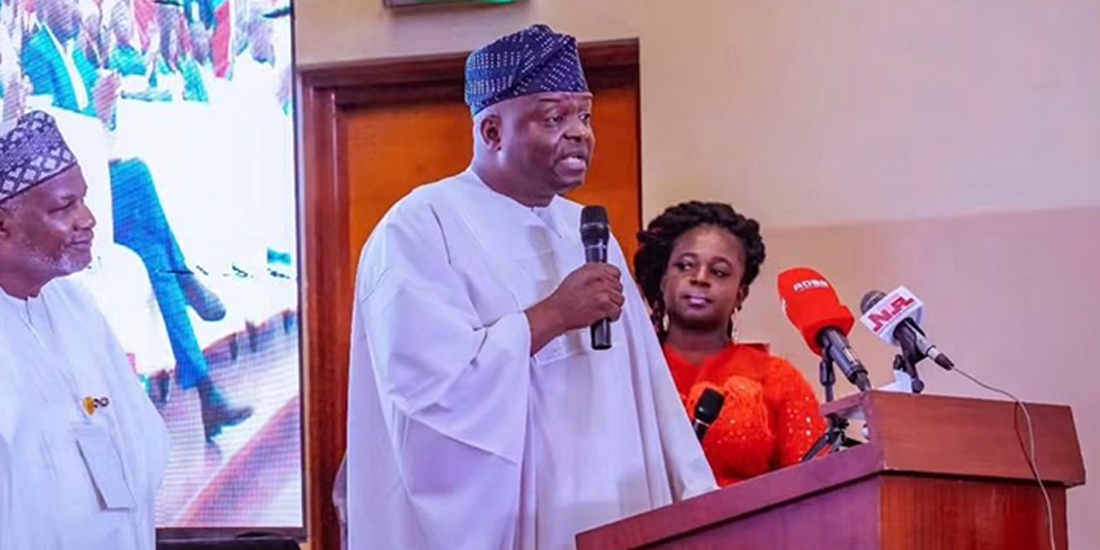
Yilwatda stated this while representing President Tinubu at the Second Edition of the Asiwaju Scorecard Series and Asiwaju Policy Roundtable, where he outlined what he described as progress recorded since the administration began implementing major economic reforms.
He said Nigeria was gradually moving from economic uncertainty toward greater stability, with the long-term objective of translating macroeconomic improvements into stronger growth, job creation and improved living standards.
According to the APC chairman, some of the gains recorded under the Tinubu administration include stronger external reserves, increased non-oil revenue, improved trade performance, sustained Gross Domestic Product growth and a significant moderation in inflation.
He, however, acknowledged that macroeconomic stability should not be regarded as an end in itself.
Yilwatda said the ultimate test of the reforms would be whether they resulted in cheaper food, more employment opportunities, affordable credit, reliable electricity and stronger purchasing power for Nigerians.
He described the President’s $1 trillion economy target as a broader national effort to make Nigeria more productive, competitive and attractive to investment.
According to him, achieving the objective would require an integrated economic infrastructure linking production centers across the country with local and international markets.
He identified strategic highways, railways, deep-sea ports, energy infrastructure and digital connectivity as critical components of that economic architecture.
Yilwatda said Nigeria’s proposed five-port maritime vision, supported by major road and railway corridors, could position the country as an important maritime, logistics and industrial gateway to West and Central Africa.
He argued that infrastructure development must go beyond constructing roads and ports and should be deliberately connected to economic production.
According to him, industrial parks, agro-processing zones, logistics hubs and manufacturing clusters could convert improved infrastructure into jobs, exports and investments.
He also highlighted the importance of the Ajaokuta-Kaduna-Kano gas pipeline in supporting industrialization and expanding access to energy for productive activities.
The APC chairman stressed that investments in young Nigerians would be equally important to the country’s long-term economic transformation.
He identified education, skills development, digital training and responsible access to credit as major areas requiring sustained attention.
Yilwatda said Nigeria’s large youthful population could become a significant economic advantage if young people were equipped with the skills and opportunities required to participate in the modern economy.
Looking ahead to the 2027 general election, the APC chairman framed the political contest as a choice between continuing the administration’s reform programme and reversing its direction.
He said the Tinubu government had laid what he described as the foundation for economic recovery and argued that the next stage should focus on translating reforms into measurable outcomes for Nigerians.
According to him, the administration’s objective is to move Nigeria from reform to results, from results to growth and from growth to widespread prosperity.
Yilwatda maintained that achieving a $1 trillion economy by 2030 would require consistent policy implementation, major infrastructure investment, stronger productive sectors and sustained participation by both government and the private sector.