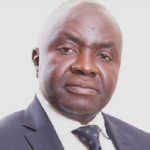
President of the Court of Appeal Monica Dongban-Mensem has warned that economic crime does more than drain public finances, arguing that stolen resources deprive citizens of opportunity and weaken confidence in institutions.
She made the remarks at the 43rd Cambridge International Symposium on Economic Crime at the University of Cambridge.
The event brought together representatives from the judiciary, law enforcement agencies, regulators and international institutions.
Dongban-Mensem said illicit wealth should not be allowed to finance additional crime, political influence or impunity.
She described economic crime as an issue of social justice because diverted public resources could otherwise support infrastructure, health, education and other public services.
The Court of Appeal President said Nigeria’s participation at the symposium reflected a commitment to stronger institutional collaboration and international cooperation.
She identified persistence, courage and coordination as essential to making the financial foundations of criminal enterprises harder to sustain.
Dongban-Mensem also called for the prompt return of recovered assets to countries from which they were stolen.
She argued that asset recovery was incomplete if confiscated funds remained abroad instead of being repatriated to victim states.
The issue has become increasingly important for countries such as Nigeria, which have pursued the return of assets linked to corruption cases across several jurisdictions.
International asset recovery can be slow because of legal proceedings, ownership disputes, evidentiary requirements and negotiations over how returned funds are used.
Dongban-Mensem said international cooperation should therefore focus not only on identifying and freezing illicit wealth but also on ensuring that recovered assets are returned through credible legal processes.
She said effective action against economic crime required institutions to reduce the ability of criminal networks to retain, move or reinvest proceeds of wrongdoing.