Nigeria’s Football Federation (NFF) has ended its 11-year partnership with sportswear giant Nike and agreed a new kit sponsorship deal with Adidas worth a guaranteed $8.5 million annually, marking what officials describe as the most lucrative arrangement of its kind in African football.
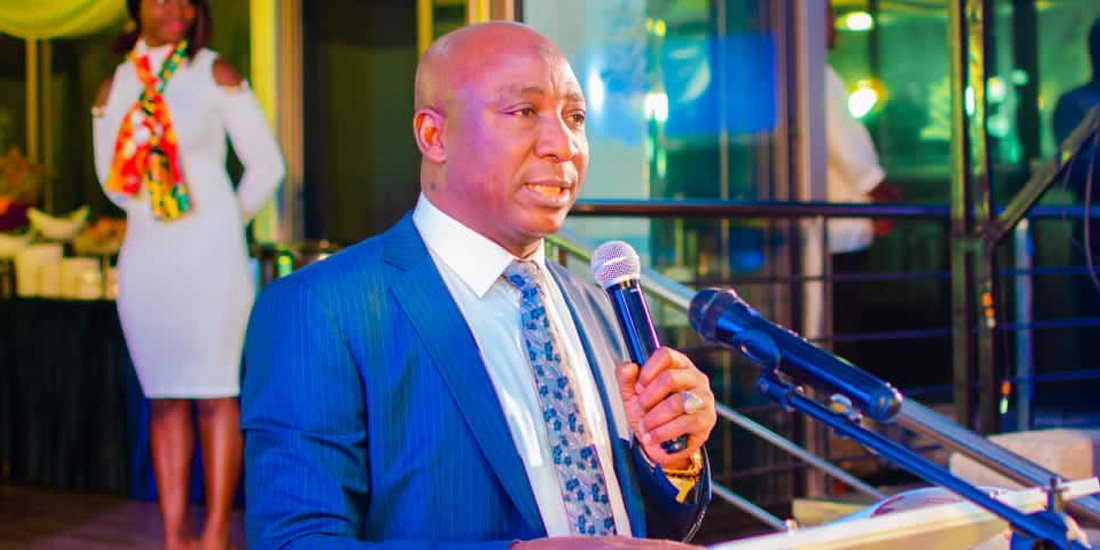
The agreement was disclosed in Abuja by former NFF President Ibrahim Gusau, who announced the details shortly after resigning alongside members of the federation’s executive committee on Thursday.
Under the terms of the deal, Adidas will provide the NFF with $4.5 million in annual cash payments and an additional $4 million worth of equipment for Nigeria’s national teams. The agreement also includes a 20 per cent royalty on merchandise sales, a provision that could significantly increase the federation’s earnings beyond the guaranteed package.
Gusau described the contract as a landmark achievement for Nigerian football.
“It is about the highest kit sponsorship in Africa. No other country in Africa has that kind of sponsorship,” he said.
According to him, the new arrangement represents a dramatic improvement on the federation’s outgoing agreement with Nike, which provided $500,000 in cash annually and approximately $1 million worth of kit supplies.
Gusau noted that the Nike contract, signed in 2015, remained unchanged throughout its duration despite inflation and the growing profile of Nigerian football.
“As president, I cannot gift someone a jersey because we met a contract that has been running for 11 years on the same terms worth $500,000 in cash and $1 million in kit supply. $500,000 in 2015 and still $500,000 in 2026. It is like you have nothing,” he said.
Nigeria first entered into a partnership with Nike in April 2015 after its previous agreement with Adidas was terminated following contractual disputes linked to the 2014 FIFA World Cup.
Gusau said the shortcomings of the Nike deal became increasingly evident in recent years, with the federation sometimes forced to procure additional kits for various national teams.
“We have to buy jerseys for the girls that travelled to Poland because $1 million worth of equipment cannot even service Super Eagles qualifiers for the World Cup and Nations Cup as well as Super Falcons,” he explained.
The NFF began discussions with Nike in 2024 in an effort to secure improved terms. However, negotiations reportedly failed after both parties were unable to reach an agreement on a revised contract.
“This was unacceptable to us as a country and we looked out and found that even countries that did not have our profile in football had better deals,” Gusau said.
Following the breakdown in talks, Nike granted the NFF permission to negotiate with rival manufacturers while retaining the right to match any competing offer.
The federation subsequently engaged Adidas and other sportswear companies before reaching an agreement with the German brand. According to Gusau, Nike was unable to equal the Adidas proposal.
“At the end of the day we contacted Adidas and other kit sponsors and we were able to secure a substantial agreement with Adidas. According to the terms of the contract, Nike has to match whatever we were offered. They were unable to match the offer from Adidas and that is why we are moving on,” he stated.
The deal, which was originally scheduled to be announced in September, has already been signed and completed, Gusau added.
The agreement marks a return to a familiar partnership between Nigerian football and Adidas. The German manufacturer supplied Nigeria’s kits during the country’s historic 1994 Africa Cup of Nations triumph and maiden FIFA World Cup appearance. Adidas also partnered with the NFF from 2004 to 2014, a period that included Nigeria’s 2013 Africa Cup of Nations victory.
Nike’s return in 2015 saw the production of several iconic jerseys, most notably the Super Eagles’ 2018 FIFA World Cup kit, which gained global recognition and became a commercial success.
Beyond the financial package, the new deal includes a significant retail strategy aimed at boosting merchandise sales. Gusau cited Adidas’ larger retail footprint in Nigeria as a key factor behind the switch.
“Nike has only one shop in Nigeria. That is in Lagos. Adidas has about 13 shops, so they are visible everywhere. They have promised that within the next two years, they will expand that to 32 shops. Within that range, NFF will have 20% royalties from their sales,” he said.
The federation expects the royalty arrangement to generate substantial additional income, creating new financial opportunities for the development of Nigerian football.
Gusau expressed confidence that the enhanced revenue stream would enable the NFF to attract top-level coaching talent for both the Super Eagles and Super Falcons.
“The issue of people clamouring for a high-profile coach for the Super Eagles or Super Falcons that we were running away from because we asked ourselves how do we pay, will be a thing of the past going forward,” he said.
“The money will be enough for NFF to hire high-profile coaches for the Super Eagles and Super Falcons.”
The Adidas agreement is expected to become one of the most valuable sponsorship deals in African football and could significantly strengthen the NFF’s financial position in the years ahead.