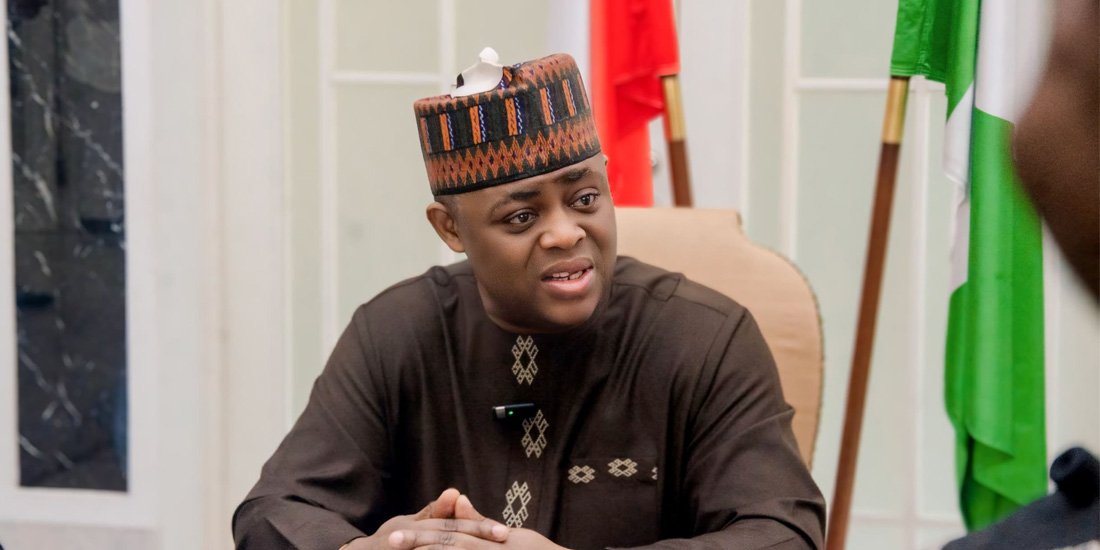
Former Minister of Aviation, Femi Fani-Kayode, has called on the Sultan of Sokoto and President Bola Ahmed Tinubu to publicly caution Islamic cleric, Sheikh Sani Yahaya Jingir, over remarks attributed to him concerning Christians and Christianity.
Fani-Kayode made the call in a statement titled “The Gospel According to Sheik Jingir,” expressing concern that the cleric’s reported comments could heighten religious tensions and undermine peaceful coexistence between Christians and Muslims in Nigeria.
The former minister said he was particularly concerned by Jingir’s reported declaration that he had no regrets over statements he allegedly made at a recent public event.
According to Fani-Kayode, the remarks had generated concern among Christians and Muslims, adding that he had spoken with some Northern Muslim governors and a prominent Muslim cleric who, he claimed, also expressed concern over the comments.
Fani-Kayode, however, commended the Sultan of Sokoto for recently appealing to Christians and Muslims to refrain from insulting one another, describing the intervention as “fatherly counsel” capable of helping to ease religious tensions.
He stressed that religious differences should not be allowed to undermine Nigeria’s unity, maintaining that Christians and Muslims are entitled to equal respect and dignity.
“I am a Nigerian Christian and I deserve to be respected for who and what I am just as every Nigerian Muslim deserves to be respected for who and what he is as well,” he said.
Fani-Kayode also rejected suggestions that his criticism of Jingir was motivated by hostility towards Islam, saying he had consistently opposed attempts by adherents of either religion to denigrate the other.
“I have equal contempt for every Christian that seeks to demean, slander and disrespect Islam as I do for every Muslim that seeks to do same to Christianity,” he said.
Addressing the controversy surrounding the 2023 Muslim-Muslim presidential ticket, Fani-Kayode said his support for the arrangement was based on his belief that competence, rather than religious affiliation, should determine political choices.
He stressed that supporting the ticket did not mean Christians had agreed to subordinate their faith to Islam, arguing that Christians and Muslims are equal citizens whose religious beliefs and choices must be respected.
“Our belief is that these two great faiths are on an equal footing and that neither is superior to the other. We believe that religion is a matter of choice and that we have an obligation as Believers to respect one another and respect those choices,” he said.
Fani-Kayode said statements suggesting that Christians were inferior or should leave the country if they were uncomfortable with a Muslim-Muslim ticket were unacceptable.
He further argued that such rhetoric could undermine the political interests of those seeking to promote the arrangement.
“Let me make this clear and I speak for millions: with those few words spoken at that public event which was televised before millions of Nigerians and members of the international community, Jingir has done more harm to the Muslim/Muslim ticket that he claims to support than anything and anyone else,” he said.
The former minister also criticised a reported attempt to associate the Maitatsine sect with Christians, arguing that violent extremist movements should not be identified with either Christianity or Islam.
He noted that victims of sectarian violence had included people from different religious backgrounds and urged Nigerians to unite against violent extremism regardless of the faith of those responsible.
Fani-Kayode called for restraint in religious discourse, warning that inflammatory statements by influential religious figures could undermine Nigeria’s fragile peace.
“We must maintain the delicate balance of love, peaceful co-existence and respectful rhetoric between us all,” he said.
He subsequently appealed directly to the Sultan of Sokoto and President Tinubu to intervene.
“I call on His Eminence the Sultan of Sokoto and the President of our beloved country, President Bola Ahmed Tinubu, to publicly caution him before it is too late,” he said.
Fani-Kayode stressed that the issue should not be reduced to partisan politics, arguing that the preservation of peace and national unity should take precedence over political considerations.
“This is not about politics or party: it is about humanity and the preservation of the peace and unity of our beloved country,” he said.
He also cited comments attributed to former Emir of Gwandu, Alhaji Mustapha Jokolo, who he said had criticised Jingir’s reported remarks.
According to Fani-Kayode, Jokolo argued that Islamic teachings support peaceful coexistence with Christians and adherents of other faiths. He also reportedly referenced historical accounts concerning the Prophet Muhammad’s interactions with Christians and emphasised the need to respect Christian worship and property.
Fani-Kayode said Jokolo’s intervention demonstrated that opposition to religious intolerance was not limited to Christians.
“Real Muslims, like their Christian counterparts, are filled with the light of courage, faith, love and knowledge and not the darkness of fear, despair, hate and ignorance,” he said.
Reiterating his call for national unity, Fani-Kayode urged Nigerians to focus on their shared humanity rather than religious differences.
He said his guiding message over the past six years had been “We Are One”, urging Nigerians to remain united in the pursuit of justice, decency and peaceful coexistence.
“We want peace and peaceful co-existence in Nigeria and we must do all we can to foster, encourage and preserve it,” he said.
Fani-Kayode maintained that Nigerians should be free to practise their respective religions without intimidation or denigration, insisting that neither political ambition nor public office should compel anyone to compromise their religious convictions.
He concluded by urging President Tinubu, the Sultan and other national leaders to take proactive measures to prevent inflammatory religious rhetoric from escalating into a wider crisis, warning that Nigeria could ill afford further division along religious or ethnic lines.