West African petroleum regulators and industry stakeholders have stepped up efforts to create an integrated refined products market capable of supporting credible regional price benchmarks and positioning the subregion as a major fuel trading hub.
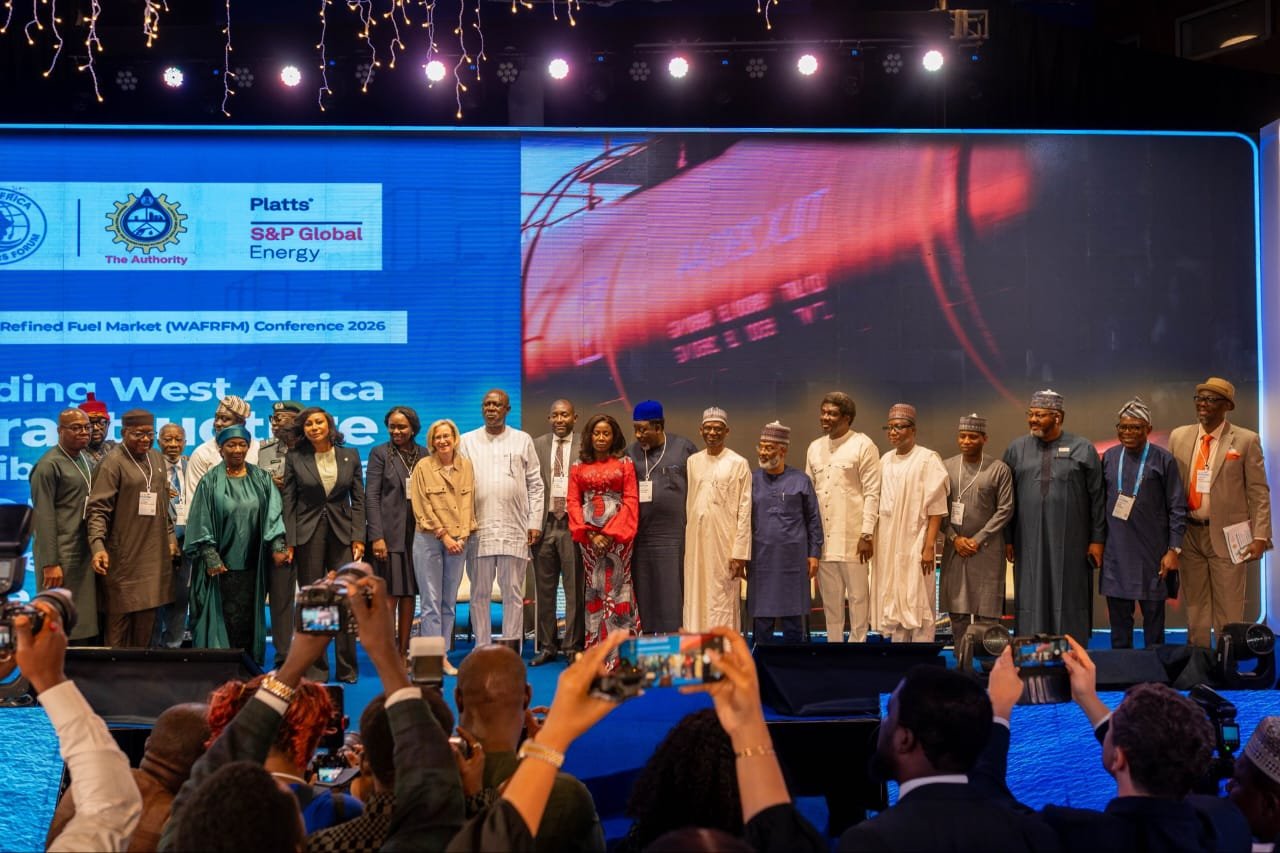
The initiative dominated discussions at the 2026 West African Refined Fuel Market Conference, which brought together regulators, governments, refiners, traders, investors, financial institutions and infrastructure operators.
Participants said increased refining capacity alone would not be enough to create a functioning regional market. They identified storage, pipelines, ports, rail systems, road networks, marine logistics, financing, digital trading platforms and reliable market data as essential foundations.
Nigerian Midstream and Downstream Petroleum Regulatory Authority Chief Executive Umar Rabiu said progress had been made since the inaugural conference in 2025, particularly in regulatory cooperation and efforts to develop regional pricing references.
He warned, however, that a reference price would have little value without sufficient transactions, infrastructure, liquidity and confidence in the underlying market data.
Rabiu called for investment in product transportation, storage terminals, refinery expansion, pipelines, digital exchanges and integrated logistics corridors.
He also stressed that investors would commit capital only where regulation was predictable, risks were understood and commercial returns were sustainable.
Minister of State for Petroleum Resources Heineken Lokpobiri said Nigeria’s deregulation of the downstream sector had encouraged fresh investment and created new opportunities for regional integration.
He argued that Nigeria should use its expanding refining capacity to serve a wider West African market rather than continue exporting raw materials and importing more expensive finished products.
Nigerian Upstream Petroleum Regulatory Commission Chief Executive Oritsemeyiwa Eyesan said stronger crude production, increased refining capacity and improving gas supply had created a favourable environment for deeper regional cooperation.
She called for harmonised regulation and infrastructure capable of linking national markets.
Presidential Energy Adviser Olu Verheijen said refining capacity by itself could not guarantee energy security. She said products must be financed, stored, transported and distributed efficiently before they could create full economic value.
S and P Global Energy representatives said credible regional benchmarks would ultimately depend on market participants generating enough commercial activity to create real liquidity.
The Central Bank of Nigeria also said a functioning regional products market could help mobilise long term finance for refining, storage and transport while supporting foreign exchange efficiency and intra African trade.