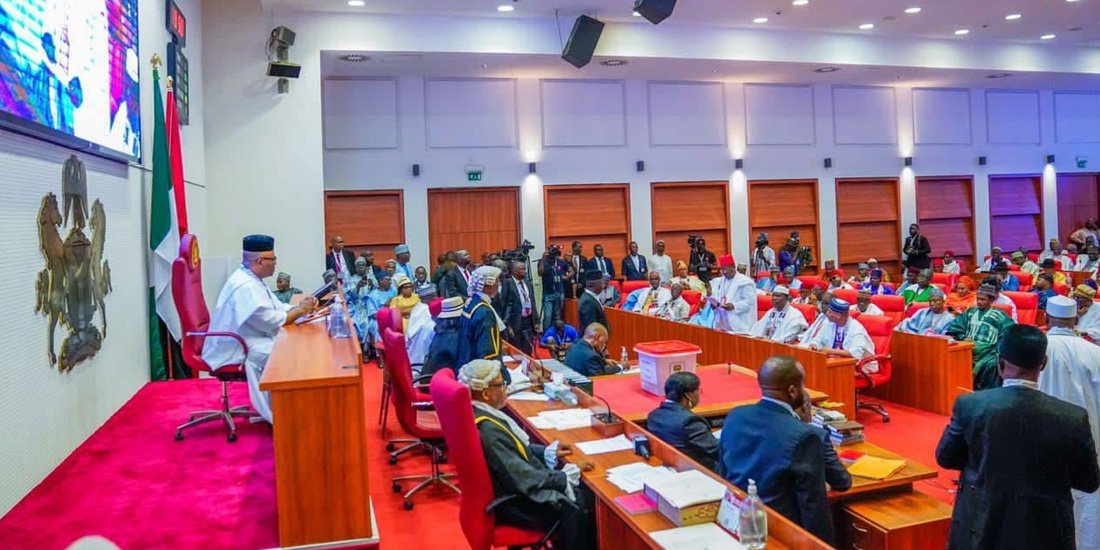
The National Assembly’s move to ban preaching, hawking and certain other activities in public buses has sparked concerns among some Nigerians, particularly within the Christian community.
The argument behind the proposed restriction is that activities such as preaching could distract drivers and potentially contribute to road accidents.
However, Senior Pastor of House of Revival International Mission, Biodun Ajibola, has described the decision as “deeply uninformed, ill-conceived and misplaced.”
According to him, if preaching in public buses has been established as a significant cause of road accidents, the authorities should provide evidence to support the claim.
“How many accidents across Nigeria have been caused by someone preaching in a bus?” he asked.
Ajibola argued that if distraction is the primary concern, several other activities routinely taking place in Lagos public transportation should also come under scrutiny.
He noted that drivers sometimes play music, particularly Fuji music, at extremely high volumes, while drivers, conductors and passengers frequently engage in loud arguments and conversations.
“Passengers fight among themselves. Conductors argue with drivers. People make phone calls, engage in loud conversations, and carry out all kinds of activities inside the bus,” he said.
He therefore questioned whether there was sufficient evidence to establish that preaching constitutes a serious road safety threat.
The pastor said Nigeria is currently confronted with more pressing challenges, including insecurity, banditry, poverty, unemployment, weak institutions, poor education and healthcare challenges.
“These are the issues that should receive serious attention. Not bus preaching,” he stated.
‘Bus evangelism has reached thousands’
Ajibola expressed particular concern over the proposed restriction because, according to him, bus evangelism has historically played an important role in spreading Christianity in Nigeria.
He recalled that as a young teenager at Lagos Baptist Academy, Obanikoro, Lagos, he made it a personal responsibility to preach in public buses almost every week.
“Some of my earliest ministerial experiences happened inside public buses,” he said.
He recalled preaching to people from different religious, social and cultural backgrounds, including Muslims and people living with disabilities.
“I have seen people give their lives to Christ. I have seen people cry because a word spoken in a bus addressed a pain they were carrying. I have prayed for healing in buses, and I have seen people receive healing.
“All of this happened while I was still a secondary school student. That is the power of bus evangelism,” he said.
According to him, many young Christians today may not fully appreciate the historical role bus preaching has played in Nigerian evangelism.
He said ordinary believers, young people and evangelists had used public transportation as an avenue to reach thousands of Nigerians with the Christian message.
‘Where is the voice of the Christian community?’
Ajibola also questioned the response of major Christian organisations to the proposed restriction.
“To the Christian community, I ask: where is our voice?” he said.
He said he expected organisations such as the Pentecostal Fellowship of Nigeria (PFN) and the Christian Association of Nigeria (CAN) to publicly engage the issue and make their positions known.
“I would have expected the Christian community to speak loudly. I would have expected the PFN and CAN to make official statements and strongly engage this matter,” he said.
He added that the Church should not remain silent on issues that affect the expression and spread of the Christian faith.
‘N50,000 fine should not silence believers’
The pastor also urged Christians not to allow the fear of sanctions to prevent them from sharing their faith.
“To the believer, I say this: If a N50,000 fine is enough to stop you from preaching the gospel, then perhaps you need to examine the strength of your conviction,” he said.
However, he urged Christians to remain peaceful, wise and respectful of lawful authority while remaining committed to evangelism.
“We must be courageous enough to face penalties. We must be prepared to face opposition. We must be prepared for persecution,” he said.
Ajibola further called on Christians to support believers who might face arrest, fines or legal challenges while engaging in evangelism.
“We must be prepared to stand with believers who may be arrested for preaching the gospel. We must be prepared to support them. We must be prepared to pay fines and provide legal assistance where necessary, because the gospel must not die.
“Bus evangelism must not die. Street evangelism must not die. Many people have encountered Jesus through these avenues. Many lives have been changed. Many souls have been saved,” he added.
‘Focus on Nigeria’s bigger problems’
While calling on the Church to remain committed to the Great Commission, Ajibola said Christians must also conduct themselves peacefully and responsibly.
“The church must be wise. The church must be peaceful. The church must respect lawful authority. But the church must also remain courageous and committed to the Great Commission,” he said.
He maintained that Nigeria has more urgent challenges requiring the attention of lawmakers and policymakers.
“Nigeria has much bigger problems to solve. Let us focus on insecurity. Let us focus on poverty. Let us focus on unemployment. Let us focus on education, healthcare, sports, and the welfare of the people.
“But let us not make bus preaching the major problem of Nigeria,” he said.
Ajibola reaffirmed his commitment to Christian evangelism and revival.
“The gospel must continue to go forth. I remain a preacher of the gospel. I remain committed to revival. I remain committed to evangelism,” he said.
Biodun Ajibola, Senior Pastor, House of Revival International Mission, writes from Lagos.