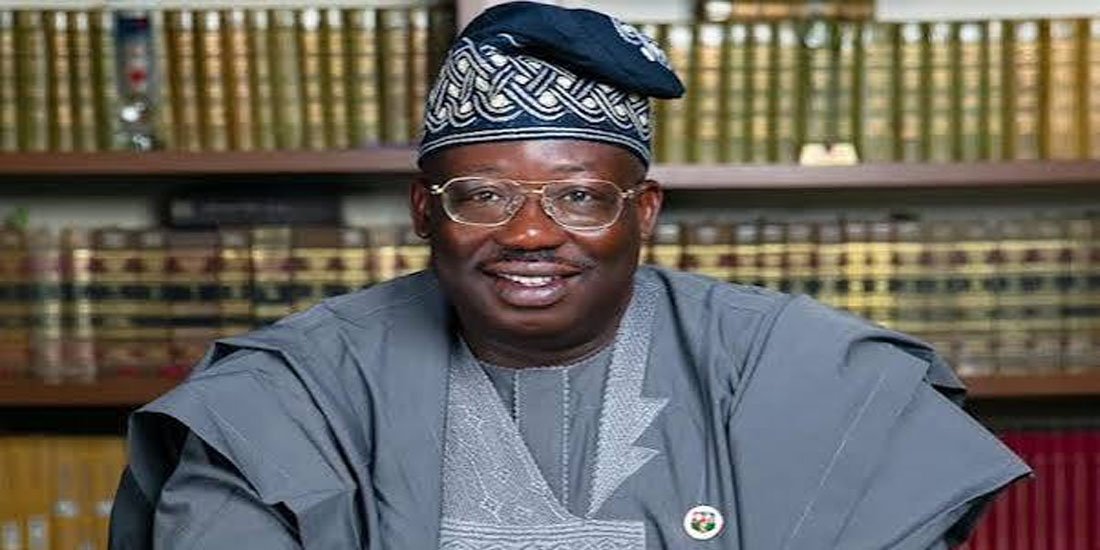
Chairman of the Alliance for Economic Research and Ethics, Dele Oye, has urged the federal government to adopt a more disciplined fiscal management strategy modelled after Anambra State’s zero borrowing policy, warning that the country’s mounting debt profile is becoming a major threat to sustainable economic development.
In a policy statement titled “A Tale of Two Ledgers: Anambra’s Zero Borrowing Masterclass versus Nigeria’s Debt Spiral,” Oye contrasted Anambra’s conservative fiscal approach under Governor Chukwuma Soludo with what he described as the federal government’s growing dependence on debt financing, presenting the two as sharply different models of public finance, one anchored on revenue generation and prudent spending, the other driven by persistent borrowing to fund government operations.
Separately, Oye unveiled an eight point policy framework aimed at converting economic reforms into broad based prosperity, arguing that the country’s current growth trajectory will remain unsustainable unless it directly improves the lives of ordinary citizens. He said rising government revenue and improving macroeconomic indicators would count for little if households, farmers and productive businesses continue struggling with soaring prices, expensive credit, insecurity and rising production costs.
Oye said Soludo, speaking at the 2026 Delta State Economic Summit, effectively demonstrated how fiscal discipline can deliver development without accumulating debt. He recalled that when Soludo took office in March 2022, he inherited a debt burden of about 109 billion naira, limited cash reserves and an economy under severe macroeconomic pressure from fuel subsidy removal, exchange rate unification and rising inflation, yet the governor committed to a zero borrowing policy that has remained intact more than three years into his administration.
According to Oye, Anambra’s budgeting strategy has consistently prioritized long term investment over recurrent spending, with about 77 per cent of the state’s 2024 and 2025 budgets devoted to capital projects and only 23 per cent to recurrent expenditure. This pattern, the policy paper noted, enabled the state to finance more than 540 kilometers of road infrastructure alongside investments in healthcare and education without taking on new debt. Oye attributed the achievement largely to improvements in internally generated revenue, which he said rose 62 per cent between 2019 and 2024 to approximately 42 billion naira, representing a sevenfold increase over sixteen years, driven by stronger tax administration and efforts to close revenue leakages that earned Anambra the highest fiscal performance rating among Nigeria’s 36 states in BudgIT’s 2025 State of States Report, with a score of 72.6 per cent.
By contrast, Oye said the federal government continues expanding its debt stock at an unsustainable pace. Citing figures from the Debt Management Office, the group said Nigeria’s total public debt rose to about 159.28 trillion naira by the end of 2025, one of the fastest increases in recent years, with domestic debt accounting for about 84.85 trillion naira and external debt standing at approximately 74.43 trillion naira. Oye warned that excessive domestic borrowing is reducing credit available to businesses while rising external obligations expose the country to exchange rate risk.
He expressed particular concern over debt servicing obligations, noting that the International Monetary Fund projects Nigeria will spend 53.7 per cent of federal revenue on debt servicing in 2026, more than double the World Bank’s recommended threshold of 22.5 per cent, leaving far fewer resources for education, healthcare, infrastructure and security. The organization also criticized federal plans to finance the 2026 fiscal deficit through fresh borrowing, describing continued debt accumulation as a sign of deeper structural weakness rather than a sustainable financing strategy. Oye said the key difference between the two fiscal models liesin their philosophy toward borrowing, with Soludo treating debt as an exceptional measure reserved for concessionary loans tied to productive, revenue generating investments, while the federal government appears to have institutionalized borrowing as a routine budget financing mechanism. The paper highlighted what it called the subsidy removal paradox, noting that although fuel subsidy removal was intended to create fiscal space and ease pressure on public finances, the expected reduction in borrowing has not materialized, with debt continuing to rise despite savings generated from the reform. Oye argued that Anambra’s experience shows subsidy reform alone cannot restore fiscal sustainability unless paired with firm borrowing limits, stronger domestic revenue mobilization and tighter expenditure controls, urging the federal government to shift from a debt driven growth model to a revenue driven fiscal framework by broadening the non oil tax base, cutting the cost of governance, improving tax efficiency and imposing stricter limits on debt accumulation. “Anambra has shown that development without crippling debt is not merely an economic theory but a practical reality,” he said, describing the country as standing at a critical fiscal crossroads that requires choosing between deepening debt dependence or embracing reforms capable of delivering stronger public finances.
In his broader recommendations, Oye argued that genuine economic success should no longer be measured solely by fiscal balances or headline growth figures, but by whether Nigerians can secure decent jobs, run profitable businesses, raise household incomes and escape poverty. He cited National Bureau of Statistics estimates that about 67 per cent of Nigerians, roughly 133 million people, were multidimensionally poor in 2022 as a stark reminder that reforms must ultimately translate into improved living standards, and said government must reposition itself as a credible referee, enabler and protector of productive enterprise rather than attempting to substitute for private sector activity.
Central to his proposal is closer coordination between fiscal, monetary and exchange rate policy to restore price stability, reduce inflation and lower borrowing costs that have constrained businesses across sectors, alongside greater discipline in public borrowing to prevent government from crowding out viable private enterprises from affordable credit. The framework recommends expanding financing for productive sectors through credit guarantees, risk sharing mechanisms, leasing arrangements, invoice financing and cash flow based lending targeted at micro, small and medium sized enterprises, farmers, manufacturers and exporters, arguing that faster, more transparent access to finance would significantly improve productive capacity and stimulate employment.
To improve the business environment, Oye proposed a single, predictable regulatory framework that harmonizes federal and state rules and establishes a unified digital portal where businesses can access licensing requirements, fees, timelines and dispute resolution processes, replacing obsolete regulations with modern, investment friendly rules that reduce compliance costs. Rather than relying on opaque direct distribution programmes, he recommended shifting toward market driven interventions through vouchers, tax credits, competitive procurement, open contracting and time bound guarantees that allow private businesses to compete fairly. “The role of government should be to establish fair rules, unite the country, provide essential infrastructure and remain accountable for measurable outcomes, while productive Nigerians create businesses, invest, employ people and compete,” he said.
The second phase of his proposal focused on strengthening the foundations of inclusive growth through improved security, infrastructure and human capital development. Oye described security as an essential economic asset, calling for intelligence led protection of farms, highways, industrial clusters, markets and ports to reduce production disruptions and boost investor confidence, alongside prioritizing reliable electricity for productive clusters, rehabilitating freight corridors, reducing port delays and preserving a transparent, rules based foreign exchange market. The framework also recommended expanding targeted social protection for vulnerable households while increasing investment in nutrition, primary healthcare, quality education, apprenticeships and demand driven skills development, arguing that no reform agenda can be considered inclusive if families lack the resilience to withstand the temporary hardships of economic transition.
To strengthen accountability, Oye proposed attaching measurable targets on employment, income growth, exports, local value addition and poverty reduction to every government intervention, backed by quarterly public scorecards, independent evaluations and sunset clauses for underperforming programmes. “The true test of reform is not simply whether government balances its books. It is whether more Nigerians can establish businesses, cultivate farms, operate factories, earn dignified incomes and lift their families above poverty,” he said, urging government to regularly publish data on decent jobs created, real household incomes, multidimensional poverty, small business survival rates, access to credit, food security, electricity reliability, export competitiveness and the time and cost of doing business, arguing these indicators, rather than headline growth figures alone, would offer a truer measure of whether Nigeria’s reforms are delivering a genuine social contract between government and citizens.