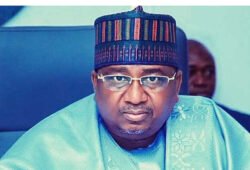
Vice President Kashim Shettima has endorsed what he described as a healthy cycle of competition among Nigeria’s 36 states, saying it is critical to achieving economic growth, prosperity, job creation and improved living standards across the country.
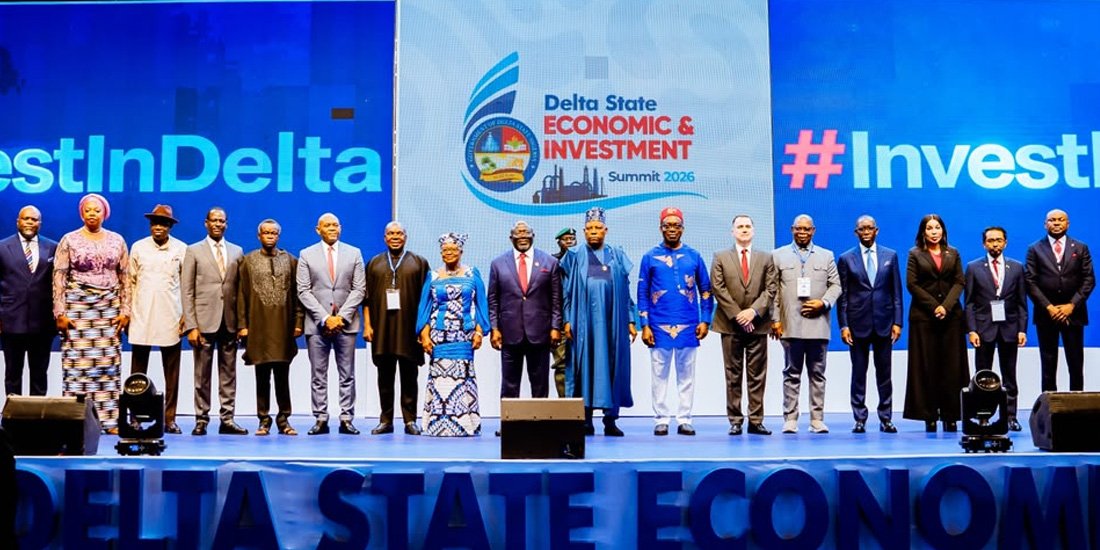
Speaking on Monday at the Delta State Economic and Investment Summit 2026 in Asaba, the Delta State capital, Shettima said the increasing quality and ambition of investment summits being organised by state governments reflect a growing economic awakening at the subnational level.
According to the Vice President, Nigeria’s economic future depends not only on policies formulated at the federal level but also on the ability of states to leverage their unique advantages and drive development within their jurisdictions.
“The cycle of competition among our states is now evident in the quality and ambition of the investment summits convened across the federation. Every state possesses immense promise, but each must define a trajectory unique to its history, geography, people and comparative advantage,” he said.
Describing the emerging rivalry as positive, Shettima said it is a contest in which the ultimate rewards are employment, economic prosperity and human dignity.
“This is the race we must welcome: a race that proclaims growth rather than conflict, a race in which the prize is employment, prosperity and human dignity, a race for the future,” he added.
Tinubu’s Reforms Driving State-Level Initiatives
The Vice President attributed the growing number of state economic summits to the economic reforms introduced by President Bola Tinubu’s administration, which he said have led to increased allocations to state governments.
According to him, states are now better positioned financially to pursue development programmes and attract investments.
“This season of summits owes itself to two developments. The first is the stronger foundation laid by the economic reset of President Bola Ahmed Tinubu, which has placed far larger allocations in the hands of state governments to pursue their internal development agendas,” Shettima said.
He added that state governments are increasingly seeking practical ways to deploy available resources for economic growth rather than merely accumulating funds without clear development strategies.
The Vice President also stressed the need for states to move beyond identifying economic assets and opportunities to implementing projects that generate jobs and sustainable growth.
Nigeria’s Economy on the Right Track
Shettima maintained that Nigeria’s economy is making progress, citing recent assessments by international rating agencies, including Fitch Ratings, Moody’s and S&P Global, as evidence that the country is moving in the right direction.
He noted that each state is contributing to the nation’s economic aspirations through investments in sectors such as agriculture, technology, energy, tourism, mining and maritime development.
“In that healthy rivalry, Nigeria discovers the full measure of her wealth,” he said.
Commends Delta Governor
The Vice President praised Delta State Governor Sheriff Oborevwori for organising the summit and positioning the state for economic diversification beyond its dependence on oil revenues.
According to him, Delta’s greatest strength lies not in its oil resources but in its determination to build a sustainable economy through innovation, enterprise and strategic investments.
“A government that prepares for life beyond oil understands that resources may finance progress, but only ideas, institutions and enterprise can sustain it,” Shettima stated.
He also assured investors and development partners attending the summit that the Federal Government remains committed to supporting credible investments and removing barriers to business growth.
Oborevwori Seeks Investment Opportunities
In his remarks, Governor Oborevwori said the summit was inspired by investment opportunities identified during official trips to China and Brazil with members of his cabinet.
He explained that the gathering was designed to connect investors with opportunities across various sectors of the Delta economy and unlock the state’s comparative advantages.
The governor thanked the Vice President for attending the event and commended his contributions to national development.
Soludo, Okonjo-Iweala, Elumelu Highlight Growth Opportunities
Also speaking at the summit, Anambra State Governor Charles Soludo expressed optimism about Nigeria’s economic prospects, arguing that recent reforms have helped stabilise the economy.
However, he stressed the need for increased foreign investment and stronger stakeholder collaboration, noting that tangible investment agreements remain the most important outcomes of economic summits.
Director-General of the World Trade Organization (WTO), Dr. Ngozi Okonjo-Iweala, commended Delta State’s developmental efforts and urged authorities to embrace fiscal discipline, improve project execution and strengthen maintenance culture.
She said current global economic shifts present significant opportunities for Delta State, Nigeria and the broader African continent.
Meanwhile, the Minister of Finance and Coordinating Minister of the Economy, Taiwo Oyedele, stated that states and local governments are receiving unprecedented revenues due to reforms under the Tinubu administration’s Renewed Hope Agenda.
He urged state governments and the private sector to take advantage of the improved macroeconomic environment to drive shared prosperity.
Founder and Chairman of Heirs Holdings, Tony Elumelu, described Delta State as increasingly attractive to investors and pledged partnership with the state government to improve electricity distribution and affordability.
Guest Speaker Prof. P.L.O. Lumumba called on African leaders and businesses to maximise the continent’s vast natural resources and pursue mutually beneficial partnerships with global powers.
He urged African countries to move from dependency-driven engagements to strategic partnerships capable of delivering sustainable development and long-term economic transformation.