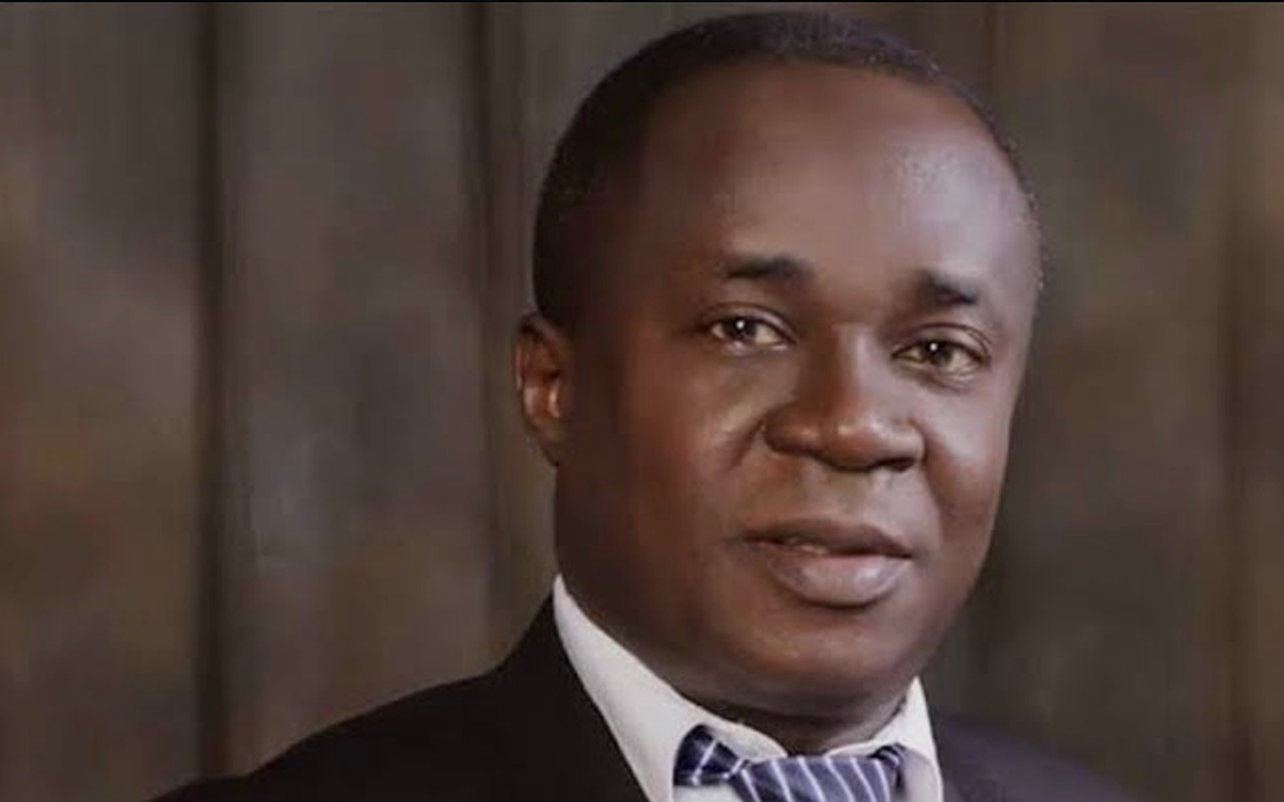
Financial economist and Capital Market Academics of Nigeria President Uche Uwaleke has urged the National Assembly to comprehensively review the statutory funding framework governing the Nigerian Revenue Service, Nigeria Customs Service and the Nigerian Upstream Petroleum Regulatory Commission, arguing that Nigeria operates one of the most generous cost of collection regimes among developing economies.
In an article, Uwaleke noted that while global discourse on Nigeria’s fiscal challenges has focused on expanding the tax base, far less attention has gone to how much government spends to collect its own revenue, even as the three agencies retain between 4 and 7 percent of what they collect to fund their operations, compared to an international average of about 1 percent among developing and emerging economies. He cited data showing the three agencies retained a combined 78.3 billion naira in cost of collection in a single month in 2024 alone, an amount that exceeded the entire monthly federal allocation received by four of Nigeria’s six geopolitical zones that same month.
He proposed halving the current retention ratios, from 4 percent to 2 percent for the revenue service and the upstream regulator, and from 7 percent to 3.5 percent for customs, arguing this would still leave Nigeria above global averages while freeing up substantial additional revenue for the Federation Account. He noted that Britain’s tax authority operates at a cost of collection ratio of just 0.51 percent, while the OECD average is about 0.64 percent, and even Kenya, whose economy shares structural similarities with Nigeria’s, typically operates within a range of 1 to 2 percent.
Uwaleke stressed that the goal is not to weaken these institutions but to ensure their funding reflects actual operational needs rather than automatically scaling with collections regardless of efficiency gains, particularly given Nigeria’s heavy investment in digital tax and customs systems meant to lower administrative costs over time. He said the National Assembly, as custodian of the country’s appropriation powers, is uniquely positioned to ensure these agencies are held to the same standards of budget scrutiny as other government institutions.