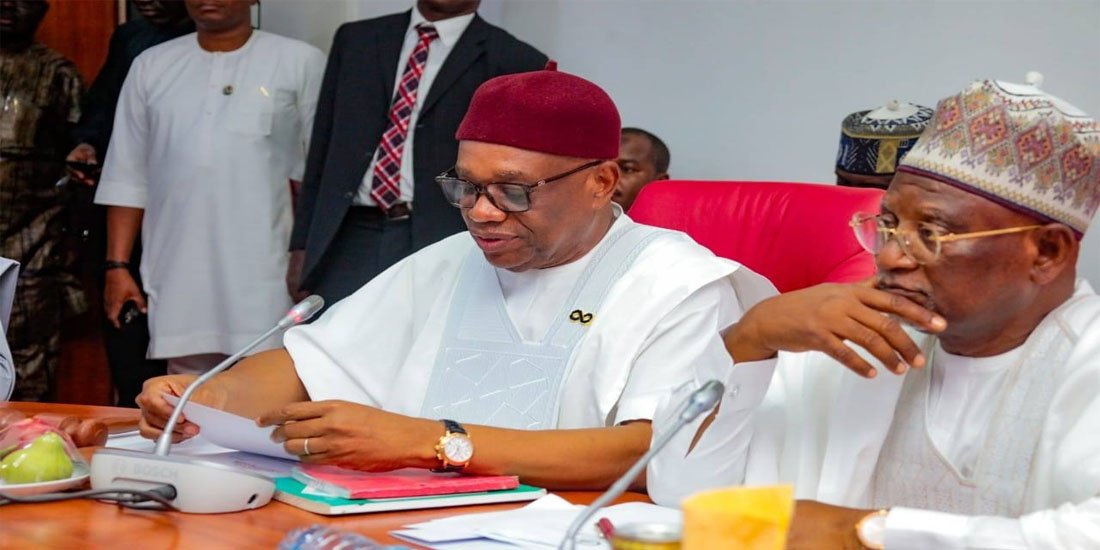
The Senate has expanded its investigation into the Safe Schools Initiative to include the Tertiary Education Trust Fund, the Nigerian Education Loan Fund, the Universal Basic Education Commission, the Federal Ministry of Humanitarian Affairs and Poverty Alleviation, and the National Social Investment Programme Agency, as part of a broader push to establish accountability over funds meant for student protection and welfare.
The Senate also granted its ad hoc committee on the initiative, chaired by Senator Orji Uzor Kalu, a further three weeks to conclude its investigation and submit a comprehensive report, following a motion adopted under the chamber’s standing orders. Kalu told lawmakers that preliminary findings had revealed extensive links between the Safe Schools Initiative and other institutions financing education and welfare programmes, arguing that restricting the probe to the initiative alone would leave gaps in the Senate’s oversight.
The expanded investigation will examine social safety net allocations linked to school feeding and displaced student support under the humanitarian ministry and the social investment agency, infrastructure and security projects financed by the education trust fund, the loan fund’s disbursement process and administrative efficiency, and the basic education commission’s interventions. Kalu said the committee needed more time because four key areas of its inquiry remained incomplete due to its demanding schedule, and Senate President Godswill Akpabio put the request to a vote that was overwhelmingly approved.
The move follows a Senate investigation launched in December after renewed concern over school attacks despite years of funding meant to protect educational institutions, prompted in part by the abduction of 25 female students from a school in Maga, Kebbi State, during which the school’s vice principal was reportedly killed. The Safe Schools Initiative was established in 2014 following the abduction of 276 schoolgirls from Chibok, Borno State, as a partnership between the federal government, the United Nations and private sector stakeholders to strengthen security in vulnerable schools.
Earlier hearings raised concerns over the deployment of 15 billion naira released for the programme in 2023, with the Nigeria Police Force receiving the largest share at 6.225 billion naira, the Nigeria Security and Civil Defence Corps receiving 3.362 billion naira, the Defence Headquarters receiving 2.25 billion naira, and the Ministry of Education receiving 519 million naira, while the amount released to the Department of State Services was not disclosed. The committee also queried consultancy expenditures and directed the Safe Schools Financing Office to reconcile all funds released, including contractor details and transactions linked to the programme’s Central Bank trust fund account.
National Coordinator of Financing Safe Schools in Nigeria, Halima Iliya, earlier told the committee the initiative had drawn 10 million dollars from the federal government matched by 10 million dollars from Nigerian business leaders, alongside contributions from the African Development Bank, the German and Norwegian governments through UNICEF, USAID, the Qatar Foundation and several UN agencies.