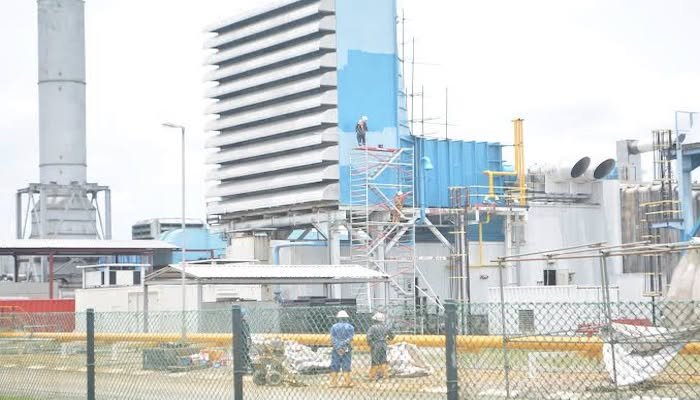
Nigeria’s only fully state owned power generation facility, the Ibom Power Plant, went without reliable gas supply for roughly eleven months in 2025, largely because of 28 billion naira owed to the company by the federal government as part of a broader 4 trillion naira legacy debt in the power sector dating back to 2015.
Managing Director Camillus Umoh described the situation in an interview, explaining how liquidity constraints, gas supply failures and weak transmission infrastructure left the 191 megawatt plant largely idle for most of the year despite being built with export capacity in mind.
He said the plant, operational since 2010, runs three General Electric turbines with a combined capacity of 191 megawatts, drawing gas from Acugas’ Uquo field roughly 62 kilometers away. He said that over the past 360 days, the aggregated number of days with gas supply came to under 30, and even on those days, supply often ran at only 30 to 40 percent of what the plant needed, forcing suboptimal operation. He said gas supply from Acugas ended in June, with the supplier informing the company that further deliveries would require upfront payment following three months of unresolved discussions.
Umoh linked the crisis to missed maintenance cycles, foreign exchange volatility and financing challenges, as well as the wider legacy debt affecting the power sector. He said the federal government and generating companies were due to meet to discuss repayment of 52 percent of that debt, some of it dating back over a decade, with the settlement excluding interest or compensation for lost value.
For Ibom Power specifically, he said the government owes 28 billion naira, of which only 12.3 billion has been paid, leaving a balance of 15.7 billion naira up for discussion. He noted that the repayment plan is not fully cash based, with about half expected to come as bonds redeemable only at a discount.
Umoh said turbines are designed to run 250 to 300 days a year without interruption, but the plant has not enjoyed that stability for the past 20 months, with 2025 marking a full collapse in supply. He said Acugas has since shifted to a pay before supply arrangement after accumulating unpaid invoices, and that the supplier also faces its own technical challenges requiring investment it is unwilling to make without guaranteed payment.
Despite the constraints, Umoh said the plant generates 82 to 83 megawatts whenever gas is available, above the roughly 65 to 71 megawatts currently demanded in Akwa Ibom State. He said the facility was originally designed as a net power exporter, with plans to expand to 685 megawatts in a second phase, but that weak transmission infrastructure remains a major obstacle. He said the state has two transmission corridors, one of which is 51 years old and can carry only about 60 megawatts, while the other has been out of service for four years due to vandalism, often forcing the plant to scale back generation even when gas is available.
He said the plant’s ability to operate in island mode, supplying power directly within Akwa Ibom State when the national grid is constrained, remains one of its key advantages. He warned that the same conditions that produced years of legacy debt are being repeated and said resolving the sector’s gas and transmission challenges will require disciplined execution, integrated infrastructure investment and stronger collaboration across the industry.