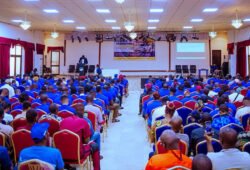
The United Nations has challenged young Nigerians to stop waiting to be included and instead take direct action to prevent conflict, build social cohesion and shape the peace they want to see in their own communities, at a high level youth dialogue convened by the UN Resident Coordinator’s Office in Abuja under the theme Hear Us, Act Now for a Peaceful World.
Opening the dialogue at the UN House, Peace and Development Adviser Grace Kpohazoude reaffirmed the UN’s commitment to amplifying youth voices and creating platforms for genuine intergenerational dialogue, but the discussion quickly moved past speeches to place responsibility for peacebuilding directly on young people themselves, urging them to translate concerns into volunteerism, advocacy, grassroots mobilisation and direct community action. Speakers, including Joseph Ochogwu of the Institute for Peace and Conflict Resolution, Reverend John Joseph Hayab of the Global Peace Foundation Nigeria, Emmanuel Nkanta of the National Peace Committee and Arome Salifu of the Africa Youth Growth Foundation, examined youth roles in leadership, conflict prevention, community engagement and building resilient societies, stressing that peace cannot be sustained by government institutions alone, since its foundations are built daily in communities through integrity, ethical leadership, dialogue, service and accountability.
The dialogue unfolded against a backdrop of persistent conflict, violent extremism, banditry, communal tension, displacement, poverty and social exclusion across Nigeria, conditions in which young people are often among those most affected, and simultaneously a population that can either be drawn into violent networks or become a powerful force for prevention and reconciliation. That reality has increasingly pushed the UN and its partners to reframe how young people are viewed, from potential victims or perpetrators of conflict to active partners in peacebuilding, a shift anchored globally in the UN’s Youth, Peace and Security agenda under Security Council Resolution 2250, adopted in 2015, built around five pillars: participation, protection, prevention, partnerships, and disengagement and reintegration, with subsequent resolutions further strengthening calls for meaningful youth participation in peace processes. In Nigeria, the UN has supported youth led, community based peacebuilding, including integrating young people into early warning and response mechanisms in parts of the North West designed to catch potential conflicts before they escalate, evidence, organisers said, that peace cannot be imposed from the top down but must be built from the grassroots by people who understand their own communities.
Participants were urged to see peacebuilding not as a one off event or commemorative slogan but as a long term process requiring patience, consistency and sustained engagement, and used the interactive session to explore strengthening grassroots peacebuilding, expanding stakeholder collaboration, and bridging the gap between young people and institutions so youth can not only speak but actually influence decisions and help implement solutions. Speakers stressed dialogue as one of the most effective tools for addressing division and preventing escalation, and warned that leadership without integrity undermines peace efforts just as surely as societies that fail to promote inclusion risk breeding the grievances that fuel instability. The most significant challenge to emerge from the dialogue was how to move the youth peace agenda from declaration to implementation, with participants agreeing young people must be empowered as active contributors through community service, advocacy, mentorship, conflict mediation and civic engagement, backed by greater investment in youth led peacebuilding and stronger partnerships among government, civil society, faith based groups, academic institutions and development partners.
The meeting closed with recommendations to institutionalise the gathering as a recurring platform for intergenerational dialogue, create a WhatsApp community to sustain engagement, expand mentorship opportunities for emerging peacebuilders, and deepen collaboration among institutions working on peace, security and development, reflecting a broader concern that young people are often invited into conversations about peace without being given the resources, access or decision making power to actually drive change. For participants, the message was clear: youth inclusion must go beyond listening, it must involve trusting young people, investing in them and giving them room to lead, since Nigeria’s peace will not be built for its youth without its youth.