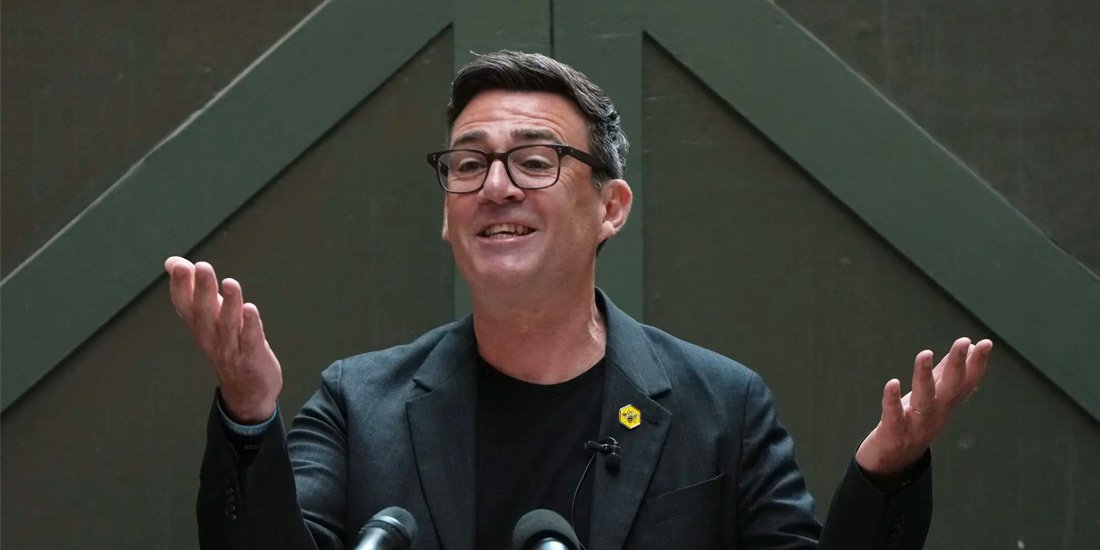
Andy Burnham is set to become the United Kingdom’s next Prime Minister on Monday, succeeding Keir Starmer following his resignation, and has pledged to usher in a new era of inclusive leadership and political renewal.
Speaking at a special Labour Party conference held at the Trades Union Congress in London, Burnham declared that he was ready to confront Britain’s emerging political challenges and restore public confidence in government.
“I am for us, for all of us. And I want people to say once again that Labour are for us,” Burnham said, reaffirming the campaign slogan that helped propel him to victory in the recent Makerfield by-election and paved his return to Downing Street.
The former Greater Manchester mayor, widely known as the “King of the North,” acknowledged that successive political leaders, including himself, had fallen short in addressing the country’s long-standing economic and social challenges.
“Change starts with honesty,” he said. “We must recognize that this generation of politicians, myself included, have failed to challenge a political culture and an economic model that simply doesn’t work well enough for ordinary people.”
Although Burnham has previously outlined his vision for greater devolution through a proposed “No. 10 North,” he has yet to unveil a comprehensive policy agenda. Instead, he used his acceptance speech to outline his broader vision for the Labour Party and the future of the United Kingdom.
His emergence comes at a difficult period for Labour, which has experienced declining public support following significant losses in local elections earlier this year, culminating in Starmer’s decision to step down as Prime Minister.
Burnham paid tribute to his predecessor, thanking Starmer for his service to both the Labour Party and the country while pledging to build on the foundations laid by previous administrations.
His leadership bid was unopposed, but political analysts say he faces significant challenges as he prepares to become Britain’s seventh prime minister in a decade amid persistent economic pressures, declining living standards and demands for institutional reform.
Addressing delegates, Burnham promised to restore hope and introduce what he described as “new politics,” urging political leaders to move beyond partisan divisions.
“I will work to build a new politics. The country is crying out for it,” he said.
According to Burnham, constant political point-scoring has alienated many voters at a time when households continue to struggle with the rising cost of living.
“How can politicians point fingers when living standards are falling and politics, as a whole, isn’t working for them? It infuriates them and makes them switch off,” he said.
Official data from the Office for National Statistics indicates that a large majority of adults in Great Britain continued to report higher living costs despite inflation easing to about three per cent.
Burnham also called on Labour lawmakers to embrace greater cooperation within the party and across the political divide, saying constructive engagement would help reduce the increasingly toxic nature of political discourse.
He pledged to foster unity within Labour and eliminate internal divisions that have often undermined the party’s effectiveness.
“I will work relentlessly to build a culture of one Labour team because change starts with us,” Burnham said. “We won’t beat Britain’s new right if we are consumed by infighting and pulling in different directions.”
He further vowed to end what he described as Labour’s “insidious briefing culture,” saying his administration would prioritise discipline, unity and collective leadership as it seeks to address the country’s economic and political challenges.