Nigeria’s headline inflation rate moderated marginally to 15.91 percent in June from 15.93 percent in May, according to the National Bureau of Statistics, the first monthly decline after three straight months of increases, even as food inflation and pressure at the state level told a more mixed story.
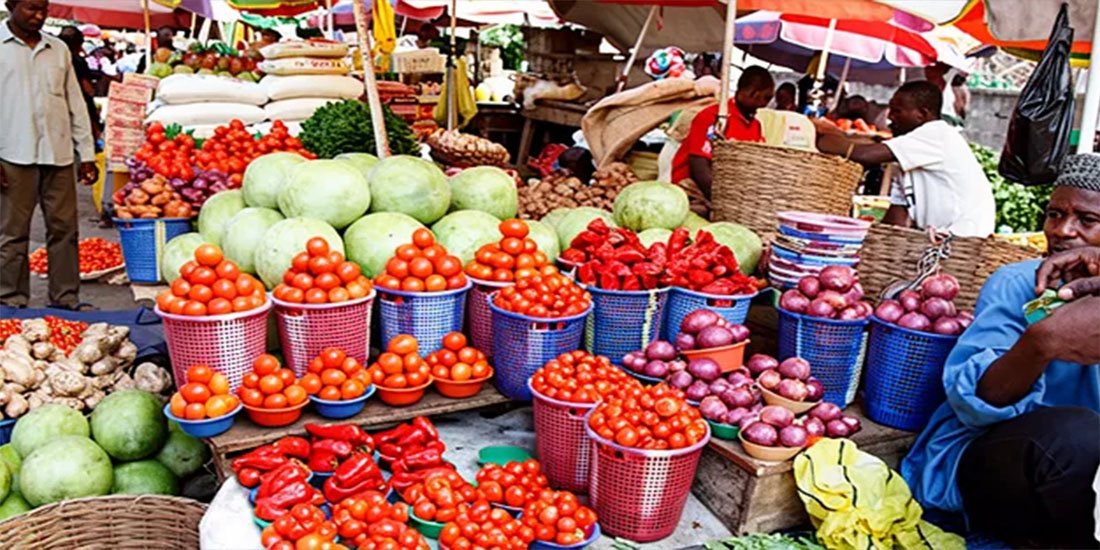
Month on month, headline inflation slowed to 1.66 percent in June from 1.75 percent in May, with the Consumer Price Index rising to 143.0 points from 140.7, a 2.3 point increase in the general price level. Average annual headline inflation for the 12 months ending June 2026 stood at 18.03 percent, a sharp drop from 30.44 percent in the same period of 2025. Food inflation, however, moved in the opposite direction, rising to 17.52 percent year on year in June from 16.96 percent in May, though still well below the 25.41 percent recorded in June 2025, driven by rising prices for crayfish, fresh pepper, tomatoes, dried green peas, yam flour, water yam, beef, banana, cassava flour, cowpea, garri, Irish potatoes and yam tubers among others, with month on month food inflation accelerating sharply to 3.75 percent in June from 2.98 percent in May, signalling stronger food price pressure during the month; average annual food inflation for the 12 months ending June 2026 stood at 16.42 percent, down from 31.93 percent a year earlier.
Core inflation, which strips out volatile agricultural and energy prices, stood at 15.92 percent year on year in June compared with 25.41 percent the same month last year, though it eased month on month to 1.66 percent from 1.94 percent in May, suggesting softer pressure from non food items, with the average 12 month core rate at 18.82 percent, down from 26.88 percent in June 2025. Urban inflation stood at 16.08 percent year on year, with month on month urban inflation rising slightly to 2.13 percent from 1.99 percent in May and an average annual rate of 17.51 percent, down from 31.64 percent a year earlier; rural inflation stood at 15.48 percent year on year, with month on month rural inflation slowing sharply to 0.52 percent from 1.17 percent in May and an average annual rate of 17.54 percent, down from 27.65 percent in June 2025.
At the state level, year on year headline inflation ran highest in Niger at 42.23 percent, followed by Kogi at 41.59 percent and the Federal Capital Territory at 39.91 percent, while Imo recorded the lowest rate at 19.47 percent, followed by Ebonyi at 20.79 percent and Katsina at 21.87 percent. Month on month, the sharpest increases came in Niger at 11.65 percent, Katsina at 8.13 percent and Kwara at 7.52 percent, while Bayelsa, Benue and Cross River all saw declines, at negative 6.48 percent, negative 5.58 percent and negative 5.12 percent respectively. Food inflation on a year on year basis was highest in Kogi at 53.02 percent, followed by Niger at 43.83 percent and Benue at 40.83 percent, while Katsina recorded the slowest food inflation at 19.15 percent, followed by Rivers at 23.81 percent and Imo at 24.60 percent; month on month, food inflation ran highest in Katsina at 16.82 percent, Kebbi at 9.79 percent and Niger at 8.96 percent, while Borno recorded the slowest movement in food prices at negative 3.54 percent, with Benue and Bayelsa posting negative 2.36 percent and negative 1.34 percent respectively.