The House of Representatives Public Accounts Committee has directed the Office of the Accountant General of the Federation to provide a full breakdown of outstanding funds owed to the federal government through unremitted operating surplus and other revenue from the Central Bank of Nigeria, NNPC Limited and other agencies, while separately demanding an explanation for the alleged withdrawal of N15 billion from the Universal Basic Education Commission’s account and similar deductions from other agencies.
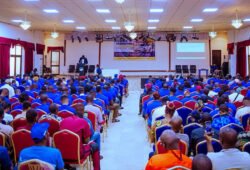
At an investigative hearing where Accountant General Shamseldeen Babatunde Ogunjimi appeared before lawmakers, committee member Gboyega Nasir Isiaka called persistent non remittance by government agencies a major threat to Nigeria’s fiscal sustainability, noting the country’s GDP remains among the lowest on the continent at roughly 16 percent, while government owned entities are required to remit around 80 percent of their operating surplus, with others required to remit between 20 and 50 percent, gaps he said suggest a significant backlog. Isiaka pressed the OAGF for details of outstanding remittances and questioned whether the performance of major revenue generating agencies such as the CBN, the Securities and Exchange Commission and NIMASA actually reflects the scale of assets under their control, arguing it is necessary to scrutinise the actual operating surplus these agencies declare rather than simply apply statutory percentages.
OAGF Director of Revenue and Investment Makinde Mogaji disclosed the CBN allegedly owes the federal government about N5.3 trillion in unremitted operating surplus, explaining that despite repeated committee efforts to recover the funds, the apex bank has allegedly failed to comply with the requirement to remit 70 percent of its surplus, calling the CBN one of government’s largest potential revenue sources, in contrast with agencies like the Federal Airports Authority of Nigeria, which has remitted about N473 billion. On the automatic deduction mechanism that has drawn complaints from several agencies, Ogunjimi said the policy was introduced as an innovative way to collect government revenue in advance, significantly boosting revenue the previous year before encountering resistance from agencies that sought presidential intervention to reverse or reduce the deductions, some of which were cancelled entirely while others were reduced, affecting the total revenue realised through the initiative. He disclosed that NNPCL had also failed to fully cooperate with the process, at one point being asked to leave discussions over non compliance, though the company has since accepted liability on some issues while disputing others, all currently under review by a post mortem committee. Mogaji said the automatic deduction mechanism introduced last year has otherwise functioned effectively, designed to deduct operating surplus in advance before reconciling agencies’ records at year end to determine whether they were over deducted or still owe government, though he cautioned preliminary figures cannot yet be treated as final.
Committee Chairman Bamidele Salam said the panel has received multiple complaints from UBEC and other agencies alleging that funds meant for their statutory responsibilities were deducted by the OAGF and diverted to unrelated government expenditure, revealing that UBEC told the committee funds approved for its November 2025 expenditure were never released, with N16 billion allegedly withheld and another N15 billion withdrawn from its account without refund, alongside a similar complaint from the National Agency for Science and Engineering Infrastructure alleging deductions exceeding N70 billion. Ogunjimi admitted the OAGF has, on several occasions, temporarily drawn funds from agency accounts to meet urgent government obligations, describing the practice as borrowing rather than outright withdrawal and insisting the funds are always refunded, following directives from the Minister of Finance based on assessments of how long affected funds had sat unused; he cited the Tertiary Education Trust Fund as an example, saying over N300 billion had been borrowed from the agency and fully refunded. Salam questioned the justification given that many affected agencies continue reporting their funds have not been returned, undermining their ability to carry out statutory duties, noting UBEC, NASENI, the National Broadcasting Commission and several other agencies under investigation have all raised similar concerns about routine access to their accounts leaving them without resources for their core mandates. He warned specifically that diverting UBEC funds carries serious implications for education, particularly in northern Nigeria, where about 13.5 million children remain out of school, since UBEC’s statutory responsibility to build schools, provide educational infrastructure and supply instructional materials cannot be effectively discharged if the funds earmarked for those purposes are diverted elsewhere.