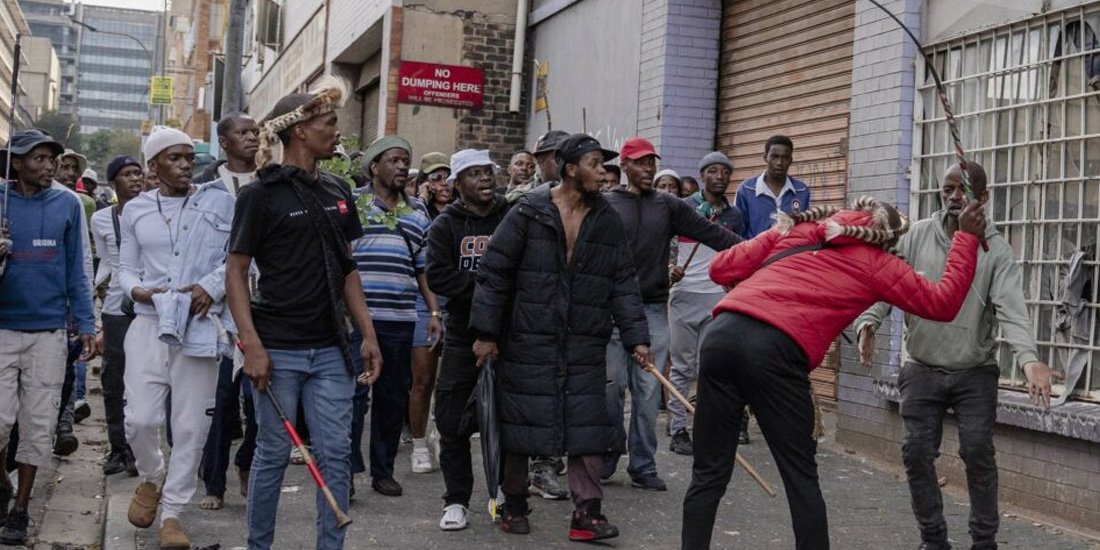
Anti-immigration protests intensified across South Africa on Thursday as demonstrators conducted door-to-door raids in parts of Johannesburg, forcibly removing suspected undocumented migrants from their homes and handing them over to police, deepening concerns among migrant communities and raising regional tensions.
In Alexandra township, north of Johannesburg, protesters broke into homes believed to be occupied by undocumented immigrants, searching residences and escorting those they apprehended to waiting police vehicles.
Among those detained was a woman and her young child from Malawi. Also apprehended was Zimbabwean national Total Mhlanga, who insisted he was legally residing in South Africa under the Zimbabwean Exemption Permit (ZEP), a special programme that allows thousands of Zimbabweans to live and work legally in the country.
“I am a ZEP holder,” Mhlanga told reporters during the operation.
Similar demonstrations unfolded in Soweto, where protesters marched through the township carrying sticks and flags before launching their own door-to-door searches for undocumented migrants. Organisers had earlier circulated flyers advertising a “peaceful march” followed by a coordinated operation targeting illegal immigrants. Another anti-immigration protest was also held in the coastal city of Durban.
The latest protests come amid rising anti-immigrant sentiment in South Africa, where persistent unemployment and economic hardship have fuelled growing resentment toward foreign nationals. The demonstrations followed an unofficial June 30 deadline issued by anti-immigration groups demanding that undocumented migrants leave the country.
The campaign is being led by former radio presenter Jacinta Ngobese-Zuma, founder of the advocacy group March and March. Following protests held on June 30, she announced that demonstrations would continue every Thursday until the group’s demands were addressed.
The organisation has blamed undocumented immigration for many of South Africa’s socio-economic challenges and is calling for stricter border controls, mass deportations, and preferential access for South African citizens to public services such as education and healthcare.
“We are walking around doing door-to-door removing foreigners,” community leader Bongani Msomi said during the Alexandra protest.
President Cyril Ramaphosa has repeatedly urged South Africans not to blame immigrants for the country’s long-standing economic and social challenges, stressing that immigration enforcement remains the responsibility of the state and not private citizens.
The South African government has also maintained that members of the public have no legal authority to enforce immigration laws.
In response to the growing unrest, police have intensified operations targeting undocumented migrants while deploying additional personnel to monitor demonstrations and maintain public order. However, Johannesburg police had yet to issue an official statement on Thursday’s incidents or the role of officers present during the raids.
The protests have also triggered a wave of voluntary returns by foreign nationals. The Malawian government said more than 38,000 of its citizens have returned home from South Africa in recent weeks over safety concerns, while Zimbabwean authorities reported that more than 60,000 citizens have also returned amid fears of escalating anti-immigrant violence.
The continued protests have heightened concerns over the safety of migrant communities and raised fresh questions about immigration policy, law enforcement, and regional relations in Southern Africa.