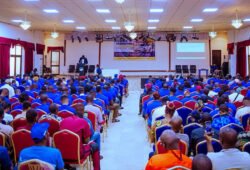
The federal government has unveiled a renewed strategy to curb irregular migration and dismantle human trafficking networks, warning that worsening economic hardship and traffickers’ growing use of digital platforms are exposing more Nigerians, particularly women and young people, to exploitation across Africa, the Middle East and Europe.
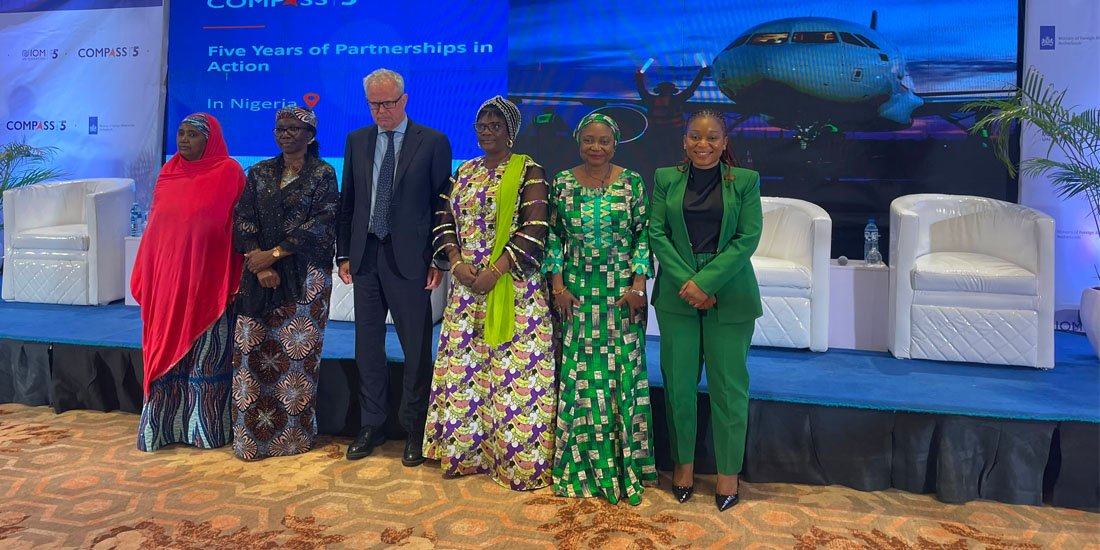
The announcement came as government and international partners marked the fifth anniversary of the Comprehensive Protection, Reintegration and Assistance to Migrants and Communities programme, known as COMPASS, revealing that more than 1,000 stranded Nigerians have voluntarily returned home from countries including Libya, Lebanon, Morocco, Mali, Egypt, India and the United Arab Emirates, while over 900 vulnerable returnees have received psychosocial care, healthcare and livelihood support to help rebuild their lives. Stakeholders warned that trafficking syndicates are growing more sophisticated, exploiting technology, poverty and unemployment to lure desperate Nigerians onto dangerous migration routes where many end up trapped in forced labour, sexual exploitation and other forms of abuse.
International Organisation for Migration Chief of Mission in Nigeria Sharon Dimanche said migration itself is not the problem, the challenge is ensuring it happens safely, in an orderly and regular way, while protecting every migrant’s dignity, and credited COMPASS with strengthening Nigeria’s migration governance through better policy and institutional coordination. She recounted the story of a Nigerian woman, given the pseudonym Joy, who was trafficked abroad and severely exploited before returning home traumatised, then rebuilt her life through IOM’s psychosocial support and reintegration programme, eventually starting a fashion business that now employs several young women. Joy is no longer defined by what happened to her, Dimanche said, she is defined by what she has become, calling it proof that effective reintegration can transform survivors into productive members of society.
Minister of Humanitarian Affairs and Poverty Reduction Bernard Doro reaffirmed the government’s commitment to protecting returning migrants, refugees, internally displaced persons and vulnerable communities, tying it to the administration’s One Humanitarian, One Poverty Reduction framework under the Renewed Hope Agenda, which integrates humanitarian assistance with long term poverty reduction, arguing that properly managed migration presents real opportunities for national development. Minister of Women Affairs and Social Development Imaan Sulaiman Ibrahim, represented by Director and Special Adviser Erimfolami Ola, warned that women and children continue to bear the greatest burden of irregular migration and trafficking, and said interventions in Edo State have shown that tackling poverty and unemployment significantly reduces the pressures driving people toward dangerous migration. Minister of Youth Development Ayodele Olawande, represented by Special Adviser Adedoyin Oyekan, said creating sustainable opportunity for young Nigerians remains one of the most effective responses to irregular migration, pledging deeper collaboration with IOM on entrepreneurship, skills acquisition and employment programmes.
Netherlands Ambassador to Nigeria Bengt van Loosdrecht announced plans for a football based youth initiative that would combine coaching and life skills training with education about the dangers of irregular migration, aiming to turn participants into community ambassadors for safe migration, describing migration as fundamentally a human issue that COMPASS addresses by investing in both stronger institutions and the people caught up in trafficking. He explained the Netherlands established COMPASS specifically to consolidate migration support into one coordinated framework covering survivor care, mental health services and institutional strengthening. National Agency for the Prohibition of Trafficking in Persons Director General Binta Bello called COMPASS one of Nigeria’s most strategic anti trafficking partnerships, crediting it with strengthening the agency’s capacity to investigate and prosecute cases through specialised training for investigators and prosecutors, while warning that traffickers continue adapting to technology and exploiting economic hardship, meaning government, international organisations, civil society and communities must keep strengthening their partnerships to stay ahead of these evolving criminal networks. Stakeholders at the event agreed that while stronger law enforcement remains essential, tackling poverty, unemployment and social vulnerability is critical to addressing the root causes of irregular migration.