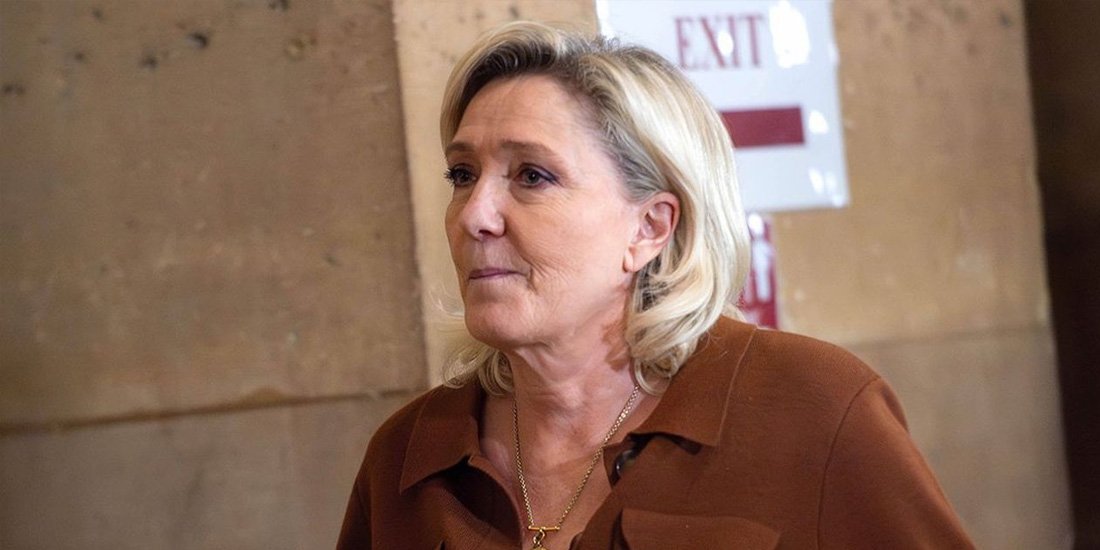
A French appeals court has upheld the conviction of far-right leader Marine Le Pen for misusing European Union funds but reduced her ban from seeking elected office, reviving the possibility of her contesting France’s 2027 presidential election.
In its ruling on Tuesday, the court sentenced Le Pen to three years in prison, with two years suspended. The remaining one-year sentence will be served under electronic monitoring through the use of an ankle tag.
The judgment significantly reduced the penalties imposed in March 2025, when Le Pen was sentenced to four years in prison and barred from holding elected office for five years after being convicted of embezzling more than €4 million in funds from the European Parliament.
Prosecutors alleged that money allocated for parliamentary assistants was diverted to pay employees of Le Pen’s far-right National Rally (RN) party. Le Pen has consistently denied the allegations and challenged the conviction on appeal.
The revised ruling reopens the prospect of Le Pen mounting another bid for the French presidency in 2027. However, political observers say the party could still turn to her protégé, Jordan Bardella, if she ultimately decides against running.
Le Pen’s legal team said it was reviewing the appellate court’s judgment before deciding on its next course of action, describing the outcome as partially favourable.
The decision triggered mixed reactions across France’s political spectrum.
Critics of the National Rally argued that the conviction highlighted what they described as inconsistencies in the party’s anti-corruption rhetoric, noting that it had been found guilty of misusing public funds while frequently campaigning on issues of law and accountability.
Some political opponents also questioned whether Le Pen should continue serving as a member of the French National Assembly, arguing that the conviction undermines her position as a lawmaker.
The latest ruling is expected to reshape the political landscape ahead of the 2027 presidential election, with Le Pen’s eligibility once again becoming a central issue in French politics.