President Bola Tinubu has dismissed claims that the Executive’s provision of infrastructure for the judiciary and legal community amounts to interference in the independence of the judicial arm of government.
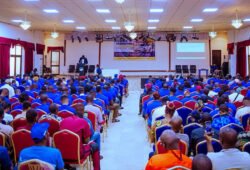
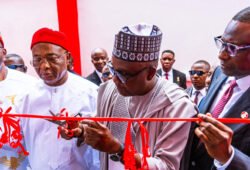
The president made the clarification on Monday during the commissioning of a new Office Annex for the Body of Benchers and 10 units of four-bedroom staff quarters at the Nigerian Law School in Bwari, Abuja.
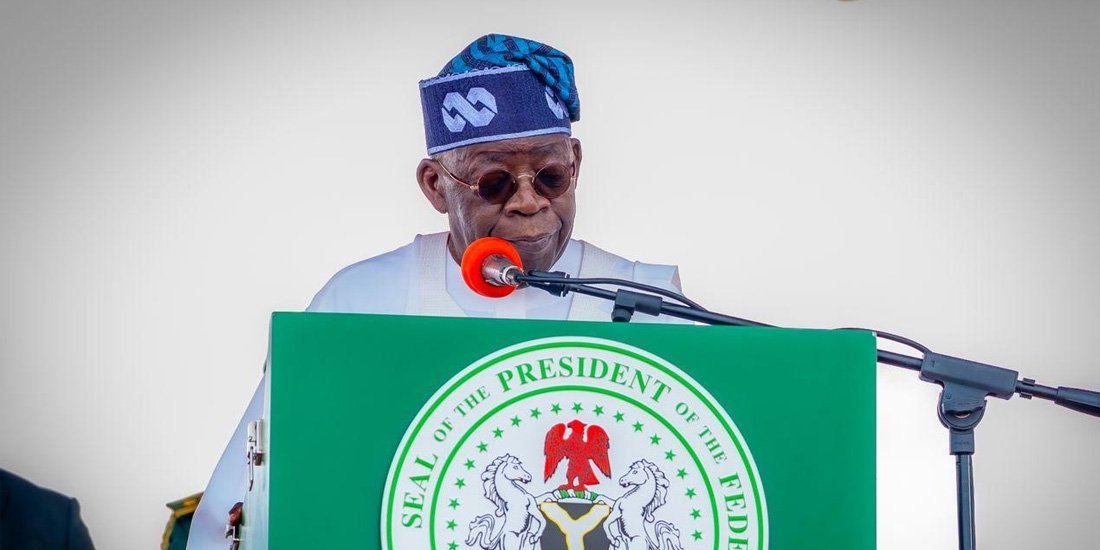
Represented at both events by the Secretary to the Government of the Federation (SGF), Senator George Akume, Tinubu said the Executive has a constitutional responsibility to provide the judiciary with the infrastructure needed to function efficiently while respecting its independence.
“Let me be absolutely clear: the provision of infrastructure for the legal community and the judiciary is not an interference in the independence of another arm of government,” the president said.
“Rather, it is a constitutional and collaborative duty of the Executive to ensure that those who interpret and uphold our laws are provided with an environment that fosters operational efficiency and excellence.”
Tinubu said his administration’s Renewed Hope Agenda is focused on strengthening democratic institutions, noting that democracy can only thrive when key institutions are adequately equipped and supported.
According to him, the newly commissioned Body of Benchers Office Annex reflects the administration’s commitment to the rule of law, institutional independence and the advancement of the legal profession.
The president also stressed the importance of improving facilities at the Nigerian Law School, saying quality infrastructure is essential for training competent legal practitioners.
“We cannot build a world-class legal system with dilapidated infrastructure,” he stated.
Tinubu disclosed that the newly commissioned staff quarters represent the first phase of broader investments in the institution. He said the Federal Government is also funding the construction of a new auditorium, additional student hostels and the digitisation of the Law School’s academic and administrative processes.
He added that similar infrastructure projects are being executed across the justice sector, including the construction of the Abuja Division of the Court of Appeal, magistrates’ courts and residential quarters for judicial officers.
According to the president, the projects underscore his administration’s commitment to delivering on its promise to strengthen national institutions through sustained investment.
“We promised not just to govern, but to reform. We promised to rebuild the broken structures of our institutional foundations,” he said.
Tinubu also defended his administration’s decision to remove the Federal Capital Territory Administration (FCTA) from the Treasury Single Account (TSA), arguing that the policy has given the FCT greater financial flexibility to accelerate infrastructure development.
He maintained that despite initial criticism, the visible transformation taking place across Abuja had justified the decision, describing it as a key step toward developing the nation’s capital into a modern city.