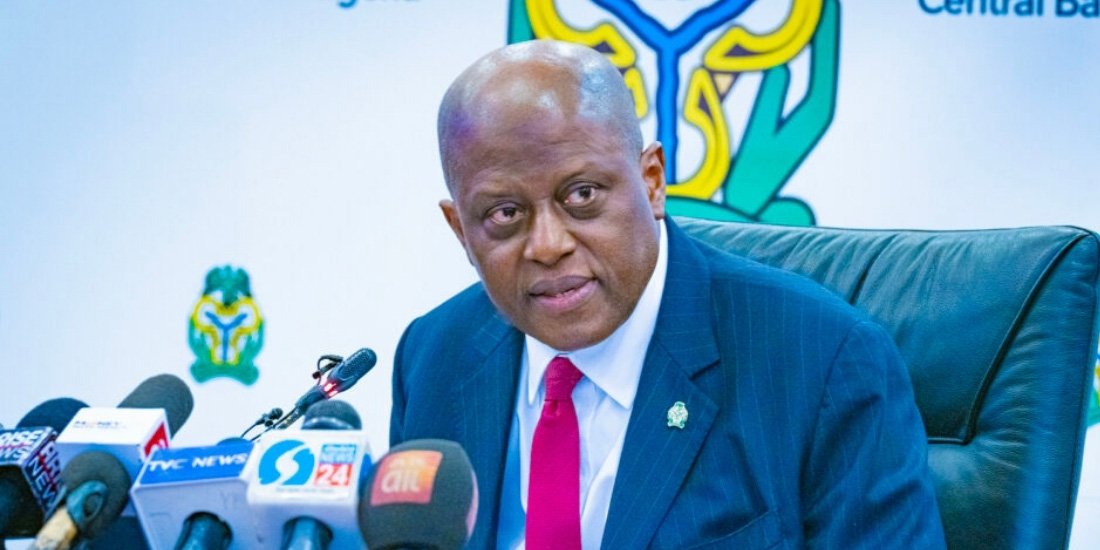
Governor of the Central Bank of Nigeria (CBN), Olayemi Cardoso, has urged Nigerian banks to deploy the fresh capital raised during the recently concluded banking recapitalisation exercise to finance key sectors of the economy, including small and medium-sized enterprises (SMEs), agriculture and infrastructure.
Speaking at the Future of Banking Summit 2026 organised by CNBC Africa and ABN Group in Lagos, Cardoso said the successful recapitalisation exercise marked the beginning of a new phase for the banking industry, where attention must shift from raising capital to supporting economic growth through increased lending to productive sectors.
Represented virtually by the Director of the CBN’s Statistics Department, Dr. Okpanachi Usman Moses, the governor said the recapitalisation programme, which ended on March 31, 2026, mobilised ₦4.65 trillion in fresh capital, enabling 33 banks to meet the minimum capital requirements for their respective operating licences.
Cardoso noted that about 73 per cent of the capital was raised from domestic investors, describing it as a strong vote of confidence in Nigeria’s financial system, while the remaining funds came from international markets.
He recalled that when the CBN introduced the recapitalisation policy two years ago, many stakeholders expressed concerns over the ambitious capital thresholds, which required international banks to maintain a minimum capital base of ₦500 billion, alongside proportionate requirements for national and regional banks.
Despite the initial scepticism, he said the exercise was successfully completed without causing the widespread disruption that had been predicted.
However, the CBN governor cautioned against viewing recapitalisation as an end in itself, stressing that stronger balance sheets should translate into greater support for businesses capable of creating jobs, boosting productivity and earning foreign exchange.
“The question is no longer whether the envisaged capital was raised. Rather, it is what we will now do with the capital raised,” he said.
According to him, banks must ensure the new capital flows into sectors that drive economic expansion rather than remaining idle on their balance sheets.
“A stronger banking system that lends timidly has missed the point. The capital that has been raised must find its way into the productive economy, into small and medium-sized enterprises, agriculture, infrastructure, and businesses that create jobs and earn foreign exchange,” he added.
Cardoso also highlighted the CBN’s ongoing implementation of the Payment System Vision (PSV) 2028, a strategic framework designed to modernise Nigeria’s payment ecosystem and position the country as a leading digital finance hub in Africa.
He explained that the initiative is built on six core principles—interoperability, security, inclusion, innovation, transparency and collaboration—and aims to strengthen Nigeria’s already vibrant financial technology ecosystem.
According to him, Nigeria has developed one of the world’s most dynamic payment systems through instant payments, fintech innovation and the expansion of agent banking to about two million agents nationwide.
He said the next objective is to transform Nigeria from a consumer of financial technology into a global producer of fintech innovation.
“The aspiration now is that Nigeria moves from being a fintech adoption market to a fintech production economy, where globally competitive fintech companies are built in Lagos, Abuja and Kaduna using Nigerian data and infrastructure for export to the world,” Cardoso said.
The CBN governor stressed that the success of both the banking recapitalisation programme and the Payment System Vision 2028 would ultimately depend on effective implementation and measurable improvements in financial inclusion, fraud prevention, fintech growth and lower cross-border payment costs.