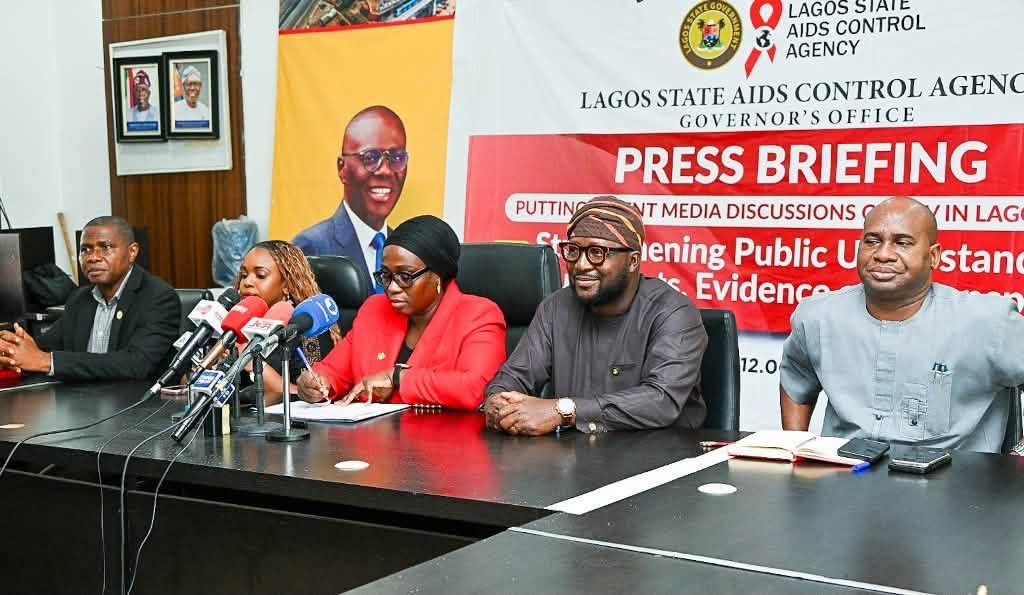
A widely circulated claim that Lagos State recorded the highest number of new HIV infections in Nigeria in 2025 rests on a misreading of the data, according to the Lagos State AIDS Control Agency, which says the 10,430 figure being cited is actually drawn from a 2018 survey and reflects newly diagnosed cases rather than new infections that occurred within the year.
At a press conference at the Bagauda Kaltho Press Centre in Alausa, LSACA Chief Executive Dr Folakemi Animashaun explained the distinction in detail: a newly diagnosed case simply means someone was confirmed HIV positive during the reporting period, which can include people who acquired the virus years earlier but were only recently tested, people who travelled to Lagos for testing or treatment, referrals from other states, or people identified because the state expanded testing access. New infections, by contrast, refer specifically to people who acquired HIV within a defined period and are estimated through epidemiological surveillance and scientific modelling, a fundamentally different indicator that should not be used interchangeably with diagnosis numbers, since doing so risks generating unnecessary fear, increasing stigma and discouraging testing. She added that Lagos, as Nigeria’s most populous state, commercial centre and major healthcare referral hub, naturally records some of the country’s highest volumes of testing and diagnosis, and that stronger surveillance and wider healthcare access should not be mistaken for worsening epidemic control.
The actual programme data, Animashaun said, tells a story of progress rather than crisis. Lagos conducted 504,800 HIV tests in 2025, identifying 11,940 positive cases for a positivity yield of 2.4 percent; in the first quarter of 2026 alone, 179,229 tests were conducted, identifying 3,390 positive cases, with the yield falling further to 1.9 percent, a declining rate despite expanded testing that she called a significant sign of improving epidemic control. As of 2025, 147,904 people were receiving antiretroviral therapy in the state, with 97 percent achieving viral suppression, and the state’s Early Infant Diagnosis positivity rate has fallen from 5.1 percent in 2020 to 1.5 percent in 2025, reflecting sustained gains in preventing mother to child transmission.
Looking ahead, Lagos has already begun implementing an HIV Response Acceleration Plan running from July to September 2026, covering expanded testing, stronger treatment linkage and retention, improved service quality, scaled up community prevention and better data quality across all 20 local government areas and 37 local council development areas, alongside continued rollout of oral and long acting injectable pre exposure prophylaxis. Longer term, the state is pursuing structural reforms around HIV commodity security, digital health intelligence and domestic resource mobilisation, most notably a decision to directly procure antiretroviral medicines, with the first state procured consignment expected to arrive in Lagos by the end of August 2026. Animashaun said this makes Lagos the first Nigerian sub national government to independently procure ARVs, a step she described as reducing dependence on external donor support and laying the foundation for a more sustainable, state owned HIV response, one the state hopes to strengthen further by drawing on lessons from Kenya’s pharmaceutical and health commodity management experience in partnership with global bodies such as UNAIDS.
Animashaun closed with a direct message to residents: there is no cause for panic, HIV remains preventable and manageable, and people living with it can live long, healthy lives with early diagnosis and sustained treatment. Special Adviser on Media and Publicity Gboyega Akosile, who opened the briefing, said it was necessary to correct what he called inaccurate and unfavourable reporting, noting that Lagos had continued funding HIV services without interruption even after the United States suspended HIV related foreign assistance under the Trump administration, and urged journalists to report only verified information.