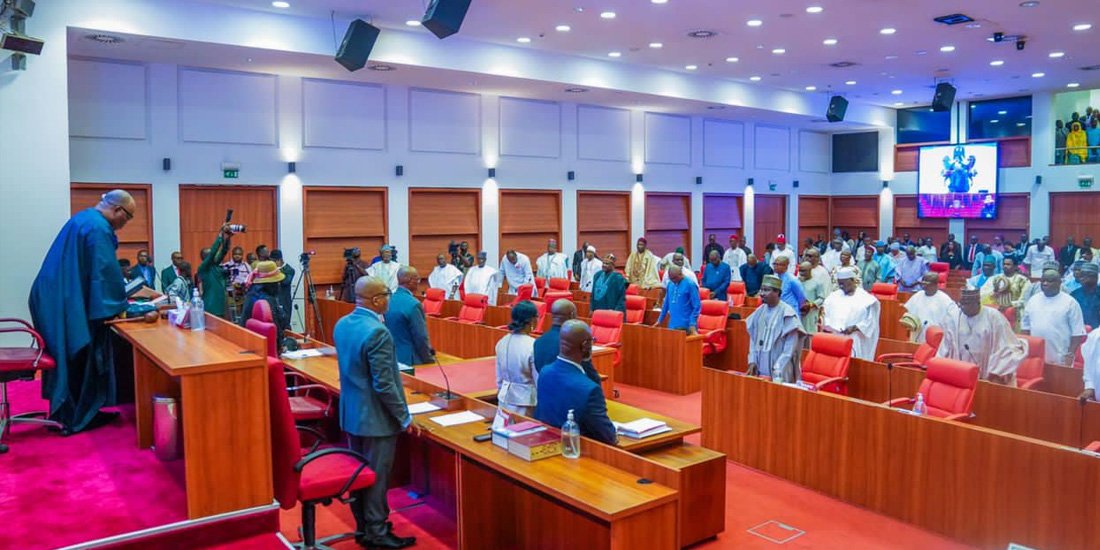
The Nigerian Senate on Wednesday passed the State Police Bill, marking a significant milestone in the country’s long-running debate over decentralizing policing and strengthening internal security architecture.
The passage of the bill followed the consideration and adoption of the report submitted by the Senate Committee on Constitution Review during plenary presided over by Senate President, Godswill Akpabio.
The proposed legislation seeks to alter relevant provisions of the 1999 Constitution to empower states to establish and maintain their own police services alongside the existing federal police structure.
Lawmakers who supported the bill argued that the country’s worsening security challenges, including banditry, kidnapping, communal clashes and terrorism, have exposed the limitations of a centrally controlled policing system in a nation of more than 200 million people.
Under the bill, state governments would be granted constitutional authority to recruit, train and deploy police personnel within their jurisdictions, while mechanisms would be put in place to ensure coordination with federal security agencies and prevent abuse by state authorities.
The Senate’s approval represents a major breakthrough after years of unsuccessful attempts to introduce state policing. Advocates have consistently maintained that governors, who are designated as chief security officers of their states, lack direct operational control over security personnel deployed to their territories.
Supporters of state police contend that officers recruited from local communities possess better knowledge of the terrain, culture and language of the areas they serve, thereby enhancing intelligence gathering and crime prevention efforts.
However, critics have expressed concerns that state police formations could be exploited by governors and political actors to intimidate opponents, influence elections and suppress dissent. To address these fears, the bill reportedly contains provisions establishing oversight mechanisms, operational guidelines and safeguards aimed at ensuring professionalism, accountability and respect for fundamental human rights.
For the constitutional amendment to take effect, it must secure the approval of at least two-thirds of the country’s 36 State Houses of Assembly before being transmitted to President Bola Ahmed Tinubu for assent.
If eventually enacted, the legislation is expected to usher in one of the most far-reaching reforms of Nigeria’s policing system since independence, fundamentally reshaping the nation’s approach to maintaining law and order and responding to security threats at the grassroots level.
The development comes amid growing calls from governors, traditional rulers, civil society organizations and security experts for a more community-oriented policing model capable of addressing Nigeria’s evolving security challenges.