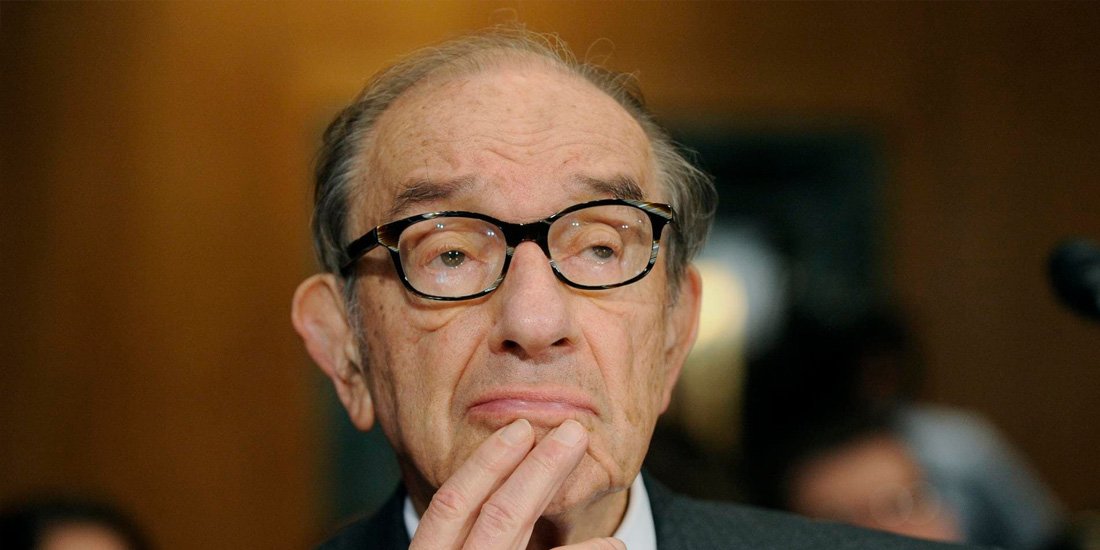
Alan Greenspan, the influential former chairman of the United States Federal Reserve who played a central role in shaping American economic policy for nearly two decades, has died at the age of 100.
According to a statement released by his wife, Andrea Mitchell, Greenspan died from complications related to Parkinson’s disease.
Mitchell described her late husband as “a giant of a man who helped shape the U.S. economy for decades under presidents of both parties,” adding that he remained candid about the mistakes made during his long public career.
Greenspan served as chairman of the Federal Reserve System from 1987 to 2006, making him one of the longest-serving leaders of the institution. During his tenure, he oversaw a period of sustained economic growth, low inflation, and significant changes in global financial markets.
Widely regarded as one of the most powerful economic policymakers of his era, Greenspan was often referred to as the architect of modern American monetary policy. His public remarks were closely watched by investors, governments, and financial institutions around the world.
Influential Career
Born on March 6, 1926, in New York City, Greenspan was raised by his mother and developed an early interest in economics. He studied at New York University and later built a successful career as an economic consultant before entering public service.
His national profile grew after advising the presidential campaign of Richard Nixon in 1968. He subsequently served as chairman of the Council of Economic Advisers under President Gerald Ford.
In 1987, President Ronald Reagan appointed Greenspan to lead the Federal Reserve, a position he would retain under multiple administrations, including those of George H. W. Bush, Bill Clinton, and George W. Bush.
Economic Legacy
Greenspan earned widespread praise for his handling of the 1987 stock market crash, when global markets experienced a sharp downturn shortly after he assumed office. His actions to maintain liquidity and reassure investors were credited with helping to stabilize the financial system.
Throughout his tenure, he responded to a series of economic challenges, including financial crises, recessions, and international market shocks. His policies often emphasized low interest rates and market-driven growth.
However, his legacy remains the subject of debate among economists. Critics have argued that prolonged periods of easy credit and low interest rates contributed to the technology stock bubble of the late 1990s and helped lay the groundwork for the global financial crisis of 2008.
Greenspan later acknowledged shortcomings in financial regulation and expressed regret over aspects of the policies that preceded the crisis.
Honors and Recognition
Following his retirement in 2006 after an unprecedented five terms as Federal Reserve chairman, Greenspan remained an influential voice on economic issues.
He received numerous honors during his lifetime, including the Presidential Medal of Freedom and an honorary knighthood from Queen Elizabeth II.
In his later years, he continued to comment on economic and political developments, offering views on globalization, fiscal policy, Brexit, and international trade.
Greenspan celebrated his 100th birthday in March 2026, marking a century that saw him become one of the most influential economists and central bankers in modern history.
He is survived by his wife, Andrea Mitchell, and leaves behind a legacy that shaped economic policy in the United States and beyond for generations.