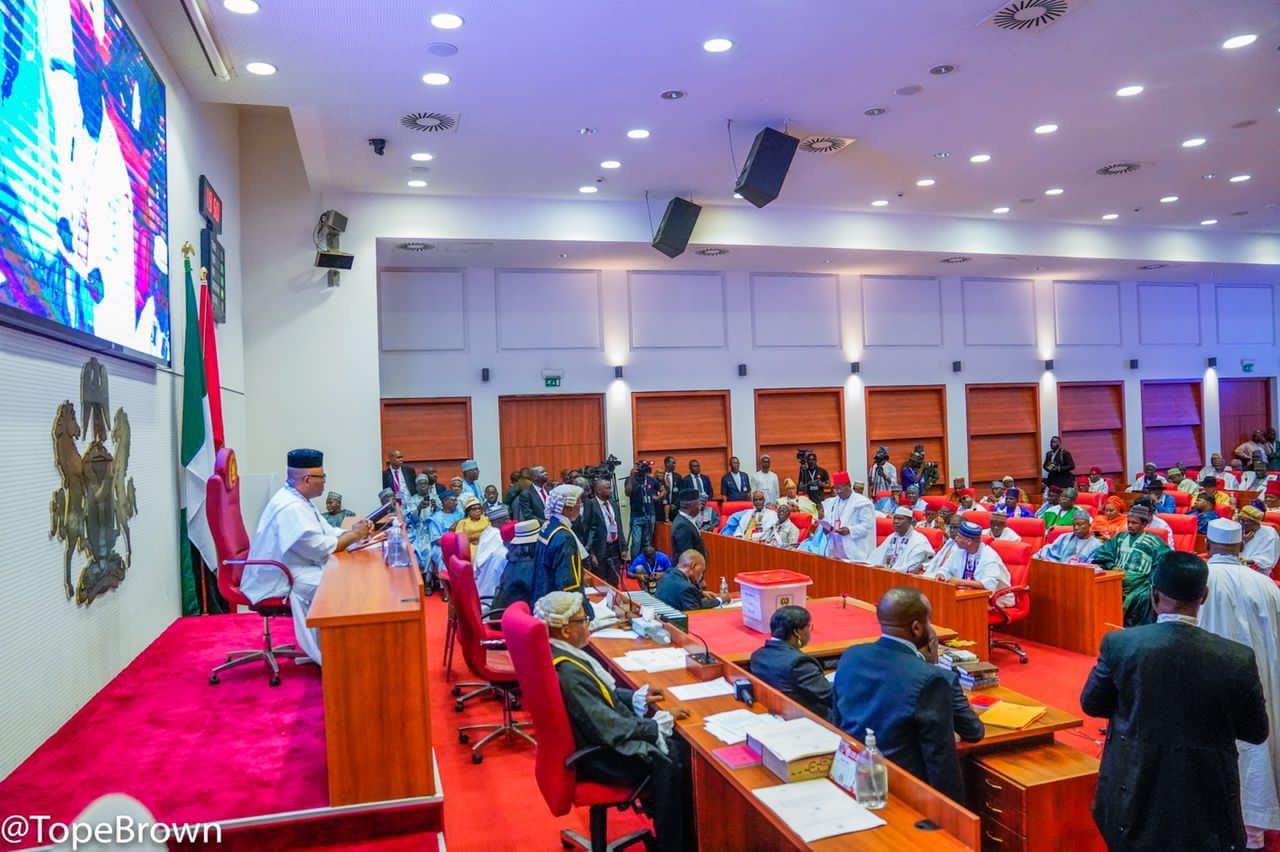
The Senate is expected to consider and potentially pass the Constitution Amendment Bill seeking the establishment of state police during an emergency plenary session scheduled for Tuesday, as lawmakers move to strengthen Nigeria’s security architecture.
The special sitting follows the inability of the upper chamber to conclude action on the proposed constitutional amendment before its recent recess due to a lack of the required quorum.
A senior Senate official, who spoke on condition of anonymity, said the bill could not be passed earlier because the Senate failed to secure the constitutionally mandated two-thirds majority required for constitutional amendments.
According to the source, the leadership of the Senate has since intensified consultations with lawmakers across party lines and appealed for full attendance at the emergency session to ensure the necessary quorum is achieved.
“We will reconvene on Tuesday to consider the State Police Bill. Previously, we were unable to form the required two-thirds majority of the 109 senators needed for the passage of a constitutional amendment. The leadership has engaged members and there is optimism that the required number will be present,” the source said.
The emergency plenary session is scheduled to take place at 11:00 a.m. and was convened by Senate President Godswill Akpabio.
Lawmakers were formally notified of the sitting through a memo issued by the Clerk of the Senate, Emmanuel Odo.
According to the notice, the session will focus on matters of urgent national importance, particularly issues relating to national security and other pressing concerns requiring immediate legislative attention.
The proposed State Police Bill is regarded as one of the most significant constitutional reform initiatives currently before the National Assembly. The legislation has already secured approval from the House of Representatives and now awaits Senate consideration.
Proponents of state policing argue that decentralising law enforcement powers would improve intelligence gathering, enhance community policing, and enable state governments to respond more effectively to local security challenges.
Nigeria currently operates a centralised policing structure under the control of the Nigeria Police Force. However, growing concerns over insecurity, including banditry, kidnapping, terrorism, and communal conflicts, have intensified calls for reforms to the country’s security framework.
Supporters of the proposal believe state police formations would complement federal security efforts and improve the overall effectiveness of law enforcement across the country.
Critics, however, have raised concerns that state-controlled police forces could be susceptible to political interference and abuse by state governments, calling for strong constitutional safeguards to prevent misuse.
The outcome of Tuesday’s emergency sitting is expected to be closely watched, as the proposed amendment could mark a major shift in Nigeria’s approach to policing and internal security.