
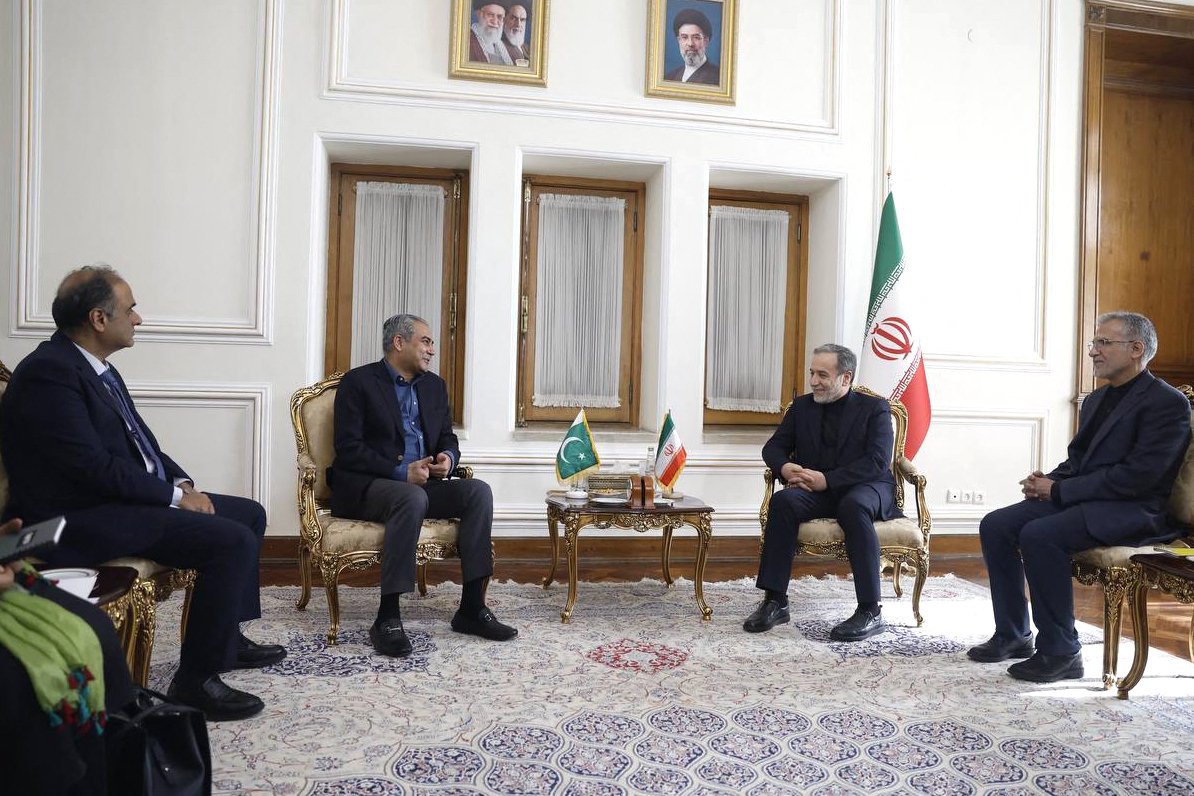
United States and Iranian officials are set to begin a new round of negotiations on Sunday aimed at sustaining a fragile agreement to end the broader Middle East conflict, even as renewed violence in Lebanon threatens to complicate diplomatic efforts.
The talks come after a scheduled meeting on Friday was postponed following deadly Israeli strikes in southern Lebanon that reportedly killed dozens and reignited tensions along the Israel-Hezbollah front.
US Vice President JD Vance arrived in Switzerland ahead of the negotiations, expressing optimism that progress could be made on key issues, including Iran’s nuclear programme and the implementation of a ceasefire in Lebanon.
Before departing for Europe, Vance told reporters that Washington hoped to advance discussions on both the nuclear file and regional security concerns.
The latest negotiations follow a preliminary agreement reached earlier between US President Donald Trump and Iranian President Masoud Pezeshkian, which established a framework for de-escalation and a broader peace process.
Iran Threatens Hormuz Closure
As negotiations resumed, Iran announced plans to close the strategically important Strait of Hormuz to vessel traffic, citing what it described as continued Israeli violations of the Lebanon ceasefire and an alleged breach of commitments by the United States.
The waterway, one of the world’s most critical energy transit routes, serves as a major channel for global oil and gas shipments. Previous disruptions to shipping through the strait during the conflict had triggered significant concerns in international energy markets.
Iran had previously agreed to reopen the route under the preliminary accord, allowing maritime traffic to gradually resume.
However, the United States Central Command said navigation through the waterway remained unaffected and that American forces continued to monitor the situation.
President Trump later warned that Washington could impose its own measures concerning maritime traffic through the strait if negotiations failed to produce a final agreement.
Diplomatic Efforts Intensify
Iran’s delegation arrived in Switzerland on Saturday and includes senior officials such as parliamentary speaker Mohammad Bagher Ghalibaf and Foreign Minister Abbas Araghchi.
Iranian officials said their primary objective is to ensure that all parties fulfil obligations outlined in the preliminary agreement.
The negotiations are expected to focus on unresolved issues, particularly Iran’s nuclear programme, regional security arrangements, and mechanisms for maintaining ceasefires across conflict zones.
Pakistan, which has played a mediating role in recent diplomatic efforts, confirmed that Prime Minister Shehbaz Sharif and Army Chief Asim Munir were travelling to Switzerland to participate in high-level discussions alongside representatives from the United States, Iran, Qatar, and other stakeholders.
Ceasefire Under Pressure in Lebanon
Meanwhile, fighting continued in southern Lebanon despite the announcement of a renewed ceasefire.
The Israeli military reported the death of another soldier during combat operations, bringing the number of Israeli military fatalities since the US-Iran agreement to five.
Israeli officials accused Hezbollah of violating the ceasefire by launching projectiles at Israeli forces, while Hezbollah claimed Israeli troops attempted to advance into strategic areas in southern Lebanon under the cover of the truce.
Both sides traded accusations of ceasefire violations throughout Saturday.
Lebanese authorities reported extensive Israeli airstrikes across multiple locations in the south, with dozens of casualties recorded. According to Lebanon’s health authorities, the cumulative death toll from recent fighting has surpassed 4,000.
Hezbollah officials insisted the group retained the right to respond to attacks, while Israel maintained that its operations were defensive and aimed at protecting its forces from ongoing threats.
The renewed clashes have raised concerns that instability in Lebanon could undermine the broader diplomatic process currently underway in Switzerland.
Critical Moment for Regional Stability
The latest round of talks is expected to open a two-month negotiation period designed to address unresolved issues left out of the initial US-Iran accord.
Diplomats and observers view the discussions as a crucial test of whether recent efforts to de-escalate one of the region’s most volatile conflicts can be sustained amid continuing tensions on the ground.
With negotiations now underway and hostilities persisting in Lebanon, international attention remains focused on whether diplomacy can prevent a return to wider regional conflict.




Very informative with detailed analysis.