President Bola Ahmed Tinubu has ordered the immediate and permanent reinforcement of security at the National Institute for Policy and Strategic Studies (NIPSS), following a recent attack on the institution’s perimeter.
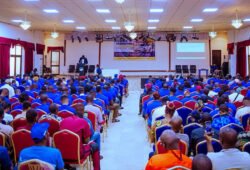
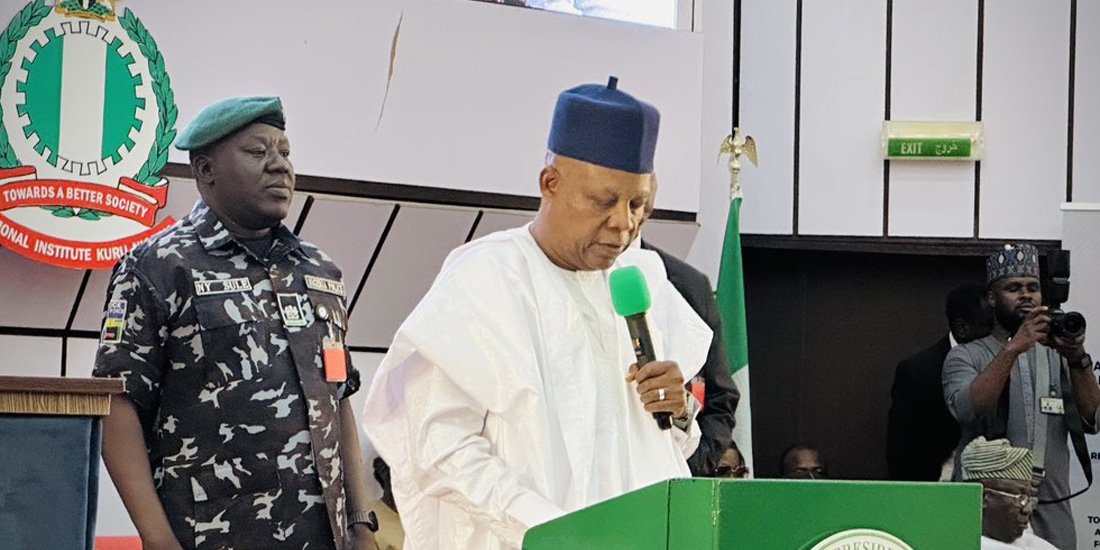
Vice President Kashim Shettima delivered the directive on Friday during a visit to the Institute in Kuru, where he met with management, staff, course participants, and residents in the aftermath of the incident. Addressing participants of the Senior Executive Course (SEC) 48, 2026, Shettima assured that the Federal Government would not allow criminal elements to undermine institutions central to governance, leadership development, and national policy innovation.
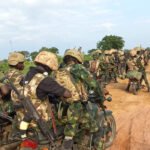
He also conveyed the President’s condolences to the families of two soldiers and a police officer who lost their lives defending the facility. “The recent incident has only strengthened our resolve to protect national institutions, support our security personnel, and ensure future attacks do not catch us unprepared,” the Vice President said.
As part of the federal response, Shettima announced that President Tinubu had directed immediate emergency security interventions at the Institute. He tasked the Director-General of NIPSS with coordinating with the Armed Forces, Nigeria Police, Department of State Services (DSS), and other security agencies to produce a comprehensive action plan. The plan is to include enhanced surveillance systems, increased personnel deployment, stricter access control, strengthened perimeter protection, and upgraded emergency infrastructure. It is expected to be submitted to the Office of the Vice President within 72 hours.
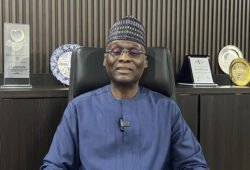
In his remarks, NIPSS Director-General Professor Ayo Omotayo described the attack as a direct assault on a critical national institution that has, for close to five decades, played a key role in leadership development, strategic research, national integration, and policy formulation. While commending security personnel for repelling the attackers, he noted that the incident exposed vulnerabilities linked to the Institute’s expansive grounds and the evolving nature of security threats.
Professor Omotayo called for a dedicated security intervention package to address these challenges, including the installation of an integrated CCTV surveillance system, deployment of additional security personnel, provision of patrol vehicles, solar-powered perimeter lighting, and the establishment of buffer zones around the facility.
Despite the breach, he assured stakeholders that the Institute remains fully operational, with all academic and strategic programmes continuing without disruption.
Participants in the Senior Executive Course also recounted their experiences during the incident. Speaking on their behalf, Dr. Kabir Abba and Dr. Toyin Sanni described the attack as traumatic but noted that the swift response of the Institute’s management and security agencies helped restore calm and confidence. They reaffirmed their commitment to the course and its objectives, vowing to remain focused despite the security challenge.
Plateau State Governor Caleb Mutfwang, who was also present, paid tribute to the fallen security personnel and pledged the state government’s support. He outlined measures including improved street lighting, intensified patrols, and stronger collaboration with federal security agencies to safeguard the Institute and surrounding communities. He described the protection of strategic national assets as a top priority for his administration.
The Vice President’s visit underscored the renewed commitment of both federal and state authorities to ensuring that NIPSS remains secure and continues to function as Nigeria’s premier centre for policy research, strategic studies, and leadership development.