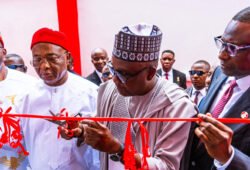
Nigeria has officially launched its Digital Switch Over (DSO) programme, marking a major milestone in the country’s transition from analogue to digital broadcasting and reinforcing ongoing efforts to strengthen national digital infrastructure.
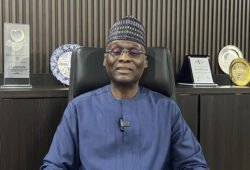
Minister of Communications, Innovation and Digital Economy, Bosun Tijani, described the development as the fulfilment of a long-standing national objective and a significant step in Nigeria’s broader digital transformation agenda.
According to the minister, the launch underscores the commitment of President Bola Ahmed Tinubu to investing in critical infrastructure capable of driving economic growth and national development for years to come.
Tijani noted that the Digital Switch Over represents a major advancement for the broadcasting sector, with benefits extending beyond improved television services. He explained that the initiative, powered by the satellite infrastructure of Nigerian Communications Satellite Limited, will provide Nigerians with clearer access to information, broader educational and cultural programming, enhanced service quality, and greater digital inclusion, particularly for people living in underserved and remote communities.
He further stated that the DSO is one of the first tangible outcomes of a wider national digital infrastructure strategy being implemented by the federal government.
As part of the strategy, the government is pursuing the deployment of 90,000 kilometres of open-access fibre-optic infrastructure under Project BRIDGE, a nationwide initiative aimed at connecting communities, businesses, educational institutions, and public services across the country.
The minister also revealed that President Tinubu has approved investments in two additional satellites to strengthen Nigeria’s communications capabilities and support the expansion of digital services nationwide.
According to Tijani, the combined impact of the Digital Switch Over, fibre infrastructure expansion, and new satellite investments will create a robust digital backbone capable of reaching every part of the country, regardless of geographical location.
He added that the expansion of digital infrastructure will open new opportunities for broadcasters, content creators, entrepreneurs, and innovators, enabling them to reach wider audiences across Nigeria, West Africa, and beyond.
The minister emphasized that modern digital infrastructure serves not only as a platform for communication but also as a tool for promoting culture, innovation, and economic development, positioning Nigeria for a more connected, inclusive, and prosperous future.