Hundreds of former jihadist fighters in northeastern Nigeria are attempting to rebuild their lives after completing a government rehabilitation programme aimed at reintegrating ex-combatants into society and reducing the country’s long-running insurgency.
Among them is 32-year-old Ibrahim Mohammed, who spent years fighting in the forests of Borno State as part of the Boko Haram insurgency before surrendering after receiving a plea from his mother.
“I received a video message from my mother. She pleaded with me to leave the group, lay down my arms, and return home,” Mohammed said at a graduation ceremony in Maiduguri marking the end of the rehabilitation programme. “It touched me deeply. I realised that my family still cared about me and wanted me back. That was when I decided to leave the bush and surrender.”
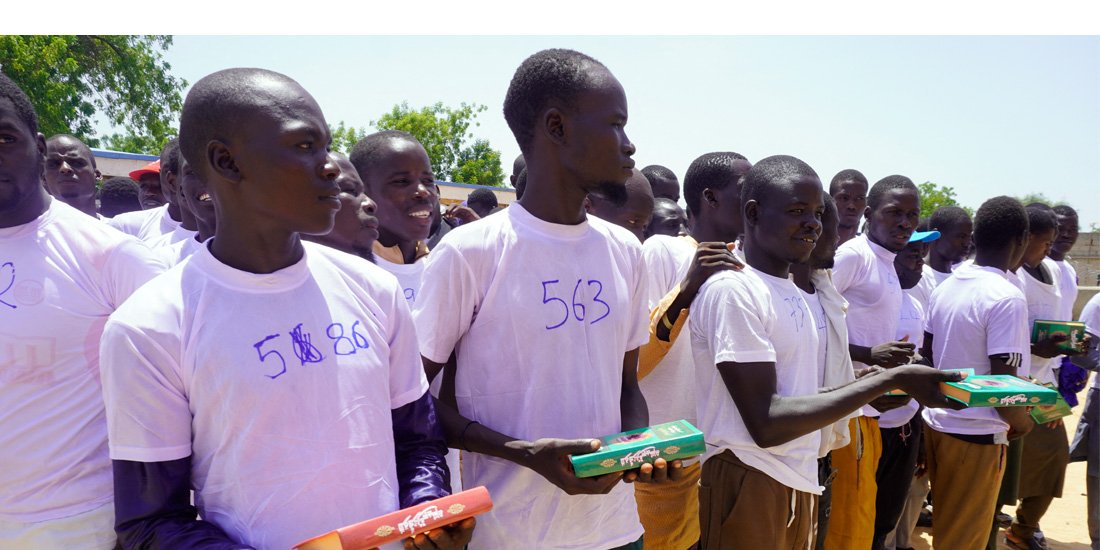
Mohammed was among about 720 former fighters who recently completed vocational training under a state-led reintegration initiative in Borno, the epicentre of the 17-year insurgency that has killed tens of thousands and displaced more than three million people.
At the ceremony, participants dressed in white T-shirts were handed copies of the Quran and swore oaths not to return to armed groups. Officials said the programme also included women and children, with a focus on helping participants acquire skills to support independent livelihoods.
Some participants were former commanders who openly acknowledged involvement in serious violence during their time in the insurgency. One ex-fighter, Bulama Mukhtar, said he authorised the killing of his own son after the boy refused to take part in an attack.
Officials said more than 9,680 people have passed through the rehabilitation programme since its launch in 2021, according to Sabi Abdullahi Ishaq, security adviser to the Borno State governor.
Participants reportedly underwent months of training in trades such as tailoring, automotive repair and other vocational skills designed to support reintegration into civilian life.
Boko Haram, which began its insurgency in 2009 seeking to establish an Islamic state, has fragmented over the years, with splinter groups such as Islamic State West Africa Province (ISWAP) continuing the violence in parts of the region.
Several former fighters told AFP they had been misled by extremist ideology and now regret their involvement.
“I realised that the violence and suffering inflicted on innocent people had nothing to do with genuine religious preaching,” said 36-year-old Mustapha Kaka, a former assistant commander. “It was not what we started in the name of Islam.”
Another ex-fighter, Idris Abdulkadir, 44, said he spent years in the bush, where he married and had 11 children while living under militant control, losing access to formal education for much of his life.
“I got married and had 11 children while living in the bush,” he said. “Because I joined Boko Haram, I was left behind while my mates continued their education and became respected Islamic scholars.”
Women and children were also among those in the programme. Ya Fanna Isa, 25, who said she spent a decade in captivity after being abducted, said she now hopes to rebuild her life after escaping with two of her children.
“I want to start over and live in peace,” she said. “My hope is that my children will have opportunities that I never had.”
Despite the programme’s aims, analysts have raised concerns about its long-term effectiveness and accountability.
Security analyst Adebayo warned that aspects of the initiative could undermine peace efforts if not carefully managed, particularly regarding concerns over accountability for serious crimes.
The rehabilitation programme remains one of Nigeria’s key non-military strategies for addressing insurgency in the North-East, alongside ongoing military operations against extremist groups.