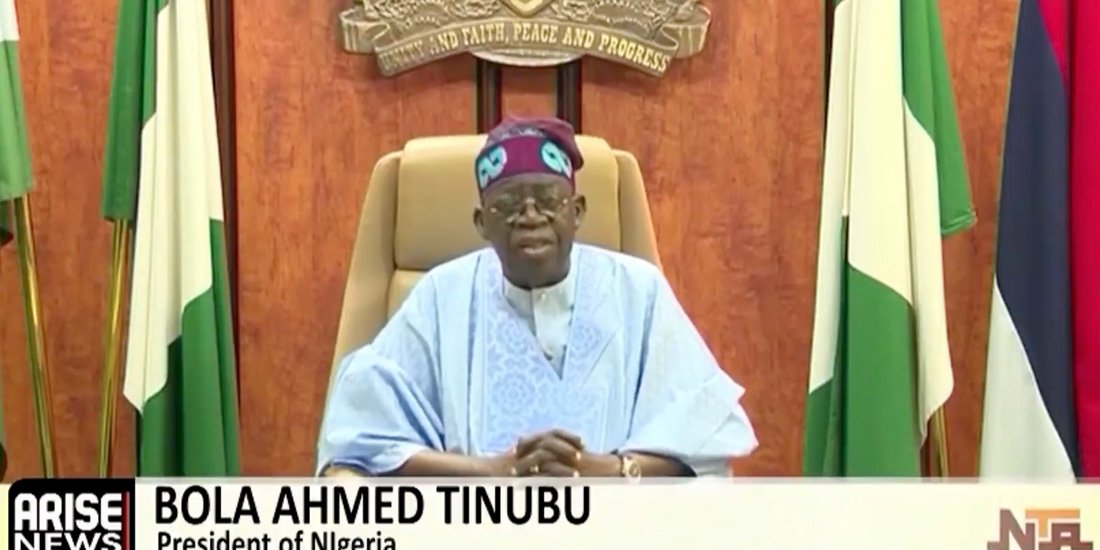
President Bola Ahmed Tinubu on Friday delivered his Democracy Day address, celebrating 27 years of uninterrupted civilian rule while urging Nigerians to defend democratic values, support ongoing reforms and remain united in the face of national challenges.
In the nationwide broadcast, Tinubu said Nigeria’s democracy, sustained since May 29, 1999, remains a collective achievement built on resilience, sacrifice and institutional progress, noting that disputes are now resolved through courts and legislative processes rather than violence.
He called on the Independent National Electoral Commission (INEC), security agencies, political parties and citizens to ensure peaceful and credible elections in Ekiti and Osun States, warning that democracy weakens when citizens lose confidence in the electoral process.
The President also appealed to the National Assembly, judiciary, media and civil society to continue playing their roles as democratic watchdogs, urging critics to remain engaged in national discourse while maintaining faith in the country’s future.
Addressing young Nigerians, Tinubu encouraged them to build their future within the country, saying national progress depends on those who choose to contribute to solutions at home.
He commended security agencies for their sacrifices and acknowledged the roles of traditional rulers, religious leaders and community stakeholders in sustaining peace across the country.
Tinubu expressed concern over recent insecurity incidents, including abductions in Oyo and Borno States, but assured Nigerians that efforts were ongoing to secure the release of victims. He said the government had declared a security emergency and approved the recruitment of more than 50,000 police officers, alongside thousands of military personnel.
He also said the 2026 budget allocated ₦5.41 trillion to defence and security, describing it as the largest in Nigeria’s history, while reaffirming his administration’s commitment to defeating terrorism and criminal networks.
The President highlighted military operations against insurgent groups, claiming significant progress in degrading terrorist structures and reducing terror-related deaths, while also noting that thousands of former fighters had surrendered under rehabilitation programmes.
Tinubu issued a warning to bandits and kidnappers, urging them to surrender or face decisive military action, while calling for national unity in addressing insecurity.
Reflecting on Nigeria’s democratic journey, the President paid tribute to the heroes of the June 12 struggle, including Chief M.K.O. Abiola and other pro-democracy activists who fought for the restoration of civilian rule.
He also announced national honours for several individuals and groups who played roles in the pro-democracy movement, with a full honours list expected to be released in the coming days.
On the economy, Tinubu said his administration inherited significant fiscal and structural challenges in 2023 but chose reforms aimed at stabilising public finances and restoring investor confidence.
He said government revenues had improved, allowing increased funding for states and local governments, while investments had grown across key sectors including agriculture, energy, manufacturing, mining and technology.
The President also highlighted progress in domestic refining capacity, describing it as part of efforts to strengthen energy security and reduce import dependence.
On the power sector, Tinubu recalled longstanding challenges of generation shortfalls, weak transmission infrastructure and liquidity constraints. He said reforms introduced through the Electricity Act had enabled states to participate in electricity generation and distribution.
He added that government-backed initiatives were addressing metering deficits and legacy debts, while renewable and off-grid projects were expanding electricity access in rural communities.
Despite progress, Tinubu acknowledged that many Nigerians were still facing economic hardship, stressing that efforts were ongoing to reduce inflation, increase food production, create jobs and improve living standards.
He said the government was focused on moving Nigeria “from uncertainty to stability,” adding that the next phase of reforms would prioritise inclusive growth and ensure that democratic dividends are felt across households and communities.
The President also advocated financial autonomy for local governments, describing grassroots governance as critical to development and security delivery.
He concluded by calling for national unity and collective responsibility, urging Nigerians to reject division and embrace hope, while reaffirming that democracy must translate into tangible improvements in citizens’ lives.
Tinubu ended his address with a tribute to the country’s democratic journey and a pledge that the sacrifices of past heroes would not be in vain.